


How Can sweelin-motor Match Your Industrial Drive Needs?
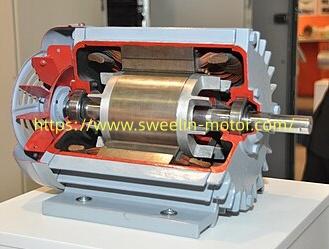
Three Phase AC Motor selection should begin with the actual needs of the equipment rather than a comparison of prices alone. Industrial machinery, ventilation systems, pumps, and production lines all have different operating requirements. Buyers need to consider load characteristics, rotational speed, electrical supply, installation dimensions, and working schedules before deciding which configuration to purchase. A clear understanding of these factors helps manufacturers recommend suitable products and allows purchasing teams to prepare more accurate orders.
Match the Product to the Equipment
Every industrial application has its own operating conditions. A ventilation system may require continuous operation, while a conveyor installation may experience changing loads during different production stages. Pumping equipment can also have specific starting and running requirements.
Before requesting a quotation, buyers should explain the intended application and provide basic information about the connected machinery. Useful details include the equipment type, expected workload, daily operating hours, starting frequency, and mechanical transmission arrangement.
This information helps the manufacturer evaluate whether a proposed configuration is suitable for the actual working conditions. It also reduces the risk of selecting a product based only on its rated power.
Calculate the Required Power and Torque
Rated power is an important purchasing parameter, but it should be considered together with torque and load characteristics. If the selected capacity does not match the driven equipment, the system may experience operating difficulties or unnecessary energy consumption.
Buyers should discuss the following points:
Required output power
Starting torque requirements
Normal operating load
Possible changes in workload
Continuous or intermittent operation
Expected operating duration
For equipment that starts under heavy loads, starting characteristics deserve particular attention. The manufacturer may need additional application information to evaluate the proposed configuration.
Purchasers should also avoid choosing a higher power rating without a technical reason. The objective is to match the product with the equipment while considering its actual operating demands.
Select a Suitable Rotational Speed
Rotational speed influences how a product connects with the driven machinery. It can affect transmission arrangements, operating noise, mechanical movement, and the overall layout of an industrial system.
The YE4 series from Sweelin includes several speed configurations for 50 Hz applications, covering 750 RPM, 1000 RPM, 1500 RPM, and 3000 RPM. These options allow buyers to compare different requirements when planning an equipment installation.
A lower-speed configuration may suit machinery requiring controlled movement, while a higher-speed option may be appropriate for systems designed around faster rotation. Buyers should also consider whether belts, pulleys, couplings, or other transmission components will be used.
Rather than selecting a speed based on preference, purchasing teams should confirm the required operating speed with their equipment designers.
Verify Electrical Supply Conditions
Electrical compatibility is another essential consideration. Before placing an order, buyers should compare the available power supply with the technical information of the selected model.
The main details to confirm include voltage, frequency, electrical supply arrangement, rated current, and connection method. These parameters should be consistent with the electrical system at the installation location.
For international purchases, buyers should pay attention to regional differences in power supply. A configuration intended for one market may require adjustments when supplied to another country.
If a variable frequency drive or special starting arrangement will be used, the manufacturer should receive this information before confirming the order. Clear technical communication can help avoid connection problems during installation.
Check Installation Space and Connection Dimensions
A product can meet electrical requirements but still be unsuitable if its dimensions do not match the existing equipment. Buyers should therefore review mechanical drawings before making a purchasing decision.
Important measurements include frame size, mounting position, shaft diameter, shaft length, center height, flange dimensions, and fixing-hole locations.
For replacement projects, it is useful to provide photographs and drawings of the existing installation. This gives the manufacturer a clearer understanding of the required connection structure.
Buyers should also consider the surrounding installation space. Ventilation clearance, maintenance access, and the position of connected components may influence the final configuration.
Confirming these details before production can reduce additional modification work after delivery.
Evaluate Efficiency and Operating Costs
For industrial equipment that runs for many hours, energy consumption can have a noticeable effect on operating expenses. Buyers should therefore consider efficiency information alongside the initial purchasing cost.
Sweelin offers the YE4 series as a high-efficiency product range. When evaluating this option, purchasing teams should examine the technical data for the specific rated power and operating conditions under consideration.
The actual financial benefit of an efficiency upgrade depends on several factors, including operating hours, electrical tariffs, load levels, and maintenance arrangements. Buyers can compare estimated energy use over a planned operating period to understand the potential cost implications.
It is also useful to ask the manufacturer for the relevant technical documents rather than relying on general descriptions.
Review Environmental and Maintenance Requirements
The installation environment can influence product selection and maintenance planning. Buyers should explain whether the equipment will operate in a dusty workshop, a humid location, an outdoor installation, or an area with elevated ambient temperatures.
Other considerations include ventilation, surrounding contaminants, installation altitude, and access for routine inspection.
Purchasing teams should discuss enclosure protection and cooling arrangements according to the actual working environment. Maintenance access should also be considered during equipment design because convenient inspection can simplify routine servicing.
Providing these details early allows the manufacturer to review the application more accurately.
Clarify Product Details Before Bulk Ordering
Before confirming a large order, buyers should establish a written record of the selected model, rated parameters, quantity, packaging requirements, and delivery schedule.
It is also useful to request a sample or technical drawing when the product will be integrated into a new machine. Engineering teams can review the dimensions and connection arrangements before approving the purchasing specification.
For distributors and equipment manufacturers, repeat-order consistency is another relevant subject. Buyers should discuss how approved configurations, product labels, packaging details, and technical records will be maintained for future purchases.Clear communication between the purchasing team and the manufacturer makes order coordination easier and helps both parties manage project requirements.If you are comparing equipment for an industrial project, visit https://www.sweelin-motor.com/ to review the available YE4 series products and discuss your application requirements with sweelin-motor. You can provide your expected power, speed, voltage, installation dimensions, and working conditions to request product information and a suitable quotation.

 English
 Arabic
 French
 Spanish
 Portuguese
 Deutsch
 Turkish
 Dutch
 Italiano
 Russian
 Portuguese (Brazil)
 Greek
