


CHENMA Entrance Fire Door for Residential and Commercial Buildings
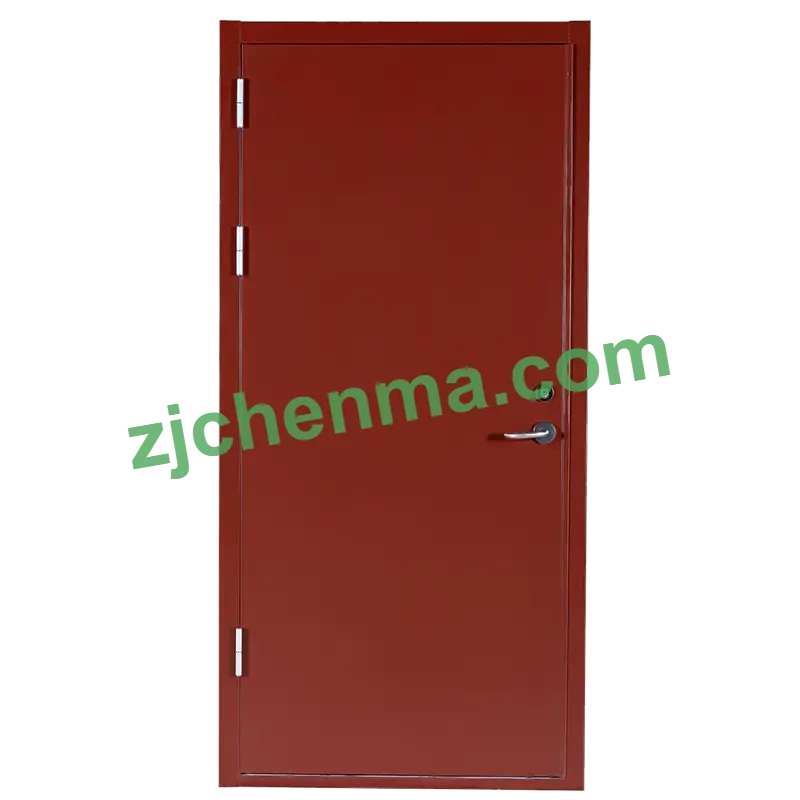
How Do Materials, Safety Features, and Design Shape a Quality Entrance Fire Door?
A building entrance is an important part of its overall safety arrangement, particularly in residential communities, apartment buildings, and commercial properties where fire protection deserves careful attention. An Entrance Fire Door combines protective construction with practical access requirements, helping create a barrier that can slow the spread of fire and smoke when an emergency occurs. Its performance depends on material selection, structural assembly, hardware compatibility, and installation quality. Zhejiang Chenma Doors Co., Ltd. presents fire protection door solutions through its zjchenma brand, offering different designs for architectural applications. Understanding the relationship between construction materials, safety features, everyday operation, and visual appearance can help buyers make informed decisions.
Material selection is fundamental to the construction of a fire protection door. Steel is commonly used because it provides structural strength and supports stable door assemblies. Cold-rolled steel and galvanized steel are among the materials used in manufacturing, with each offering characteristics suited to different production requirements. The internal construction also deserves attention because the door panel, frame, and connecting components work together as an integrated structure. Suitable fire-resistant core materials and carefully assembled joints contribute to the protective function of the finished product. Buyers should examine material descriptions and request relevant product documentation rather than judging quality only through the visible surface.
Surface treatment is another aspect that influences the appearance and practical maintenance of a door. Powder coating can create a uniform finish, while transfer printing offers opportunities to reproduce decorative textures and patterns. These treatments allow manufacturers to coordinate protective entrance products with different architectural environments. A suitable finish should be selected according to the installation location, expected handling conditions, and desired visual effect. Buyers should also consider how the surface responds to routine cleaning and whether the chosen treatment is appropriate for the surrounding environment. A carefully finished door can maintain a consistent appearance while complementing the building's overall entrance design.
When selecting a suitable product, buyers should begin with the building's actual fire protection requirements. Residential properties, shared apartment corridors, commercial premises, and other facilities may follow different fire safety regulations. The required fire resistance classification should therefore be confirmed through local building codes and project specifications. Buyers should request authentic test reports, certification documents, and information about the complete door assembly. A manufacturer's general description should never replace formal verification of the product's approved performance. It is also important to confirm whether the selected door, frame, hinges, locking components, and seals are compatible with the tested configuration.
Hardware plays an important role in the practical operation of fire protection doors. Hinges must support the door panel and allow controlled movement, while suitable locking systems help maintain secure closure. Concealed hinges can create a cleaner visual appearance, whereas traditional exposed arrangements may be preferred for particular construction requirements. The locking mechanism should correspond with the intended building application and applicable safety regulations. Buyers should also examine handle positioning, opening convenience, and the coordination between the frame and door leaf. Hardware selection should consider both daily usability and the door's intended protective function rather than focusing on appearance alone.
Modern manufacturing technology contributes to the consistency of the finished product. Accurate cutting, forming, welding, assembly, and surface treatment help manufacturers maintain the intended construction quality throughout production. Quality inspections should cover the door panel, frame connections, hardware installation, and surface condition. Particular attention should be given to areas where different components meet, since poorly assembled joints can affect alignment and overall functionality. Production management also matters because consistent procedures help reduce avoidable variations between individual products. Buyers comparing manufacturers can ask about inspection practices, production supervision, and the documentation provided with completed orders.
Everyday user experience is closely connected with installation and maintenance. A door that is difficult to open, closes improperly, or has poorly adjusted hardware can create inconvenience for occupants. Correct installation helps maintain alignment between the frame and door leaf, while suitable seals contribute to the intended separation between spaces. Regular inspection should include hinges, locks, closing mechanisms, and visible damage. Any modification or replacement involving fire-rated components should follow the manufacturer's guidance and relevant regulations. Property managers should also ensure that doors remain unobstructed and that occupants understand the importance of keeping designated fire doors in their intended operating condition.
Design should not be overlooked simply because protection is the primary purpose. Entrance doors form part of a building's visual identity, and their appearance can influence how residents and visitors perceive the surrounding space. Decorative panel arrangements, understated patterns, transfer-printed finishes, and coordinated hardware provide different styling possibilities. Contemporary buildings may benefit from clean geometric compositions, while traditional properties may suit more elaborate decorative details. Buyers can compare available finishes and panel designs according to wall colors, entrance layouts, and the architectural character of the property. Practical protection and visual coordination can work together when product selection considers both requirements from the beginning.
For developers, contractors, distributors, and property owners, evaluating fire protection doors involves examining the complete relationship between materials, assembly methods, hardware, certification, installation, and maintenance. The official product collection from the manufacturer includes different entrance protection designs and finish options for residential and commercial applications. Buyers researching suitable solutions can visit https://www.zjchenma.com/product to explore its fire protection door range, review product information, and discuss project requirements with the supplier. A carefully selected Entrance Fire Door should correspond with verified safety requirements, appropriate building conditions, and the practical needs of the people who use the space.

 English
 Arabic
 Spanish
 Portuguese
 Deutsch
 Turkish
 Dutch
 Italiano
 Russian
 Romaian
 Portuguese (Brazil)
 Greek
