


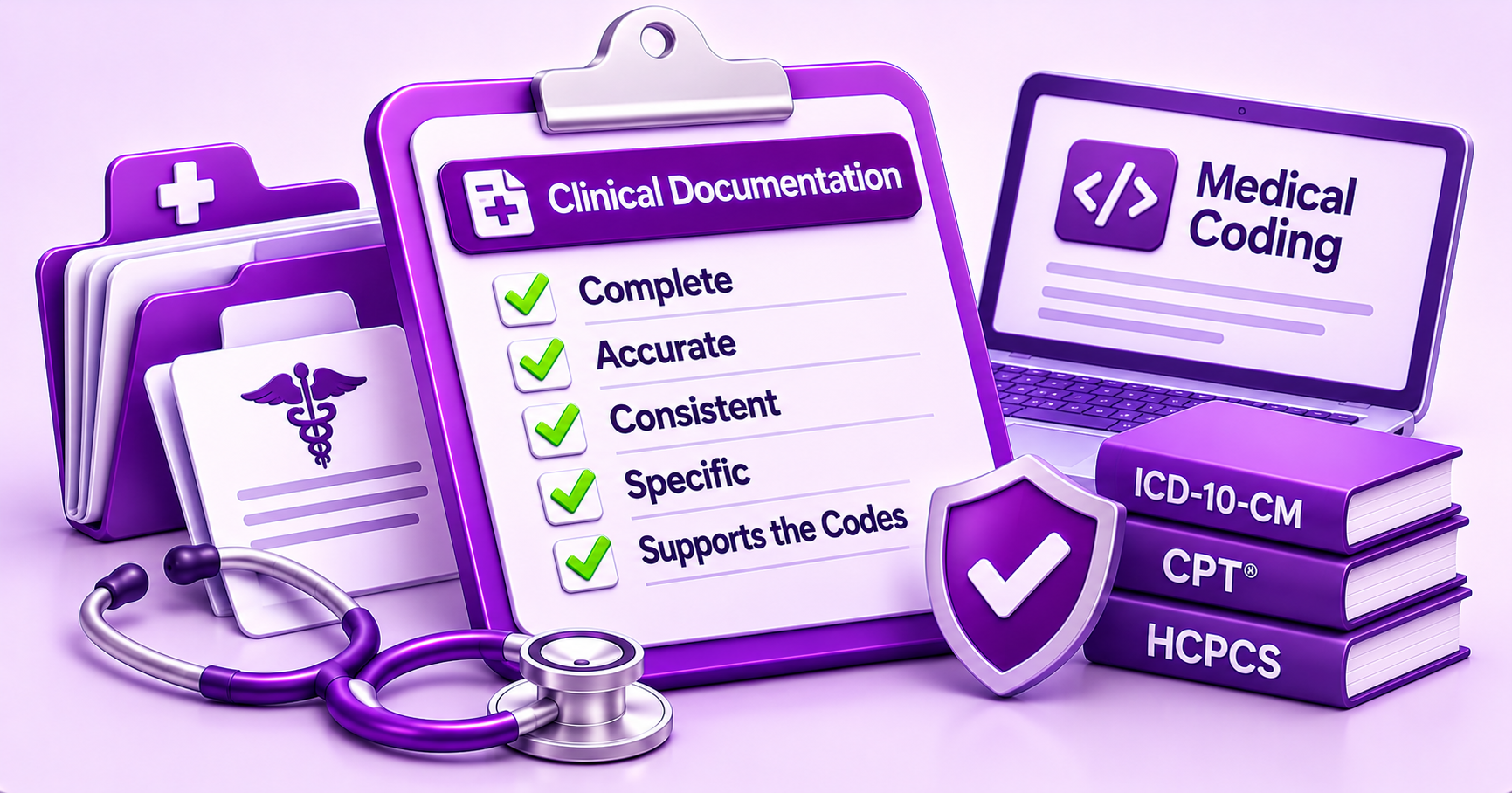
The Importance of Documentation Integrity in Medical Coding
Revenue Cycle Analytics gives medical practice leaders a practical way to examine financial performance without relying on assumptions. The central question is not simply whether a number has changed, but which part of the billing process explains it. Identify the actual point where work stops. Practices need clear definitions, reliable account records, and staff who can act on exceptions. This guide explains the decisions, checks, and examples that make revenue cycle analytics useful in everyday US healthcare billing. It also shows where teams should slow down, verify payer information, and avoid treating every claim the same way.
Map the patient-to-payment timeline
For map the patient-to-payment timeline, a useful internal check is to compare the current case with a recently completed example. Confirm the relevant source record, the action taken, and whether the next team received the information needed to proceed. If the two cases differ, record the reason rather than silently changing the account. This gives managers a concrete issue to investigate during the next quality review.
A billing dashboard may show rising receivables without revealing which handoff causes the delay. Separate scheduling, registration, coding, claim submission, payer response, payment posting, and patient billing into distinct stages. Record the date each account enters and leaves a stage.
For example, a surgery practice may submit claims promptly but wait several days for missing operative notes. A single total A/R figure would hide this documentation queue. Review a small set of delayed accounts to confirm the timestamps before building a larger report.
For a useful management review, save the original account record and the decision made at each step. This creates a clear trail for the next reviewer and helps distinguish a one-time exception from a process issue. Use a small weekly sample to verify that the new procedure actually changes outcomes.
Use denial and rejection analytics together
For use denial and rejection analytics together, a useful internal check is to compare the current case with a recently completed example. Confirm the relevant source record, the action taken, and whether the next team received the information needed to proceed. If the two cases differ, record the reason rather than silently changing the account. This gives managers a concrete issue to investigate during the next quality review. For additional claim coordination, practices can consider medical billing services while retaining clinical oversight.
Clearinghouse rejections often happen before payer adjudication, while payer denials arrive after a claim is processed. Keep these events in different categories and identify the reason codes that drive repeat work. Group findings by payer, location, provider, and service type when sample sizes allow.
Practices may also use revenue cycle management experts to coordinate claim review and administrative follow-up, while retaining appropriate oversight of documentation and payer-specific decisions.
A spike in subscriber-ID rejections suggests a front-desk or eligibility workflow issue. A concentration of authorization denials points to a different team. Compare the cost of rework and time lost before deciding which problem deserves priority.
Ask staff to record what information was available at the time, not just the final result. This detail matters when reviewing delayed claims because the reason for a pause may change after a payer response arrives. A dated note also makes it easier to explain the account history to another team member.
Find bottlenecks in aging and work queues
For find bottlenecks in aging and work queues, a useful internal check is to compare the current case with a recently completed example. Confirm the relevant source record, the action taken, and whether the next team received the information needed to proceed. If the two cases differ, record the reason rather than silently changing the account. This gives managers a concrete issue to investigate during the next quality review.
Age open items from the correct starting point and distinguish claims awaiting submission from submitted claims awaiting payer action. Track unresolved exceptions, oldest-item age, and the number of touches per account. Review whether high-value accounts receive appropriate attention without ignoring smaller balances.
An unusually large queue of zero-response claims may indicate a follow-up process gap, while accounts with repeated requests for records may need a documentation fix. Assign ownership to the queue rather than relying on individual memory.
Before changing the workflow, review a few cases that did not follow the expected pattern. Look for differences in payer instructions, clinical records, or software configuration. Keep the change narrow enough to test, and document who will review unresolved exceptions after implementation.
Connect data findings to workflow changes
An analytics report becomes useful only when someone changes a process. For each finding, record the root cause, responsible team, proposed correction, and review date. Start with one payer or one encounter type so staff can compare before and after performance.
If a charge-entry queue consistently grows after weekends, adjust staffing or the handoff schedule and monitor the next few weeks. Do not assume the change worked because one weekly report improved; check case mix and volume too.
Managers can use a short case review to check whether the written policy matches daily practice. Compare one straightforward encounter with one difficult exception. The difference often reveals a missing handoff, unclear responsibility, or an assumption that should be confirmed with the payer.
Build a small, reliable revenue cycle scorecard
Choose a few measures that answer specific management questions: clean-claim rate, days in A/R, denial rate, unbilled encounters, and net collection rate. Define the numerator, denominator, exclusions, and reporting period in writing. Use the same definitions each month.
Pair each number with a brief narrative about what changed. A drop in denial rate can look positive even when more claims are stuck before submission. Reviewing measures together reduces the risk of optimizing one stage while harming another.
Build a feedback loop between the people who enter information and the people who correct downstream problems. Share a de-identified example, the precise field or step involved, and the approved correction. Follow up after several reporting cycles to see whether the same problem returns.
Conclusion
Analytics should lead to specific actions rather than more charts. A practice that locates a delay, verifies its cause, assigns an owner, and measures the result can improve its revenue cycle without relying on guesses. A practical next step is to choose one measurable problem, review a representative set of accounts, and assign responsibility for the correction. Then compare results over a consistent period and record what changed.
Frequently Asked Questions (FAQs)
What is a revenue cycle bottleneck?
It is a step where claims, charges, or payments accumulate faster than staff can resolve them. Examples include missing documentation and unresolved payer requests.
Which analytics should a small clinic track first?
Start with unbilled encounters, claim rejections, denial reasons, days in A/R, and payment posting delays. Consistent definitions matter more than a large dashboard.
Can analytics identify the cause of every denial?
No. Analytics reveal patterns, but staff still need to review claim records, payer responses, and documentation to confirm causes.
How often should billing bottlenecks be reviewed?
Teams can review urgent queues daily and trends weekly or monthly. The schedule should reflect claim volume and operational risk.

 English
 Arabic
 French
 Spanish
 Portuguese
 Deutsch
 Turkish
 Dutch
 Italiano
 Romaian
 Portuguese (Brazil)
 Greek
