


Custom Solutions for Professional Makeup Collections
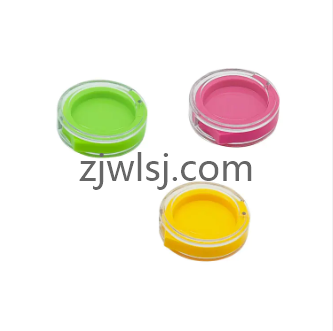
Multi-shade makeup products require packaging that combines organized storage, convenient application, and attractive presentation. The container must accommodate different colors while helping protect the pressed powders during storage and transportation. A Makeup Eyeshadow Palette is therefore developed through a combination of internal layout planning, material selection, structural engineering, and surface decoration. These elements work together to create packaging that supports both product functionality and brand identity.
Material selection influences the structure and appearance of the finished case. Plastic is commonly used in cosmetic packaging because it supports different shapes, compartment arrangements, and decorative finishes. Depending on the design, manufacturers may evaluate rigidity, impact resistance, transparency, and surface quality. The selected material should be suitable for the intended molding process and provide the structural characteristics needed for daily handling.
The internal layout is one of the most important design considerations. A Makeup Eyeshadow Palette may contain several compartments arranged to accommodate different shades or product formats. The dimensions and positions of these compartments should correspond with the intended powder pans. An organized layout makes individual shades easier to identify and access. It can also help create a balanced visual arrangement that supports the overall product concept.
Injection molding is widely used to manufacture the plastic components of cosmetic palettes. The mold determines the shape of the lid, base, internal tray, hinges, and other structural details. During mold development, engineers need to consider material flow, cooling behavior, wall thickness, and dimensional stability. Proper tooling design helps improve component consistency and reduce common issues such as deformation, uneven surfaces, and poor assembly fit.
The closure system needs to balance convenience and protection. A palette should open smoothly while remaining securely closed when stored or transported. Hinges and locking structures require suitable alignment to support consistent operation. If the closure is poorly designed, consumers may find the case difficult to use, or the lid may open unintentionally. Manufacturers should evaluate these structural details during development and assembly testing.
Additional functional elements can improve the usability of a multi-shade product. Depending on the design, a palette may include a mirror, applicator storage, or specially arranged compartments. These features should be considered together with the overall dimensions and internal structure. The objective is to provide useful functions without making the packaging unnecessarily complex or difficult to manufacture.
Surface decoration contributes to the visual identity of a cosmetic collection. Printing, coating, metallic effects, and other finishing techniques can create different appearances. A brand may choose a simple finish for an everyday makeup line or a more distinctive decorative treatment for a special collection. Manufacturers should ensure that the selected process is compatible with the plastic material and the shape of the case. Inspection of color consistency, surface quality, and decoration adhesion helps maintain a uniform result.
Quality management should cover raw materials, molded components, decoration, and final assembly. Material inspection helps confirm that incoming supplies meet project requirements. Molding checks can identify dimensional variations and surface defects. After assembly, the palette can be evaluated for component alignment, hinge operation, closure performance, and overall appearance. These procedures help manufacturers maintain consistency across production batches.
Customization is an important requirement for cosmetic brands seeking distinctive packaging. Buyers may specify the case shape, color, internal arrangement, logo placement, surface finish, and additional functional features. Each request needs to be evaluated in relation to tooling, material selection, and manufacturing feasibility. Early cooperation between the brand and supplier can help reduce unnecessary design changes and improve production coordination.
Wholesale buyers should also consider packing, storage, and transportation requirements. The palette structure should provide appropriate protection for the powder pans and external components. Efficient packing arrangements can help reduce handling difficulties during distribution. When multiple designs are produced within one collection, consistent quality standards and coordinated production schedules become especially important.
Successful palette packaging development requires cooperation between product design, material engineering, mold manufacturing, decoration, and quality inspection. A balanced approach helps create products that are practical to use, visually consistent, and suitable for commercial distribution. Brands seeking related cosmetic packaging solutions can explore WEILI PLASTIC at https://www.zjwlsj.com/product/eye-shadow-palette/shadow-palette-1-grid/.

 English
 Arabic
 Spanish
 Portuguese
 Deutsch
 Turkish
 Dutch
 Italiano
 Russian
 Romaian
 Portuguese (Brazil)
 Greek
