


Is Nante Suitable for Your Portable Distribution Box Requirements?
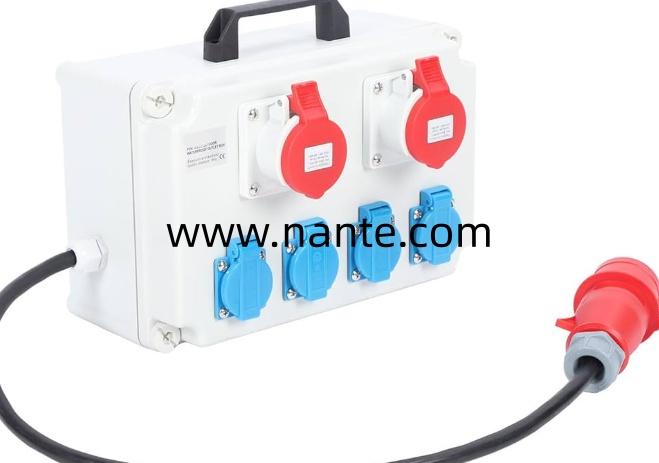
Modern industrial operations rarely remain confined to a single location. Construction projects, maintenance activities, temporary production areas, and outdoor events often require electrical power to be distributed wherever work takes place. A Portable Distribution Box provides a convenient way to organize electrical connections and manage power supply across changing environments. Nante focuses on industrial electrical equipment designed to support practical installation requirements, combining functional enclosure structures with adaptable connection arrangements. With suitable equipment, businesses can establish more organized temporary power systems without making every installation dependent on fixed electrical infrastructure.
Mobility is one of the defining considerations in this type of electrical equipment. Unlike permanently installed distribution cabinets, portable units are intended to accommodate changing work locations and different operational arrangements. Their enclosure structure should therefore balance mechanical protection with convenient transportation. Practical handles, stable housing, suitable dimensions, and carefully arranged internal components all contribute to easier handling. The design should also consider how the equipment will be positioned during operation to maintain convenient access to electrical connections.
Electrical distribution organization is another essential function. Temporary work environments may involve different machines, lighting systems, power tools, and auxiliary equipment. A well-arranged internal structure helps organize these connections and provides a clearer overview of the electrical supply arrangement. Circuit breakers, terminal components, socket outlets, and wiring accessories should be positioned according to their functions. Clear internal separation can make inspection and operation more straightforward for technical personnel.
Enclosure material selection should reflect the conditions in which the equipment will be used. Construction areas and industrial workshops may expose electrical equipment to dust, moisture, mechanical contact, and frequent handling. Metal housings can provide structural rigidity for demanding applications, while suitable engineered plastics may offer convenient transportation and resistance to certain environmental influences. Buyers should evaluate material characteristics alongside the intended installation environment and equipment requirements.
Protection against environmental exposure is particularly important when portable equipment is used outdoors. Rain, dust, humidity, and accidental splashing can affect electrical components if the enclosure is not appropriately designed. Sealing structures, protected cable entries, secure covers, and suitable socket arrangements all contribute to the overall protective function. The required enclosure protection should be selected according to the actual operating conditions rather than assuming that every portable unit is suitable for every outdoor environment.
Cable management also influences how conveniently a distribution unit can be used. Incoming power cables and outgoing connections should be arranged to reduce unnecessary bending, pulling, and interference. Appropriate cable glands and strain-relief arrangements can help maintain organized connections. Clearly positioned outlets allow operators to connect equipment without creating an unnecessarily complicated cable layout around the working area.
Ease of operation deserves equal attention. Workers may need to connect or disconnect equipment frequently while moving between different tasks. Clearly identified controls, accessible switching components, and practical socket positioning help simplify everyday use. Protective covers and suitable locking arrangements can also help manage access when the equipment is not being operated. These design details contribute to a more orderly working environment.
Maintenance is another consideration for businesses that rely on portable electrical equipment. Frequent transportation and changing installation conditions make regular inspection important. Technicians should check enclosure surfaces, handles, cable connections, socket components, switches, and protective devices. Any visible damage or loose connections should be addressed before the equipment returns to service. A practical internal layout can make these inspection activities easier to perform.
Different industries have different requirements for mobile electrical distribution. Construction teams may need temporary power arrangements for tools and site equipment. Maintenance departments may require movable power access when servicing machinery in different areas. Event organizers may need structured electrical connections for lighting, sound systems, and temporary facilities. Industrial workshops can also benefit from portable distribution solutions when permanent outlets are not conveniently located.
Selecting suitable equipment involves considering the power requirements of connected devices, circuit protection, cable specifications, environmental conditions, and transportation needs. Users should also follow applicable electrical regulations and ensure that installation, inspection, and servicing are handled by qualified personnel. Proper planning helps ensure that portable equipment fits the intended application and supports responsible electrical operation.
Ultimately, mobile power management is about making electrical resources available without sacrificing organization or operational safety. A thoughtfully configured enclosure can help businesses adapt to changing work locations while keeping connection points accessible and manageable.
Let your power supply move at the pace of your projects. Visit https://www.nante.com/product/ and take a closer look at the industrial electrical solutions available for mobile working environments. Browse the product possibilities, rethink your temporary power arrangements, and find a practical starting point for your next site operation.

 English
 Arabic
 French
 Spanish
 Portuguese
 Deutsch
 Turkish
 Dutch
 Italiano
 Russian
 Portuguese (Brazil)
 Greek
