


How Does UV Curing Improve Production Speed and Product Quality?
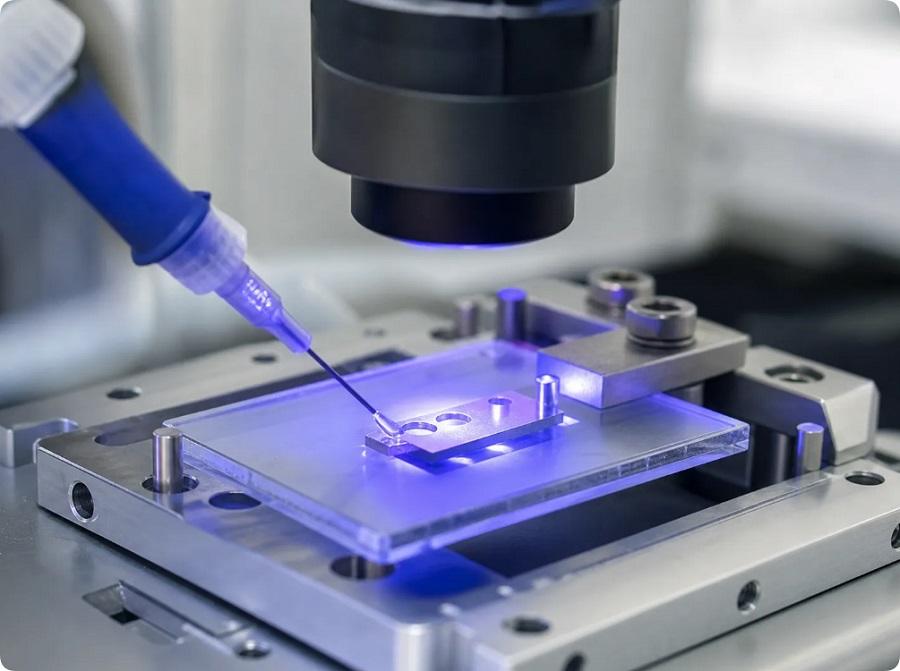
UV curing has become an important technology in modern manufacturing. It uses ultraviolet (UV) light to instantly cure or harden specially formulated materials such as inks, coatings, adhesives, and resins. Unlike traditional drying methods that rely on heat and evaporation, UV curing triggers a chemical reaction that transforms liquid materials into solid finishes within seconds. As industries continue to seek faster production and higher-quality results, UV curing is gaining popularity across a wide range of applications.Get more news about Uv Curing,you can vist our website!
How UV Curing Works
The UV curing process is relatively simple but highly effective. Materials used in UV curing contain photoinitiators, which react when exposed to ultraviolet light. Once activated, these photoinitiators start a rapid polymerization reaction, causing the material to harden almost instantly.
A typical UV curing system consists of a UV light source, a curing chamber, and specially designed UV-curable materials. As products move through the curing area, the UV light activates the material and completes the curing process in a matter of seconds. Because the reaction happens so quickly, manufacturers can significantly increase production speed while maintaining consistent quality.
Another advantage is that the process does not require high temperatures. This makes UV curing suitable for heat-sensitive materials such as plastics, films, and electronic components that could be damaged by traditional drying methods.
Benefits of UV Curing in Manufacturing
One of the biggest reasons for the widespread adoption of UV curing is its impressive efficiency. Since materials cure almost instantly, production lines can operate at higher speeds without waiting for drying time. This leads to increased productivity and shorter manufacturing cycles.
UV curing also improves product quality. The cured surface is often more resistant to scratches, chemicals, moisture, and wear compared to conventionally dried finishes. As a result, manufacturers can produce durable products with attractive appearances and long service lives.
Environmental performance is another key advantage. Traditional coatings and inks often release volatile organic compounds (VOCs) during drying. Many UV-curable materials contain little or no solvents, reducing emissions and supporting cleaner manufacturing practices. In addition, UV curing systems typically consume less energy because they require shorter operating times and lower heat levels.
Cost savings can also be significant. Faster production, reduced energy consumption, and lower maintenance requirements help companies improve overall operational efficiency.
Applications of UV Curing Across Industries
UV curing technology is widely used in several industries. In the printing industry, UV-curable inks allow printed materials to be handled immediately after production, improving workflow and reducing delays. This technology is commonly found in packaging, labels, magazines, and commercial printing.
In the coatings industry, UV curing provides tough and attractive finishes for wood products, furniture, flooring, and automotive parts. The fast curing process helps manufacturers achieve high-gloss surfaces and consistent quality.
The electronics sector also benefits from UV curing adhesives and protective coatings. Components such as circuit boards, display panels, and mobile devices often require precise bonding and protection. UV curing enables fast assembly while maintaining reliability and accuracy.
As technology continues to develop, UV curing is expected to play an even larger role in advanced manufacturing. Its combination of speed, durability, and environmental benefits makes it an attractive solution for companies seeking greater efficiency and product performance.
Conclusion
UV curing has transformed the way many products are manufactured. By using ultraviolet light to achieve rapid curing, manufacturers can improve production speed, product quality, and environmental performance. From printing and coatings to electronics and industrial bonding, UV curing offers practical advantages that support modern manufacturing demands. As industries continue to prioritize efficiency and sustainability, UV curing will remain a valuable technology with growing importance worldwide.

 Arabic
 French
 Spanish
 Portuguese
 Deutsch
 Turkish
 Dutch
 Italiano
 Russian
 Romaian
 Portuguese (Brazil)
 Greek
