


Will Fuel Efficiency and Sustainability Influence Thailand's Future Machinery Procurement Decisions?
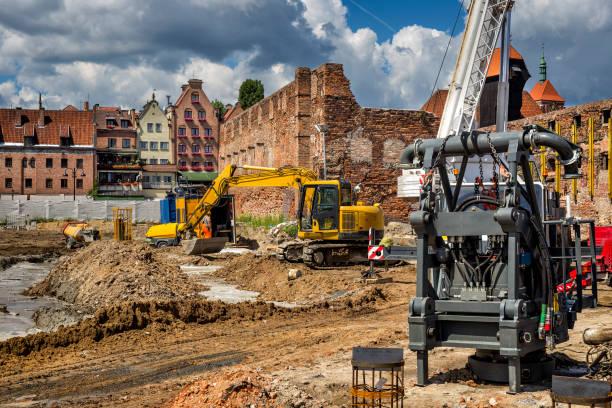
Thailand’s construction sector depends heavily on reliable machinery for excavation, material handling, road development, site preparation, and large-scale infrastructure activities. According to a Vyansa Intelligence report, the Thailand construction equipment market was valued at USD 905 Million in 2025 and is projected to reach USD 1.24 Billion by 2032, registering a CAGR of 4.6% during 2026-2032. The direction of the sector reflects the continuing importance of construction machinery in supporting projects that require efficient movement of materials, ground preparation, lifting, and road-building capabilities.
Equipment Access Is Closely Linked to Project Requirements
Construction projects rarely depend on one type of machine throughout their entire lifecycle. Early-stage site preparation can require excavation and earthmoving machinery, while later phases may depend on lifting, material handling, road-building, or power equipment.
This creates a strong need for contractors to select machinery according to specific project requirements. Equipment capability, operating conditions, maintenance needs, fuel considerations, and availability can all influence procurement decisions.
In this report, construction equipment is viewed as an important operational resource supporting multiple stages of project execution. Contractors need machinery that can perform reliably while fitting the schedule and technical requirements of individual projects.
Infrastructure Development Supports Machinery Demand
Infrastructure remains an important area for construction equipment utilization. Road construction, highway development, transportation facilities, utilities, industrial projects, and other civil engineering activities require machinery capable of handling demanding site conditions.
Road and infrastructure work can involve excavation, grading, compaction, material movement, lifting, and surface preparation. The variety of these activities creates requirements for different categories of construction equipment rather than a single standardized machine type.
According to this industry report, equipment demand is closely connected with the practical needs of construction execution. Contractors must consider not only the initial acquisition of machinery but also how effectively equipment can be deployed throughout a project.
Earthmoving Machinery Supports Early Construction Activities
Earthmoving equipment plays an essential role in preparing construction sites. Excavators, loaders, bulldozers, motor graders, crawler loaders, trenchers, and dump trucks can be used across excavation, grading, material handling, and ground preparation activities.
The importance of these machines comes from their position within the construction sequence. Many projects cannot progress toward structural or finishing activities until basic site preparation and earthmoving work has been completed.
A Forestry machinery market analysis provides a useful comparative perspective because forestry operations also depend on equipment that can perform under demanding field conditions. Although construction and forestry have different applications, both require careful equipment selection based on terrain, workload, reliability, and operating requirements.
Roads and Highways Create Diverse Equipment Requirements
Road construction requires a combination of machinery across different project stages. Excavators and bulldozers can support initial earthwork, while graders and rollers contribute to ground preparation and compaction. Additional equipment can then support paving, lifting, material movement, and related construction activities.
This variety creates opportunities for equipment suppliers and rental providers to support contractors with broader machinery portfolios. Businesses capable of providing appropriate equipment for different project phases can become more valuable to customers managing complex construction schedules.
The Forestry machinery industry report perspective also reinforces the importance of equipment versatility. Machinery must be matched with the task rather than selected solely on general availability.
Efficiency Is Becoming More Important in Equipment Selection
Contractors increasingly need to consider the efficiency of their equipment operations. Machinery that is poorly matched to a project can contribute to unnecessary downtime, inefficient resource utilization, maintenance interruptions, and scheduling difficulties.
Equipment selection therefore involves more than technical specifications. Contractors may also evaluate machine condition, ease of operation, maintenance support, replacement availability, and suitability for the intended working environment.
Latest market analysis should consequently examine construction equipment from an operational perspective. The commercial value of machinery is closely connected with how effectively it contributes to project execution.
Safety and Equipment Management Remain Essential
Heavy construction machinery operates around workers, vehicles, materials, and other equipment. Responsible operation therefore requires attention to equipment condition, operator practices, inspection procedures, and site-level safety management.
Thailand’s Department of Labour Protection and Welfare provides dedicated construction safety resources covering construction machinery and safe crane operation, highlighting the importance of safety practices when machinery is used on construction sites.
From an Industry analysis perspective, equipment safety should remain part of broader machinery evaluation. Proper maintenance and responsible operation can help contractors manage operational risks while supporting more predictable project execution.
Technology Can Improve Equipment Utilization
Technology is creating additional possibilities for equipment management. Digital monitoring, maintenance scheduling, equipment tracking, and other management tools can help contractors and equipment providers gain better visibility into machinery usage.
Improved information can support maintenance planning and help identify potential equipment issues before they create significant disruption. It can also help businesses understand how machinery is being utilized across different projects.
A Market research report assessing the sector therefore needs to consider the wider equipment ecosystem, including machinery capability, service support, maintenance, operational efficiency, and technology-enabled management.
Sustainability Influences Equipment Decisions
Environmental considerations are also becoming relevant to construction equipment selection. Contractors may increasingly evaluate equipment based on fuel efficiency, operating practices, maintenance condition, and suitability for projects where environmental performance is an important consideration.
This can encourage equipment providers to maintain fleets that respond to changing customer expectations. It can also create opportunities for machinery that offers improved efficiency without compromising the performance required for demanding construction applications.
Detailed market insight requires attention to how these operational considerations influence purchasing and equipment deployment decisions.
Safety Standards Strengthen Equipment Management
Equipment users and suppliers must also consider applicable technical requirements. Thailand’s industrial standards system includes machinery-related safety requirements designed around safe operation and risk reduction.
For construction companies, this reinforces the importance of integrating equipment inspection, maintenance, operator training, and safe-use procedures into project planning.
According to this forestry machinery industry report, the same principle can be observed across equipment-intensive industries. Machinery performance is only one part of its overall value. Reliability, safety, maintenance, and suitability for operating conditions are equally important considerations.
Looking Ahead
Thailand’s construction equipment sector is supported by the continuing need for machinery across infrastructure, building, industrial, and civil engineering activities. Contractors require dependable equipment that can adapt to different project stages while supporting efficient execution.
Forestry machinery market analysis can provide another perspective on the importance of machinery reliability and task-specific deployment, even though the applications differ. The broader Forestry machinery industry report framework similarly emphasizes the relationship between equipment capability and operating requirements.
As contractors become more focused on equipment efficiency, safety, maintenance, and utilization, machinery suppliers and rental providers will need to provide more than basic equipment access. Their ability to support customers with dependable machines and responsive service can become an increasingly important part of the construction equipment ecosystem.

 English
 Arabic
 Spanish
 Portuguese
 Deutsch
 Turkish
 Dutch
 Italiano
 Russian
 Romaian
 Portuguese (Brazil)
 Greek
