


Advanced Optical Products for Growing Brands
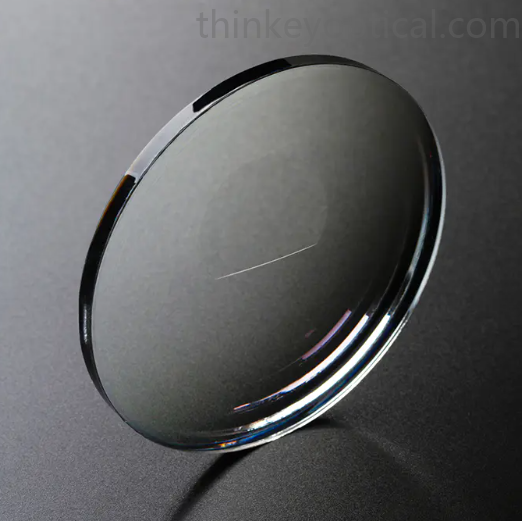
Optical product development increasingly focuses on combining useful features within a single lens design. Consumers may use the same pair of glasses in indoor workspaces, outdoor environments, and other settings with different lighting conditions. Blue Light Blocking Photochromic lenses combine two distinct technologies: selective blue-light filtering and photochromic response to ultraviolet exposure. Understanding how these functions work together helps eyewear brands and distributors assess product suitability for their target markets.
Blue-light filtering refers to the selective reduction of certain wavelengths within the blue region of visible light. Depending on the lens design, this function may be achieved through the lens material, incorporated filtering components, or a surface treatment. The filtering range and degree vary between products. For this reason, buyers should request technical documentation or relevant transmission data to understand the actual characteristics of a specific lens.
Photochromic technology operates through a different mechanism. Photochromic components respond to ultraviolet radiation, causing the lens to become darker under suitable exposure conditions. When UV exposure decreases, the lens gradually returns toward a lighter state. The transition behavior can vary with temperature, UV intensity, lens formulation, and environmental conditions. Some vehicle windshields block a portion of UV radiation, which may affect the darkening response inside a car.
Integrating these technologies requires careful product development. The filtering components, photochromic system, and lens substrate must be compatible with one another. Surface treatments may also influence the finished appearance and processing requirements. Manufacturers need to evaluate these factors to maintain the intended optical characteristics while achieving a consistent product finish. Buyers should clarify the expected functions and appearance before approving a design.
Material selection affects both manufacturing and application. Resin lenses are widely used in prescription and non-prescription eyewear, offering flexibility across different optical designs and coating combinations. Polycarbonate may be considered when lightweight construction and impact resistance are important. However, the available combinations depend on the manufacturer's production capabilities and the technical requirements of the product.
For eyewear brands, visual appearance is an important part of product positioning. Buyers may need to compare indoor transparency, outdoor color changes, residual tint, and surface reflections. Sample evaluation under different lighting conditions provides a practical way to understand how a lens behaves in everyday environments. It is also useful to confirm whether the selected functions can be maintained across different prescriptions and lens designs.
Quality management should address each feature separately as well as the finished product. Inspection may include optical power verification, surface examination, coating appearance, tint consistency, and photochromic response under controlled conditions. For blue-light filtering, spectral transmission data can provide a clearer basis for evaluating the filtering characteristics. Establishing acceptance criteria before bulk production helps buyers and manufacturers maintain consistent expectations.
Customization allows wholesalers and optical retailers to develop products for different customer groups. Depending on availability, buyers may discuss lens material, prescription range, refractive index, photochromic color, coating options, dimensions, and packaging. Private-label or OEM services may also be considered for suitable projects. Confirming technical details at the beginning of the sourcing process can reduce sampling revisions and improve production planning.
When evaluating Blue Light Blocking Photochromic lenses, businesses should look beyond the combination of functions stated in the product name. Technical documentation, material compatibility, sample performance, manufacturing consistency, and supplier communication all matter. Thinkey Optical provides optical product information and customized sourcing support for professional buyers. Visit https://www.thinkeyoptical.com to explore available solutions and discuss product requirements.

 English
 Arabic
 French
 Spanish
 Portuguese
 Deutsch
 Turkish
 Dutch
 Italiano
 Romaian
 Portuguese (Brazil)
 Greek
