


What Are the Most Common Roof Problems After a Texas Storm?
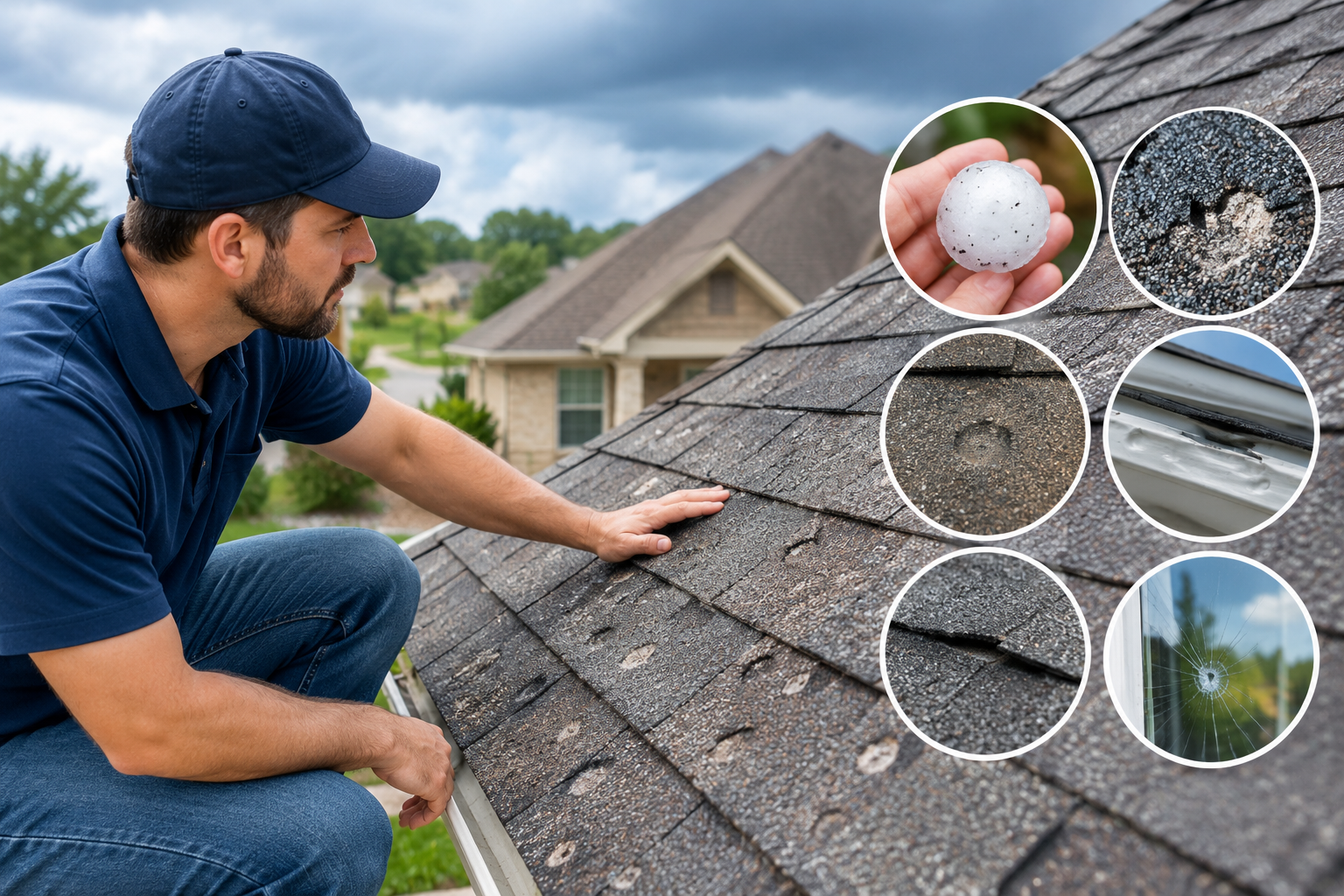
Lifted or missing shingles, hail bruising, cracked vent boots and loose flashing, gutter damage, cracked decking from falling limbs, and wet insulation in the attic. Many of them can't be seen from the ground.
It's November 11, and hurricane season has less than three weeks left. If a storm has already rolled through Katy this year, your roof probably took something from it. You may not know what yet. Storm damage rarely announces itself. It looks fine from the driveway, then turns up in January as a brown ceiling stain.
Most people treat roof maintenance as a spring chore. After a storm, it becomes a same-week job.
What a storm actually does to a roof
Wind
Wind lifts the tab of a shingle and breaks the seal strip underneath. The shingle may lie back down and look perfect. It isn't. The next gust finds the loose edge and the one after that takes it, so a roof that seemed fine on Tuesday is missing pieces by Friday.
Hail
Hail is the sneaky one. Stones about the size of a quarter can bruise standard shingles, and bigger ones crack them. Nothing drips. Nothing looks torn. The damage is a soft spot where the granules came off and the mat underneath weakened.
Limbs and debris
A heavy branch can crack the decking under the shingles, and a small one can scrape a gouge across a slope. Leaves and twigs pile into valleys and gutters and block the paths water uses to leave your roof.
Where to look first
-
Shingle pieces in the flower beds
-
Dented gutters and downspouts
-
Dings on the AC unit and attic fan housing
-
Fresh limbs or scrapes near the roof edge
The six problems we see most
1. Lifted and missing shingles
Lifted shingles are the quickest to spot and the quickest to cause trouble. Water slips under the loose edge and soaks the underlayment. If you see bare patches or a row of shingles that look wavy, mark the spot with a photo.
2. Hail bruising and granule loss
Look in the gutters and at the bottom of the downspouts. A thick layer of sandy granules after a storm is a sign that hail knocked them loose. The shingle below is now exposed to sun and water, and it ages faster than the shingles beside it. Our page on hail damage roof repair explains what a bruised shingle looks like up close. The Insurance Institute for Business and Home Safety also publishes research on how hail affects roofing materials.
3. Cracked vent boots and loose flashing
The rubber collars around plumbing vents and the metal flashing around chimneys and skylights take a beating in Texas sun, and a storm finishes off the weak ones. These are common leak points, and also cheap ones to fix. Resealing a loose flashing edge or swapping a vent boot is about an hour of roof maintenance for a pro, and it keeps water out of the attic.
4. Gutter and fascia damage
Gutters are soft metal, so they dent easily and pull away from the fascia under the weight of debris or water. A sagging gutter holds water against the roof edge, and wet fascia rots. Watch for gaps between the gutter and the board behind it.
5. Cracked decking from falling limbs
This one hides. A limb strikes the roof, the shingles bounce back, and the plywood underneath cracks. You might find it by a dip in the roofline, or by a soft spot you feel from the attic side. Anyone who suspects a limb strike should have the decking checked before the next rain.
6. Wet insulation and attic leaks
Take a flashlight into the attic on a dry day. Stains on the wood deck, damp insulation and a musty smell all mean water got in. A single drip from a vent boot is a small roof leak repair. Several stains in different spots, or sagging insulation, point to a bigger problem.
What to do in the first 48 hours
Stay off the roof
Wet shingles are slippery, and damaged ones can give way under a foot. Use binoculars from the yard and a flashlight in the attic. Any roof work after a storm should be done by someone with the right fall protection.
Document everything
Take dated photos of every dent, every shingle piece in the yard and every stain inside. Write down the storm date, since your insurer will ask. Photos taken today count for more than a description given later.
Cover it, don't fix it
A tarp is a stopgap, not a fix. It keeps rain out for a few days while you arrange proper roof leak repair. A bucket under an active drip and a few towels do the same job inside. Skip roof tar and caulk from the hardware store. They hide the real gap and make the later repair harder.
Insurance timing and storm chasers
The claim window
Many Texas homeowners policies give you about a year from the storm date to file a claim, and some give less. Read your own. Wind and hail deductibles are often a percentage of your home's insured value rather than a flat dollar amount, which can change whether a claim is worth filing. Insurers also tend to treat wear and routine roof maintenance differently from sudden storm damage. The Texas Department of Insurance publishes homeowner guidance, and our guide to the roof insurance claim process covers the order of steps.
Who knocks on your door
After a big storm, strangers show up offering free inspections. Some are honest. Some are out-of-state crews who collect deposits and vanish. Texas doesn't license roofers at the state level, so ask for a certificate of insurance and local references from anyone offering roof leak repair or replacement. Never sign a contract before you've seen photos of the damage. Anyone who offers to waive or cover your deductible is breaking Texas law, so thank them and close the door.
If water is already coming in, our roof leak repair page explains what a visit involves, and a roof inspection with photos can pin down damage you can't see.
Conclusion
Walk around your house today while it's dry and take photos of the roof from every side of the yard. Dated "before" pictures beat any description you give an adjuster later. Regular roof maintenance won't stop a hailstorm, but it makes the next one easier to sort out, since you'll know what was already worn and what the storm added. If you'd like someone to look it over, call 346-733-8558 and ask for a free inspection. Whether a borderline hail claim is worth filing when your deductible is high, we can't answer for you. It depends on your policy, your roof's age and how much damage turns up.
Frequently asked questions
What is the most common roof problem after a Texas storm?
Lifted or missing shingles, followed closely by hail bruising. Wind breaks the seal on shingle tabs, and hail knocks off granules and weakens the shingle underneath without leaving a hole.
How soon should I get my roof checked after a storm?
Within a few weeks. Hail damage often doesn't leak right away, and insurance claim deadlines run from the storm date, so waiting costs you evidence and time.
Can I tell if I have hail damage from the ground?
Sometimes. Dented gutters, dings on the AC unit and shingle granules in the downspouts are good clues. A full answer needs someone up close on the roof, since bruising is hard to see from far away.
Is it safe to put a tarp on my roof myself?
We'd say no. Wet, damaged roofs are dangerous to walk on. A professional can place a tarp safely, and inside the house, a bucket and towels will handle an active drip.
Will insurance pay for storm damage to my roof?
Often, for sudden damage like hail and wind, though it depends on your policy, your deductible and the age of the roof. Read your policy, document the damage and file within the deadline.

 English
 Arabic
 French
 Spanish
 Portuguese
 Deutsch
 Turkish
 Dutch
 Italiano
 Russian
 Romaian
 Portuguese (Brazil)
