


How to Manage ACT Test Anxiety Without Losing Time on Questions You Already Know
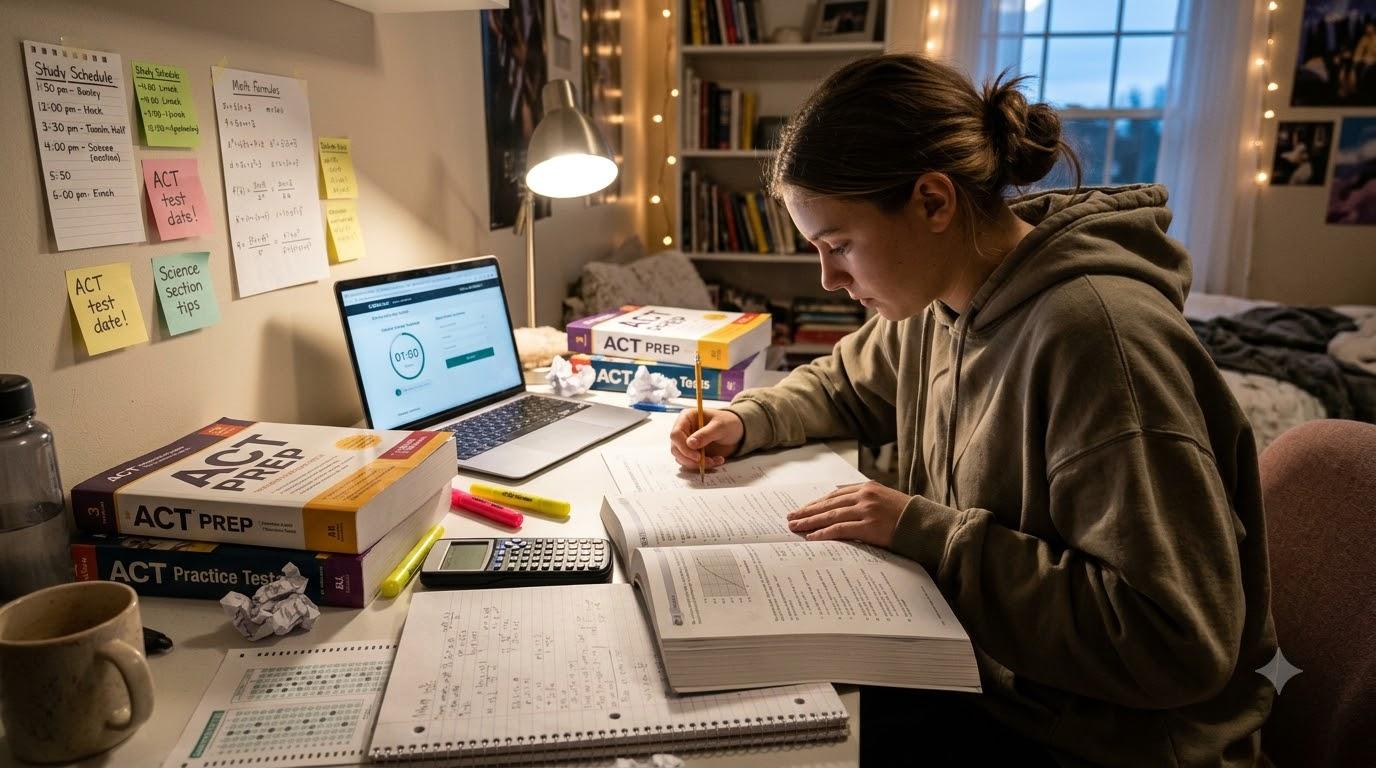
Some students perform well during practice but struggle when they sit for the actual ACT. They may suddenly forget familiar concepts, spend too long checking answers or become distracted by the number of questions remaining.
This does not always mean that they lack subject knowledge. Sometimes, pressure changes how they approach the test. A student who normally solves a question in one minute may spend three minutes doubting an answer during the examination.
Good act preparation strategies for managing test anxiety and maintaining concentration should therefore address both academic readiness and exam behaviour. Students need a clear approach for handling difficult questions, managing time and recovering when they lose focus.
Why test anxiety affects performance
Test anxiety can influence concentration, decision-making and confidence. When students become overly concerned about their score, they may focus more on the consequences of making a mistake than on solving the question in front of them.
Several behaviours can make the situation worse:
-
Re-reading the same question repeatedly without making progress.
-
Spending too much time on one difficult problem.
-
Changing correct answers without a clear reason.
-
Comparing their progress with other students.
-
Panicking after noticing that time is running short.
-
Losing concentration after making an early mistake.
These behaviours can reduce the time available for questions that the student could answer correctly.
The objective is not to eliminate every feeling of nervousness. It is to develop a routine that helps students continue working effectively even when they feel pressure.
Build a time-management strategy before test day
Students should not wait until the examination to decide how they will manage time.
The ACT format, timing and section arrangements can change. Always check the official test information for the specific test date and format you are taking. Then practise using the relevant timing conditions.
1. Establish a realistic pace
During practice, record how long you spend on different question types.
Identify whether you are losing time because of:
-
Slow reading.
-
Repeated calculations.
-
Difficulty understanding question wording.
-
Overchecking answers.
-
Spending too long on unfamiliar questions.
The aim is to understand your personal timing pattern rather than blindly following another student's strategy.
2. Use a question-skipping rule
A difficult question should not prevent you from answering easier ones.
If you have made a reasonable attempt but are not progressing, mark the question if the test interface or format permits and move on. Return to it after completing other questions, while ensuring that you follow the test's current navigation and marking rules.
This approach protects time and reduces the pressure created by one unfamiliar problem.
3. Avoid repeatedly checking every answer
Checking can be useful, but excessive checking wastes time.
Review an answer when you have identified a specific reason to doubt it. For example, you may have noticed a calculation error or misread a condition.
Do not change an answer simply because another option suddenly looks more attractive.
How to recover when you feel anxious during the test
A short recovery routine can help you return your attention to the task.
Step 1: Pause briefly. Stop rushing through the question for a moment.
Step 2: Relax your breathing. Take a few steady breaths without allowing the pause to become lengthy.
Step 3: Read the question again. Focus on what it actually asks rather than thinking about the previous question.
Step 4: Identify the next action. Decide whether to calculate, eliminate options, interpret a passage or move on.
Step 5: Continue. Once you have made the decision, return to the examination rather than repeatedly evaluating your performance.
This routine is simple, but practising it beforehand makes it easier to use under pressure.
Use mock tests to practise exam behaviour
A mock test should do more than measure how many questions a student gets correct. It should also reveal how the student behaves when time is limited.
After each practice test, review:
|
Area |
What to examine |
|
Timing |
Which questions took longer than expected? |
|
Concentration |
When did attention begin to drop? |
|
Decision-making |
Were difficult questions skipped appropriately? |
|
Accuracy |
Were mistakes caused by knowledge gaps or careless reading? |
|
Answer changes |
Were changes based on evidence or uncertainty? |
|
Recovery |
How quickly did the student return to work after a difficult question? |
This review helps students distinguish between academic weaknesses and exam-management problems.
Example 1: When one difficult question affects the whole section
Imagine a student encounters an unfamiliar mathematics problem early in a timed section.
The student spends several minutes trying different methods. As time passes, they become increasingly worried and begin rushing through the remaining questions.
A better approach would be to make a reasonable attempt, mark the question for review if permitted and continue. The student can return to it after answering questions they understand more confidently.
The lesson is that one difficult question should not determine the performance of an entire section.
Example 2: When overchecking reduces accuracy
A student completes a reading section with a little time remaining. Instead of reviewing only uncertain questions, the student starts changing several answers because they are worried about making mistakes.
Some of the original answers were correct, but the student replaces them without finding evidence in the passage.
A more effective review process would be to return to questions where there is a specific uncertainty, locate the relevant evidence and change an answer only when the reasoning supports it.
Confidence should come from evidence, not from repeatedly looking at the same options.
How to prepare mentally during the final week
The final week should reinforce familiar routines rather than introduce a completely new study system.
A practical schedule could look like this:
-
Seven days before: Complete a timed practice section and review the mistakes.
-
Six days before: Revise the topics where errors are most frequent.
-
Five days before: Practise moving past difficult questions without losing concentration.
-
Four days before: Complete another timed section using the intended test strategy.
-
Three days before: Review common errors and practise a short recovery routine.
-
Two days before: Check test-day arrangements and review essential material.
-
One day before: Avoid an exhausting study session and prepare the required items.
Students should also protect their sleep routine. Staying up late to complete additional practice can leave them tired on test day.
Illustrative case study: Improving performance through better decisions
A hypothetical student regularly achieves reasonable scores in untimed practice but performs less consistently in full-length tests.
During review, the student discovers that difficult questions cause a chain reaction. They spend too long on one problem, become anxious about time and rush through later questions.
The student begins using a consistent rule: attempt the question, recognise when progress has stopped, move on when appropriate and return later if time allows.
They also review answer changes after every mock test. Over several practice sessions, the student becomes more aware of unnecessary checking and improves their ability to recover after a difficult question.
The change does not guarantee a particular score. It gives the student a more controlled way to use the time available.
How structured ACT support can help
Students sometimes need help identifying whether their main difficulty is content knowledge, timing, question interpretation or test anxiety.
Structured act preparation support can help students analyse practice results, identify recurring weaknesses and develop a realistic examination strategy.
Useful preparation should include timed practice and detailed review, not simply repeated testing. Students should understand why an answer is correct, why an alternative is incorrect and how to approach a similar question next time.
The Princeton Review Singapore homepage provides access to its broader test-preparation and education information.
Conclusion
Test anxiety can make familiar questions feel more difficult, but students can reduce its effect by practising a consistent examination routine.
Learn to manage time, move past questions that are taking too long, review answers using evidence and recover quickly after losing concentration. These habits help students focus on the questions they can solve rather than allowing one difficult moment to affect the entire test.
FAQs
1. Can test anxiety affect ACT performance?
Yes. Anxiety can interfere with concentration, timing and decision-making. Students may spend too long on difficult questions or repeatedly change answers without sufficient reason.
2. Should I skip difficult ACT questions?
If a question is taking too long and you are not making progress, moving on can protect time for other questions. Follow the navigation and answer-marking rules of your specific test format.
3. How many mock tests should I take?
There is no universal number. The important point is to complete enough timed practice to understand the test format, identify weaknesses and improve your approach without becoming exhausted.
4. Should I change an answer when I feel uncertain?
Change it when you identify a specific error or stronger evidence for another option. Avoid changing answers simply because you feel nervous.
5. What should I do if I panic during the ACT?
Pause briefly, take steady breaths, read the current question carefully and decide on the next action. Focus on the task in front of you rather than worrying about earlier questions.

 English
 French
 Spanish
 Portuguese
 Deutsch
 Turkish
 Dutch
 Italiano
 Russian
 Romaian
 Portuguese (Brazil)
 Greek
