


Frame Steel, Cast Parts and Why Rigidity Shows Up in Boxes
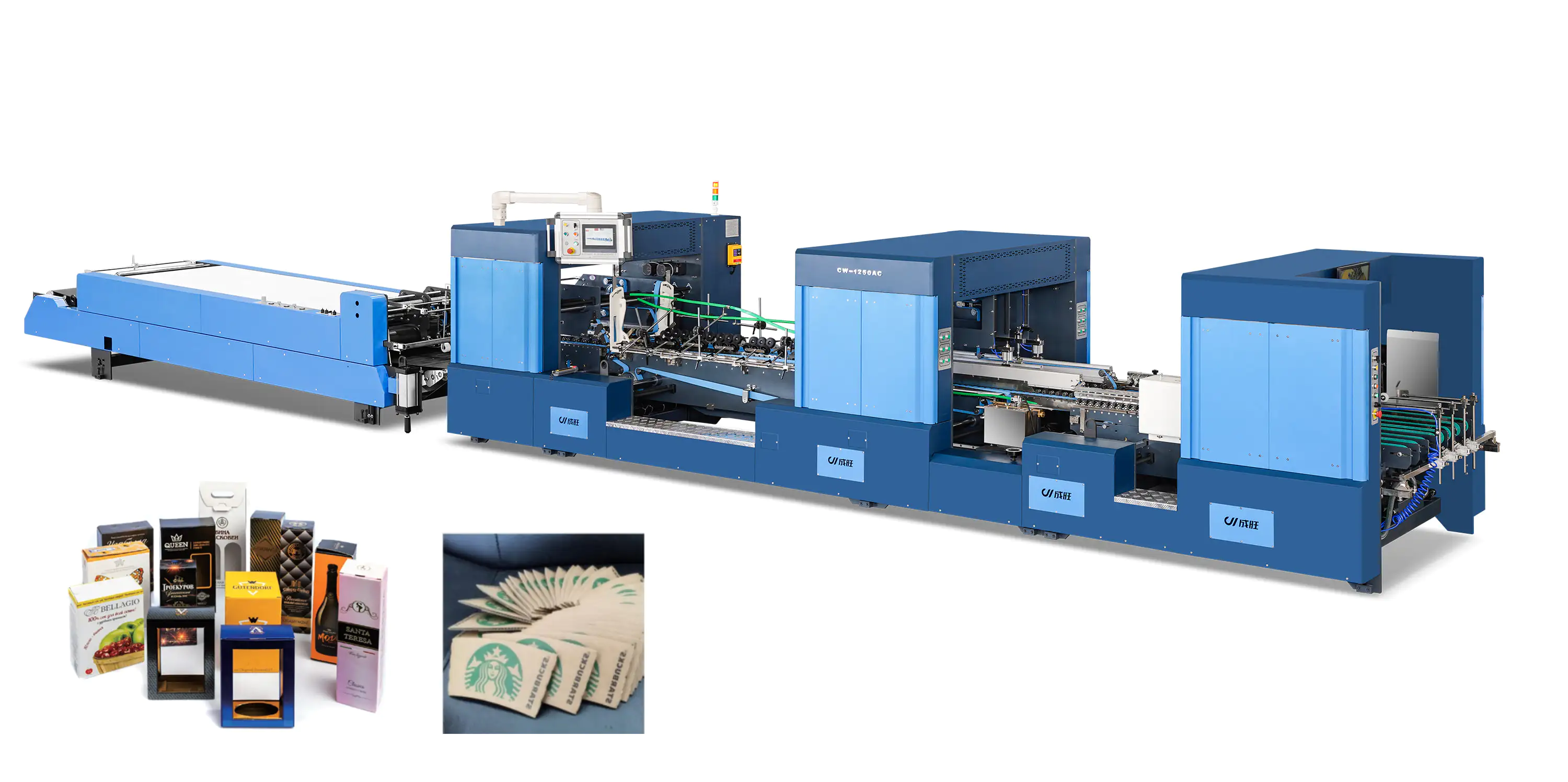
When I toured a corrugated plant last winter, the manager rapped his knuckles on the side frame of his line and said the sound told him everything, which got me wondering what really separates a solid Automatic Gluing Machine from one that starts to rattle after a couple of busy seasons?
It begins with the frame. Thick steel plate, cut cleanly and welded with continuous seams, gives the whole line a rigid backbone, and that rigidity matters more than most buyers expect. A thin or poorly braced frame flexes slightly under load, and the flex shows up downstream as folds that drift out of square. Lean on a well built side wall while the line is running and you feel a low, steady hum rather than a buzzing shake.
Welds are worth a look with a flashlight. Clean, even beads with no pinholes or spatter usually mean the fabricator took time over stress relief, and that the frame has been allowed to settle before machining. I once saw a cheaper unit where a cracked weld near a motor mount had been quietly ground flat and repainted, and the owner only discovered it when vibration began loosening nearby bolts.
Cast iron appears in the heavier components, such as gear housings, roller brackets and some bearing seats, because it damps vibration far better than plain steel. Pick up a cast bracket and it feels almost surprisingly dense, with a fine grain on the machined faces. Those machined faces are what keep shafts parallel, and parallel shafts keep belts tracking true for years.
Shafts and rollers carry a surprising amount of the machine's reputation. Hardened and ground steel shafts resist the tiny grooves that develop where bearings sit, while rollers with a precise outer finish carry the carton without leaving marks. Rubber or polyurethane coatings on drive rollers need to be firm enough to grip yet soft enough to avoid crushing board, and good ones keep their texture long after cheaper coatings have glazed over and begun to slip.
The belts that carry cartons through the folding and compression sections wear in a predictable way. Quality belts use a reinforced core with a durable surface layer, so they stay flat and stretch very little, and you can run a fingertip across the working face and feel a consistent, slightly tacky grain. Worn belts turn glossy and develop thin cracks along the edges, which is usually the sign that replacement is due.
Bearings deserve more credit than they get. Sealed, branded units inside well machined housings keep dust and adhesive vapor out, and they tend to run for a long time before developing any play. When a machine begins to whine at a certain speed, a worn bearing is frequently the cause, and the quality of the original part often decides whether that day arrives after a few years or a few months.
Surface treatment is the part people notice first and trust least, yet it has a practical purpose. A baked powder coat or a thick industrial paint resists the oil, dust and cleaning solvents of a busy packaging floor, whereas thin paint chips at corners and lets rust creep under the edge. Plated fasteners and stainless covers around the glue area hold up better where moisture and adhesive are constant companions.
Glue contact parts form their own small category. Nozzle bodies, tanks and reservoirs that touch adhesive are best made from materials that clean easily and do not react with the glue, because stubborn residue turns into a crust that interferes with flow. I like to run a thumbnail along these surfaces, and a smooth, well finished part releases dried glue with a gentle scrape instead of clinging in stubborn flakes.
Covers and guards complete the picture, and they say a lot about the maker's attention to detail. Sturdy hinges, tight fitting panels and edges rolled smooth rather than left sharp point to a team that thinks about daily use, not only the sales photo. If the doors sag or rattle on a showroom machine, imagine how they will behave after years of opening and closing.
For buyers who want to compare frame construction, component choices and finishing details across different models, the catalog at https://www.cenwanmachine.com is a sensible place to begin, and I would ask the supplier directly about steel thickness, bearing brands and coating methods. A well built Automatic Gluing Machine rewards that homework with steady output, quiet running and far fewer unplanned stops over a very long service life.

 English
 Arabic
 French
 Spanish
 Portuguese
 Deutsch
 Turkish
 Dutch
 Italiano
 Russian
 Romaian
 Portuguese (Brazil)
