


Advantages of Stainless Steel Tubing in Liquid Cooling Systems
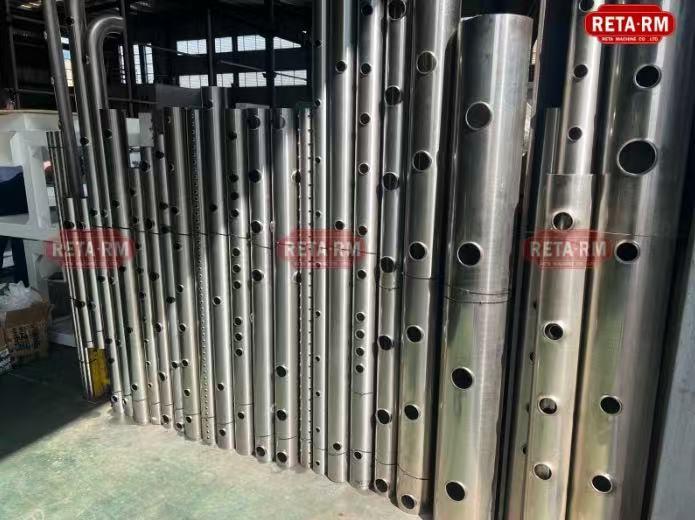
As high-density computing, battery thermal management and high-power electronics rapidly develop, liquid cooling has become the mainstream thermal control solution. The selection of tubing materials directly determines the stability, service life and maintenance cost of the whole cooling loop. Among various options, stainless steel tubing, especially grades 304 and 316L, stands out with comprehensive advantages and is widely adopted in modern liquid cooling projects.
The most prominent merit is outstanding corrosion resistance. Stainless steel forms a thin, self-healing chromium oxide passivation layer on its surface when exposed to oxygen. This protective film resists erosion from deionized water, ethylene glycol coolant and other common working fluids. Unlike copper, it will not release metal ions to trigger galvanic corrosion when connected with dissimilar metals, and it avoids the pitting risk of aluminum tubes in complex chemical environments. It keeps the coolant clean and stable, reducing sediment, scaling and clogging inside the closed loop.
Stainless steel also delivers remarkable mechanical strength and pressure resistance. It can withstand higher operating pressure and vibration than copper, plastic and carbon steel tubes. Under long-term continuous operation, it maintains stable dimensional performance within a wide temperature range, lowering the risk of leakage caused by thermal expansion, mechanical impact or system pressure fluctuation. This reliability is critical for 24/7 running data centers and power battery cooling systems, where any leakage may lead to costly equipment damage.
Smooth inner surface and high cleanliness are another key strength. Electropolished stainless steel tubing has low surface roughness, which cuts fluid friction loss and helps maintain stable flow conditions. It hardly breeds microorganisms or adsorbs impurities, so the heat transfer performance will not decline quickly after years of operation. Though its raw thermal conductivity is lower than copper, the long-term stable heat transfer effect often surpasses copper tubing that suffers from fouling and corrosionUnited Ind....
In addition, stainless steel features long service life and good sustainability. It requires minimal maintenance, and can serve reliably for more than ten years under proper working conditions. It is fully recyclable, which helps reduce the overall lifecycle cost and environmental footprint. Compared with materials that need frequent replacement, it brings better economic benefits for large-scale liquid cooling infrastructure.
In summary, stainless steel tubing balances corrosion resistance, mechanical robustness, cleanliness and long-term stability. It is a dependable material choice for high-performance liquid cooling systems, supporting the trend of higher heat flux and stricter reliability requirements.

 English
 Arabic
 French
 Spanish
 Portuguese
 Turkish
 Dutch
 Italiano
 Russian
 Romaian
 Portuguese (Brazil)
 Greek
