


Dental Implants in Islamabad | Complete Patient Guide
Missing teeth can affect much more than the appearance of a smile. A gap may change how a person chews, speaks and distributes pressure when biting. Over time, tooth loss can also contribute to changes in the jawbone and the position of neighbouring teeth.
Dental implants offer one option for replacing missing teeth with a fixed restoration. They act as artificial tooth roots and support replacement teeth designed to function as part of the bite. However, successful treatment requires careful assessment, suitable bone support and consistent oral hygiene.
For anyone considering Dental Implants in islamabad, understanding the treatment process, available options and long-term responsibilities can make the decision easier.
What Are Dental Implants?
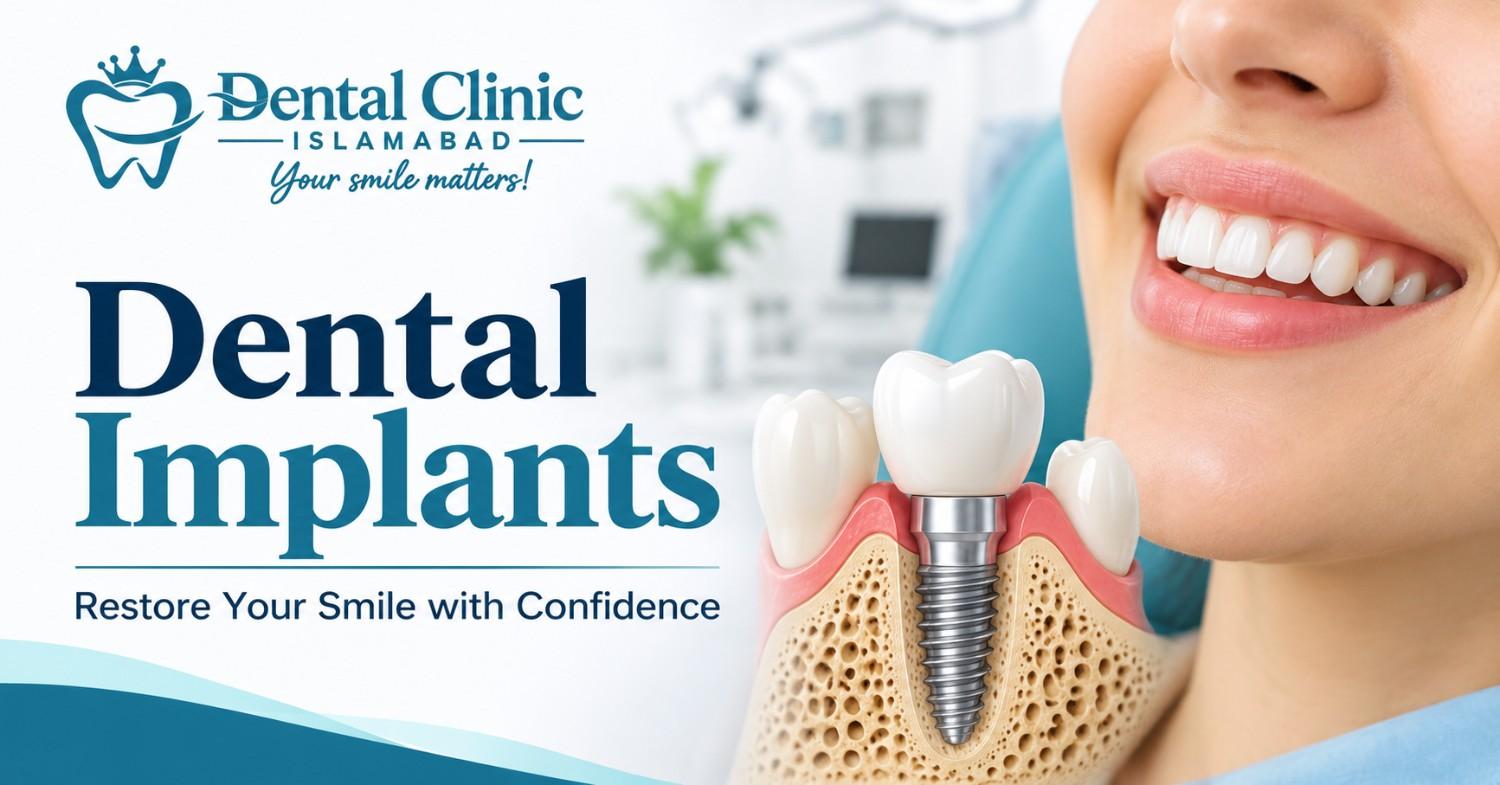
A dental implant is a small post, commonly made from titanium, that a dentist or implant surgeon places inside the jawbone to replace the root of a missing tooth. After placement, the surrounding bone gradually bonds with the implant through a process called osseointegration.
The completed restoration usually has three main components:
-
Implant fixture: The part placed inside the jawbone that acts as an artificial tooth root.
-
Abutment: A connector that joins the implant to the replacement tooth.
-
Dental crown: The visible part that restores the shape, appearance and chewing function of the missing tooth.
For patients missing several teeth, implants can also support bridges or dentures instead of individual crowns for every missing tooth.
Dental implants do not develop cavities like natural teeth, but the surrounding gums and bone still require proper care. Inflammation around an implant can damage the supporting tissues and affect its stability. <Cite refs={["turn706967search1","turn706967search2","turn706967search10"]}/>
When Might Someone Need a Dental Implant?
People lose teeth for different reasons. Some experience tooth loss following extensive decay, while others may need an extraction because of advanced gum disease, injury or a fractured tooth.
A dental implant may be considered when someone:
-
Has lost one or more permanent teeth.
-
Cannot comfortably use a conventional removable denture.
-
Wants a fixed replacement for a missing tooth.
-
Has difficulty chewing because of gaps in the dental arch.
-
Needs support for a bridge or implant-retained denture.
-
Has sufficient jawbone support or can undergo suitable preparatory treatment.
Replacing a missing tooth can help restore chewing function and support the appearance of the dental arch. An implant also transfers biting forces to the jawbone, which may help reduce the bone changes associated with tooth loss.
However, an implant is not automatically the best solution for every patient. A conventional bridge or removable denture may be more suitable depending on oral health, medical history, budget and personal preferences. <Cite refs={["turn706967search1","turn706967search2","turn706967search7"]}/>
Types of Dental Implant Treatments
The number of missing teeth and the condition of the jawbone influence the type of restoration a dentist recommends.
1. Single Tooth Implant
A single-tooth implant replaces one missing tooth without relying on the neighbouring natural teeth for support. The dentist places one implant in the jawbone and later attaches an individual crown.
This option may suit someone who has lost a single tooth because of an accident, severe decay or another dental problem. It can also help avoid preparing healthy neighbouring teeth for a conventional bridge.
2. Multiple Dental Implants
Patients missing several teeth may need more than one implant. Depending on the location and number of missing teeth, implants can support individual crowns or a connected dental bridge.
A dentist does not necessarily need to place one implant for every missing tooth. The treatment plan depends on the available bone, spacing, bite forces and the design of the final restoration.
3. Implant-Supported Bridge
An implant-supported bridge replaces several missing teeth using implants as anchors. The bridge connects multiple replacement teeth into one restoration.
This approach can be useful when several adjacent teeth are missing and a fixed solution is preferred. The number and placement of implants depend on the clinical examination and the forces expected during chewing.
4. Full-Arch Dental Implants
People who have lost most or all teeth in an upper or lower jaw may be candidates for a full-arch restoration. In selected cases, four or more implants support a fixed set of replacement teeth.
You may hear terms such as All-on-4 or All-on-6. These names describe treatment approaches that use different numbers of implants to support a full dental arch. The appropriate design depends on bone availability, bite conditions and the patient's overall oral health.
5. Implant-Supported Dentures
Some patients prefer a removable denture that attaches securely to dental implants. Special connectors help hold the denture in position while still allowing the patient to remove it for cleaning.
This option can provide greater stability than a conventional denture, particularly for people who experience slipping or movement during speaking and eating. <Cite refs={["turn706967search2","turn706967search10"]}/>
Who Is Suitable for Dental Implants?
A suitable candidate needs more than a gap where a tooth used to be. The dentist must assess the jawbone, gums, remaining teeth and general health before recommending surgery.
Important factors include:
Healthy gums: Active gum disease should receive treatment before implant placement. Inflammation around natural teeth can also affect the tissues that support an implant.
Adequate jawbone: The implant needs sufficient bone for stability. If the jawbone has become too thin or lost height, additional treatment may be necessary.
Good oral hygiene: Patients must be able to brush and clean around the implant regularly. Poor cleaning can lead to inflammation and bone loss.
General health: Certain medical conditions and medicines can influence healing. Diabetes, immune-related conditions and some treatments affecting bone health may require additional assessment.
Smoking habits: Smoking can interfere with healing and increase the risk of implant complications. Patients should discuss tobacco use honestly with their dentist.
Age alone does not determine suitability. The jaw must have completed its growth, and the overall clinical condition matters more than a patient's age in isolation. <Cite refs={["turn706967search1","turn706967search2","turn706967search7"]}/>
What Happens During Dental Implant Treatment?
Dental implant treatment usually involves several stages. Some patients may complete certain steps together, while others need additional healing periods or preparatory procedures.
Step 1: Consultation and Dental Examination
The process begins with a detailed examination. The dentist reviews the patient's dental history, missing teeth, gum condition, bite and general health.
Patients should mention existing medical conditions, allergies, smoking habits and all medicines or supplements they take. This information helps the dental team assess potential risks and plan treatment appropriately.
Step 2: X-Rays and 3D Imaging
Dental imaging helps the dentist examine the jawbone and the structures surrounding the proposed implant site. Depending on the case, the assessment may involve standard dental X-rays or a 3D CBCT scan.
These images help evaluate bone height, width and the position of important structures, such as nerves and the sinus cavities. The dentist uses this information to determine whether the available bone can support the planned implant.
Step 3: Treating Existing Dental Problems
Some patients need treatment before implant placement. This may include managing gum disease, treating infections, removing severely damaged teeth or addressing insufficient bone.
If the jawbone cannot support an implant in its current condition, the dentist may recommend bone grafting. This procedure adds bone or bone-substitute material to improve the foundation for future implant placement.
Bone grafting can extend the overall treatment period because the graft needs time to heal. <Cite refs={["turn706967search2","turn706967search3","turn706967search8"]}/>
Step 4: Implant Placement
The dentist places the implant into the prepared jawbone, usually under local anaesthesia. The procedure involves accessing the bone, preparing a space and positioning the implant according to the treatment plan.
Patients generally remain awake during treatment with the area numbed. The dentist may discuss other anaesthesia or sedation options when clinically appropriate.
After placement, the gum tissue is managed according to the surgical approach. Some patients receive a temporary replacement tooth, depending on implant stability and the location of the missing tooth.
Step 5: Healing and Osseointegration
Following implant placement, the jawbone gradually bonds with the implant surface. This process, known as osseointegration, creates the support needed for the final restoration.
Healing can take several months. The exact period depends on bone quality, implant location, general health and whether bone grafting was necessary.
Patients should avoid putting excessive pressure on the healing implant and follow the dentist's instructions about eating and oral hygiene.
Step 6: Abutment and Final Crown Placement
Once the implant has integrated sufficiently with the bone, the dentist connects the abutment if it has not already been placed.
The dental team then designs and fits the final crown, bridge or denture. The dentist checks its appearance, fit and contact with opposing teeth to ensure that the restoration works comfortably during biting and chewing.
The final restoration should suit the patient's dental arch rather than simply fill the visible gap. <Cite refs={["turn706967search2","turn706967search5","turn706967search8","turn706967search10"]}/>
How Long Do Dental Implants Take?
Dental implant treatment does not follow one fixed timeline. Some straightforward cases progress without additional procedures, while others require extractions, bone grafting or extended healing.
The main stages include:
| Treatment stage | What happens |
|---|---|
| Initial consultation | Examination, medical history and imaging |
| Preparatory treatment | Gum treatment, extraction or bone grafting if required |
| Implant placement | The implant is positioned inside the jawbone |
| Healing period | The bone gradually integrates with the implant |
| Final restoration | The crown, bridge or denture is attached |
Bone integration often takes a few months, but the full process may take longer when grafting or other procedures are needed. Patients should ask for an individual treatment schedule rather than relying on a general estimate. <Cite refs={["turn706967search2","turn706967search8","turn706967search10"]}/>
Is Dental Implant Surgery Painful?
The dentist uses local anaesthesia to numb the treatment area during implant placement. Patients may notice pressure or vibration, but the aim is to prevent pain during the procedure.
After surgery, some discomfort is expected. Common temporary effects include:
-
Mild pain around the implant site
-
Swelling of the gums or face
-
Minor bleeding
-
Bruising
-
Tenderness while eating
The dental team may recommend suitable pain relief and specific aftercare instructions. Patients should contact their dentist if pain or swelling becomes worse rather than gradually improving, or if they notice unusual discharge, fever or persistent bleeding. <Cite refs={["turn706967search2","turn706967search5","turn706967search7"]}/>
How to Care for Dental Implants After Treatment
A dental implant needs regular maintenance even after the final crown has been fitted. The artificial tooth itself does not decay, but plaque can collect around the implant and cause inflammation in the surrounding tissues.
Patients should:
-
Brush twice daily with a suitable toothbrush.
-
Clean between teeth and around the implant using recommended interdental tools.
-
Follow the dentist's instructions about flossing or using a water flosser.
-
Attend regular dental examinations and professional cleaning appointments.
-
Avoid using teeth to open packaging or bite extremely hard objects.
-
Discuss teeth grinding or clenching with the dentist.
-
Avoid smoking, which can affect the health of the supporting tissues.
A dentist may recommend specific cleaning tools depending on whether the patient has an individual crown, bridge or full-arch restoration.
Regular reviews help identify early signs of inflammation, changes in the bite or loosening of restoration components. <Cite refs={["turn706967search1","turn706967search2","turn706967search10"]}/>
Possible Risks and Complications
Dental implant treatment has a good record of success, but it remains a surgical procedure and carries potential risks. Patients should understand these before giving consent.
Possible complications include:
-
Infection around the implant site
-
Failure of the implant to integrate with the jawbone
-
Injury to nearby nerves or structures
-
Sinus complications involving implants in the upper jaw
-
Gum inflammation and loss of supporting bone
-
Loosening of screws or other restoration components
-
Difficulty cleaning certain implant-supported restorations
Smoking, untreated gum disease, poor oral hygiene and some medical conditions can increase the risk of complications. A detailed examination helps the dentist identify concerns and explain whether additional precautions are needed.
If an implant feels loose, becomes painful or develops persistent inflammation, patients should arrange a dental assessment promptly. <Cite refs={["turn706967search1","turn706967search2","turn706967search9","turn706967search10"]}/>
How to Choose a Dental Implant Dentist in Islamabad
Choosing an implant dentist involves more than comparing treatment prices. Implant placement and restoration require careful planning, surgical knowledge and an understanding of how the final teeth will function.
Before starting treatment, patients should consider the following:
Training and clinical experience: Ask about the dentist's qualifications, experience with implant cases and role in the surgical and restorative stages.
Diagnostic planning: The dentist should examine the mouth and use appropriate imaging before recommending implant placement.
Treatment options: A professional assessment should explain whether an individual implant, bridge, denture or another option is more appropriate.
Implant system information: Ask which implant brand and model the clinic plans to use. Keep the product details and any available implant documentation for future reference.
Transparent treatment plan: The estimate should explain what it includes, such as the implant fixture, abutment, crown, imaging, extraction, grafting and follow-up appointments where applicable.
Aftercare arrangements: Ask how the clinic monitors healing and what to do if pain, swelling or looseness develops after treatment.
Patients can discuss these points during a consultation at Dental Clinic Islamabad before deciding on a treatment plan.
Final Thoughts
Dental implants can provide a fixed way to replace missing teeth and restore important aspects of chewing and dental function. However, the outcome depends on suitable patient selection, careful implant placement, adequate healing and long-term maintenance.
Anyone considering treatment should begin with a thorough dental examination rather than choosing a procedure based only on price or advertised treatment timelines. A personalised assessment helps determine whether an implant is appropriate, whether bone grafting is necessary and which restoration will best suit the remaining teeth and bite.
With realistic expectations and consistent professional care, patients can make a more informed decision about restoring their smile and maintaining their oral health.

 English
 Arabic
 French
 Portuguese
 Deutsch
 Turkish
 Dutch
 Italiano
 Russian
 Romaian
 Portuguese (Brazil)
 Greek
