


Why Does the Rotary Cap Compression Moulding Machine Keep Production Moving?
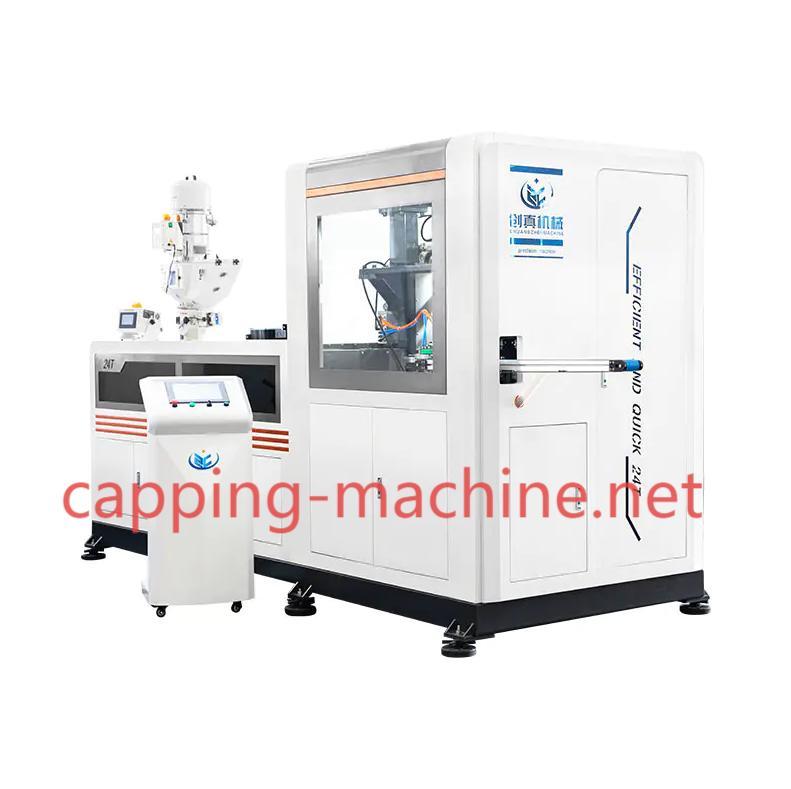
A Rotary Cap Compression Moulding Machine brings a distinctive production approach to plastic closure manufacturing by combining rotational movement with controlled compression and carefully coordinated molding operations. With an emphasis on practical equipment development, Capping-Machine focuses on machinery solutions that connect mechanical design, production organization, and the changing requirements of packaging manufacturers.
In modern packaging facilities, production equipment must do more than shape raw materials. It needs to support an organized workflow while maintaining suitable conditions throughout the manufacturing process. Rotary molding technology addresses this requirement through a rotating structure that allows different processing activities to take place as molds move through designated working positions.
The rotary arrangement creates a continuous production rhythm. Rather than depending entirely on a single stationary forming position, the equipment coordinates material feeding, mold preparation, compression, cooling, and product removal around a rotating system. This arrangement can help manufacturers organize production activities and make better use of the available working space.
Mechanical synchronization is central to this process. Every movement must correspond with the position of the mold and the requirements of the current operation. Rotational speed, compression pressure, feeding accuracy, and mold positioning all influence how the system performs. Proper coordination helps maintain a stable workflow and reduces unnecessary interruptions caused by inconsistent mechanical movements.
Mold configuration also plays an important role in determining the final product characteristics. Plastic closures come in various shapes and functional designs, depending on the containers and industries they serve. The mold must accommodate the intended external profile, internal threads, sealing surfaces, and other structural details. Appropriate mold engineering allows manufacturers to translate packaging concepts into practical products.
Material preparation requires similar attention. Different plastic materials have distinct processing characteristics, which influence their response to heat and compression. Consistent feeding and suitable material distribution help create favorable forming conditions. Manufacturers should consider the relationship between raw material properties, mold geometry, and processing parameters when arranging their production systems.
Thermal management is another essential part of rotary operations. Heating conditions influence material flow and shaping behavior, while cooling helps the molded closure retain its intended structure. Since molds move through different working positions, thermal conditions need to remain coordinated with the overall production sequence. Proper system design can support consistent processing and reduce avoidable variations in finished products.
Operator accessibility should also influence equipment selection. Production personnel need convenient access to inspection areas, control interfaces, material supply sections, and maintenance components. A thoughtfully arranged machine structure makes daily supervision more manageable and helps create a safer, more organized working environment.
Automation can further improve the coordination of rotary manufacturing operations. Integrated controls allow different mechanical functions to work according to an established sequence. Depending on the equipment configuration, automated systems may assist with feeding, compression, mold movement, and finished product collection. This can reduce repetitive manual handling and allow operators to focus on process monitoring and quality management.
Maintenance planning is equally important for long-term operation. Rotating components, transmission mechanisms, heating elements, and mold surfaces require regular attention. Easy access to key components can simplify inspection, cleaning, lubrication, and replacement procedures. Manufacturers should evaluate these practical details alongside production capabilities when selecting equipment.
The value of rotary technology ultimately lies in how its mechanical structure supports the manufacturer's production objectives. Different factory layouts, closure designs, material choices, and workflow requirements call for thoughtful equipment configuration. Understanding these relationships helps businesses make informed decisions and prepare their facilities for changing packaging demands.
Every rotating movement carries a new production possibility. What could that movement mean for your next packaging project? Visit https://www.capping-machine.net/product/ , take a closer look at the machinery solutions, and see how a different approach to molding could reshape the way your factory works.

 English
 French
 Spanish
 Portuguese
 Deutsch
 Turkish
 Dutch
 Italiano
 Russian
 Romaian
 Portuguese (Brazil)
 Greek
