


bank statement loans
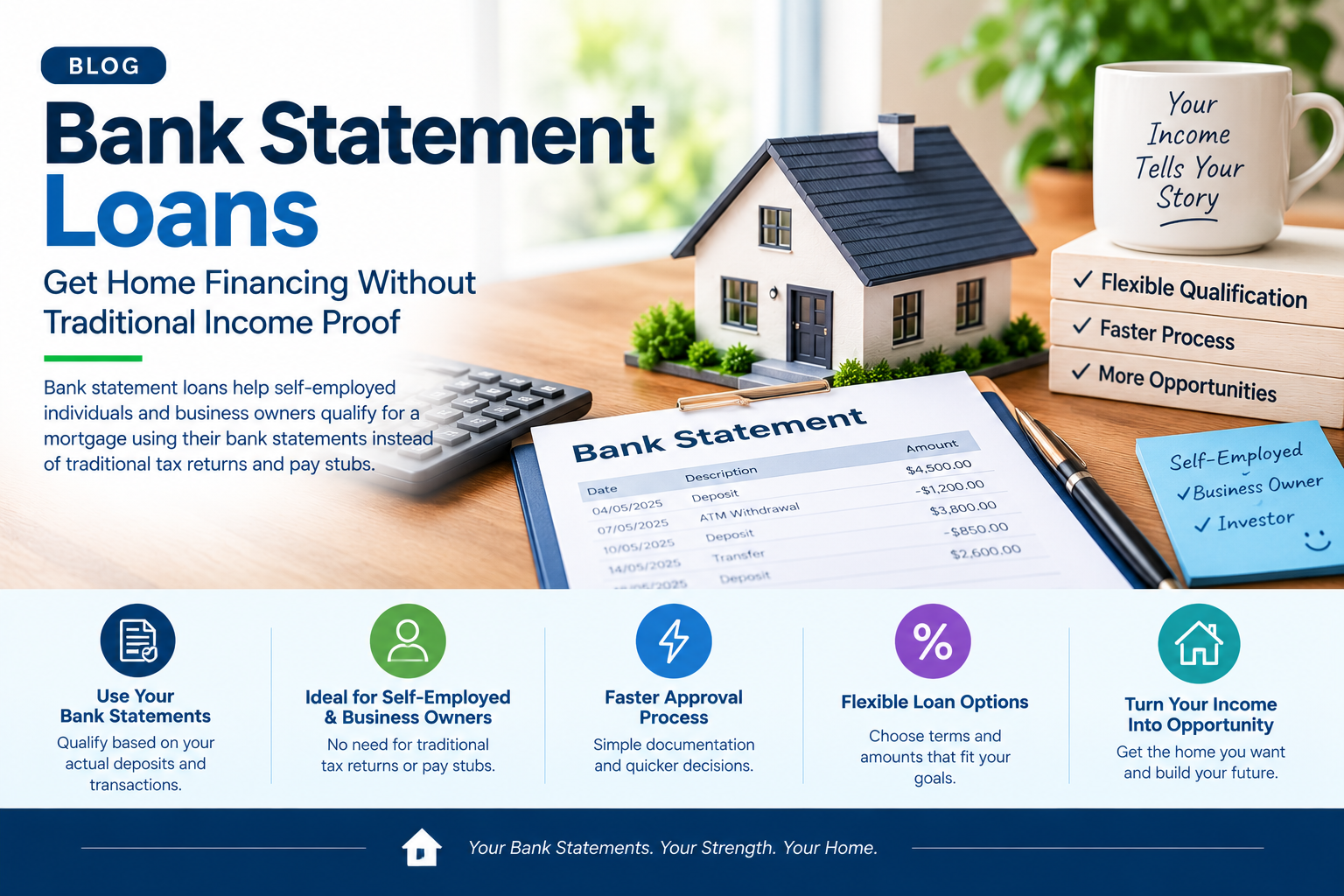
Bank Statement Loans: A Flexible Mortgage Option for Self-Employed Borrowers
Getting approved for a traditional mortgage can sometimes be difficult for self-employed individuals and business owners. Even when they earn a stable income, tax deductions and business expenses may make their taxable income appear lower than their actual cash flow. This is where bank statement loans can offer an alternative financing solution.
These mortgage programs are designed to help eligible borrowers demonstrate their ability to repay a home loan using bank deposit records instead of relying entirely on traditional tax return documentation.
What Are Bank Statement Loans?
Bank statement loans are alternative mortgage financing options that allow certain borrowers to use personal or business bank statements to demonstrate their income.
Unlike traditional mortgages, which commonly rely on tax returns, W-2 forms, and pay stubs, these loan programs evaluate regular deposits over a specific period.
They are particularly useful for self-employed professionals, freelancers, independent contractors, and business owners who have consistent cash flow but may not qualify easily through conventional income calculations.
How Do Bank Statement Loans Work?
The application process generally involves reviewing the borrower's bank statements to estimate qualifying income.
Here is how the process typically works:
-
Submit Bank Statements: Borrowers provide personal or business bank statements, often covering 12 or 24 months.
-
Income Assessment: The lender reviews deposits and identifies eligible income.
-
Expense Calculation: For business accounts, the lender may apply an expense factor or consider documented business expenses.
-
Financial Review: Credit history, assets, existing debts, and other financial details may be evaluated.
-
Loan Approval: If the borrower meets the lender's requirements, the mortgage application may proceed toward approval.
Requirements and income calculations vary depending on the lender and loan program.
Benefits of Bank Statement Loans
Bank statement mortgage programs can provide several advantages for eligible borrowers.
1. Alternative Income Documentation
Borrowers may demonstrate their income through bank deposits rather than depending entirely on traditional tax returns.
2. Helpful for Self-Employed Individuals
Business owners, freelancers, and independent professionals with regular income deposits may find these programs useful.
3. Flexible Mortgage Options
Some lenders offer different repayment terms, loan structures, and documentation requirements based on the borrower's financial situation.
4. Support for Business Owners
Entrepreneurs who manage their own businesses may have complex tax returns. Bank statement loans can provide another way to demonstrate their ability to repay a mortgage.
5. Home Financing Opportunities
Qualified borrowers may use these programs to purchase eligible residential properties, subject to the lender's occupancy and property requirements.
Who Can Qualify for Bank Statement Loans?
Bank statement loans may be suitable for:
-
Self-employed professionals.
-
Small business owners.
-
Freelancers and independent contractors.
-
Entrepreneurs with consistent bank deposits.
-
Individuals with income that is difficult to document through traditional mortgage methods.
Borrowers generally need to meet additional requirements related to credit scores, down payments, financial reserves, and debt obligations.
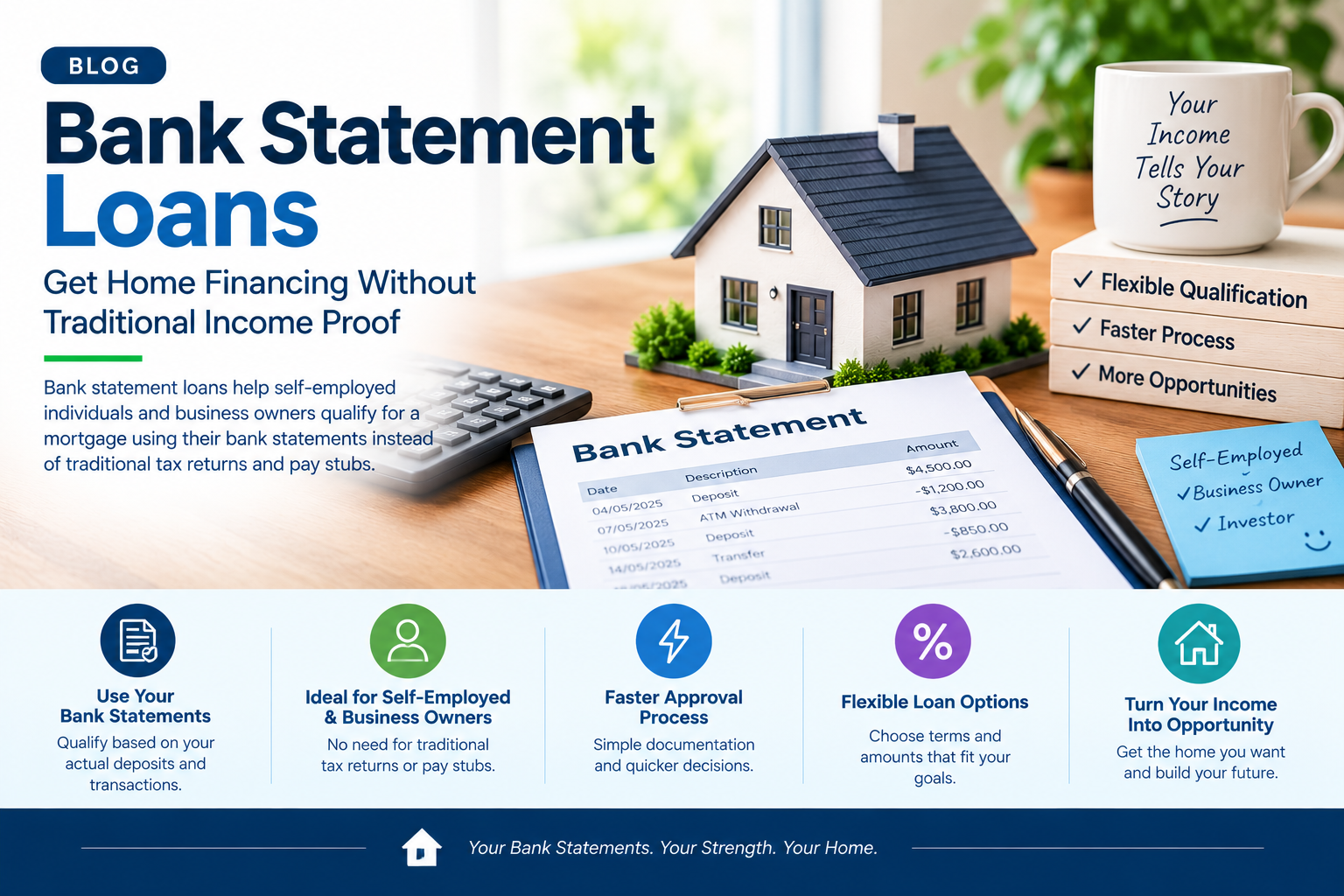
Bank Statement Loans vs. Traditional Mortgage Loans
The primary difference is the way income is documented.
Traditional mortgage loans generally use tax returns, W-2 forms, pay stubs, and other standard income documents.
Bank statement loans use eligible bank deposits to help calculate qualifying income. This approach can be useful for borrowers whose tax returns do not fully represent their available cash flow.
However, bank statement loans may have higher interest rates, larger down payment requirements, or additional fees compared with certain conventional mortgage programs.
Important Things to Consider Before Applying
Before choosing a bank statement mortgage, consider these important factors:
-
Credit Score: Check the lender's minimum credit score requirements.
-
Bank Statements: Keep accurate and consistent financial records.
-
Down Payment: Understand how much money you need upfront.
-
Interest Rates: Compare offers from multiple mortgage lenders.
-
Loan Costs: Review closing costs, lender fees, and other expenses.
-
Income Requirements: Understand how deposits and business expenses affect qualifying income.
Comparing multiple lenders can help you find a financing option that matches your financial circumstances.
Conclusion
bank statement loans can be an effective mortgage alternative for self-employed individuals, freelancers, and business owners who have consistent income but face challenges with traditional income documentation.
By evaluating bank deposits instead of relying entirely on tax returns, these programs can create additional home financing opportunities for eligible borrowers. Before applying, compare lenders, review loan conditions, and make sure the monthly payments fit your budget.
Frequently Asked Questions (FAQs)
1. What are bank statement loans?
Bank statement loans are alternative mortgage programs that allow eligible borrowers to demonstrate income using personal or business bank statements rather than relying entirely on traditional tax returns.
2. Who is eligible for bank statement loans?
Self-employed individuals, freelancers, entrepreneurs, and business owners may qualify if they meet the lender's income, credit, down payment, and other requirements.
3. How many months of bank statements are required?
Many lenders request 12 or 24 months of bank statements, although requirements vary by mortgage program.
4. Are bank statement loans more expensive than traditional mortgages?
They can have higher interest rates, fees, or down payment requirements than some conventional mortgage options. Comparing lenders is important.
5. Can I use a bank statement loan to purchase a home?
Yes. Eligible borrowers may use bank statement mortgage programs to purchase qualifying residential properties, depending on the loan terms and lender requirements.

 Arabic
 French
 Spanish
 Portuguese
 Deutsch
 Turkish
 Dutch
 Italiano
 Russian
 Romaian
 Portuguese (Brazil)
 Greek
