


Fenbendazole for Rabbits: Uses, Dosage, Benefits, Side Effects & Safety Guide
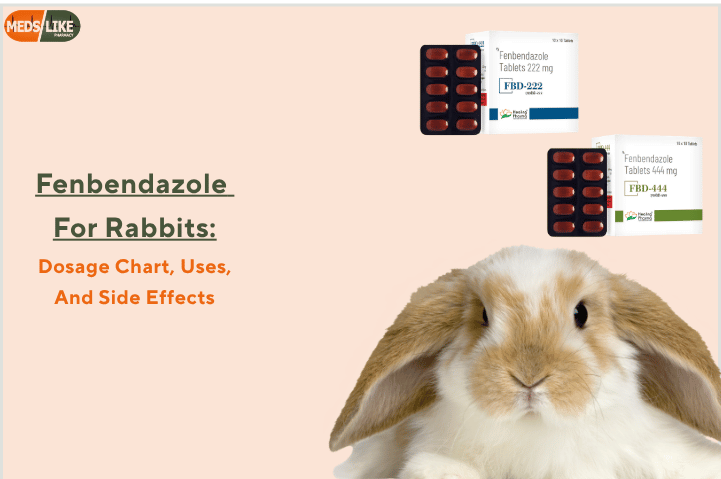
Fenbendazole is an antiparasitic medication commonly used in veterinary medicine to treat certain parasitic infections in rabbits. It belongs to the benzimidazole drug family and works by interfering with the parasites' ability to absorb nutrients and survive. Veterinarians may recommend it for conditions caused by intestinal worms and Encephalitozoon cuniculi (E. cuniculi), a microscopic parasite associated with neurological and kidney problems in rabbits. Understanding how fenbendazole works, when it is prescribed, and its potential side effects can help rabbit owners make informed decisions about their pets' healthcare.
For rabbit owners researching veterinary medications, Medslike.com provides an additional resource for general medication-related information. However, online medication guides should not replace advice from a qualified veterinarian, particularly when treating rabbits. These animals can be sensitive to medication errors, and the correct fenbendazole dose depends on body weight, the parasite being treated, and the specific veterinary formulation. Always consult a rabbit-experienced veterinarian before starting treatment.
What Is Fenbendazole Used for in Rabbits?
Fenbendazole is a broad-spectrum antiparasitic medication that helps control certain internal parasites. It interferes with microtubule formation in susceptible parasites, disrupting their ability to absorb glucose and perform essential cellular functions.
Veterinarians may prescribe fenbendazole for:
-
Encephalitozoon cuniculi: A microscopic parasite associated with neurological, kidney, and eye problems in rabbits.
-
Certain intestinal worms: Fenbendazole can help treat susceptible gastrointestinal nematodes.
-
Parasitic infections: It may be included in a veterinary treatment plan when a rabbit has an identified or suspected susceptible parasite.
Fenbendazole does not treat every parasite. For example, coccidiosis generally requires a different treatment approach.
Fenbendazole for Rabbits Dosage
Fenbendazole dosage is calculated according to the rabbit's body weight and the condition being treated. A commonly referenced veterinary regimen for E. cuniculi is 20 mg/kg orally once daily for 28 days.
The following table illustrates the calculated daily amount for this particular regimen.
| Rabbit's weight | Calculated daily amount |
|---|---|
| 0.5 kg | 10 mg |
| 1 kg | 20 mg |
| 1.5 kg | 30 mg |
| 2 kg | 40 mg |
| 2.5 kg | 50 mg |
| 3 kg | 60 mg |
| 3.5 kg | 70 mg |
| 4 kg | 80 mg |
| 5 kg | 100 mg |
Important: This is an educational calculation for the 20 mg/kg E. cuniculi regimen, not a universal dosing chart. Intestinal worm treatment and licensed product instructions may differ. The amount in milligrams is not the same as the volume in millilitres or the number of paste graduations. A veterinarian must confirm the formulation, dose, and treatment duration.
How Does Fenbendazole Work in Rabbits?
Fenbendazole works by disrupting the internal cellular structures of susceptible parasites. It interferes with beta-tubulin, a protein needed to form microtubules.
These structures are essential for nutrient transport and other cellular processes. When their formation is disrupted, parasites cannot maintain normal growth and reproduction.
In rabbits affected by E. cuniculi, fenbendazole is used to limit parasite activity and replication. However, treatment does not guarantee that existing organ or neurological damage will reverse.
How to Give Fenbendazole to Rabbits
Fenbendazole is available in veterinary formulations such as oral paste, liquid preparations, and granules. The appropriate formulation depends on the rabbit's weight and the veterinarian's instructions.
Follow these general precautions:
-
Measure body weight: Weigh your rabbit accurately before calculating any medication dose.
-
Check the product strength: Different formulations contain different concentrations of fenbendazole.
-
Follow veterinary instructions: Give the medication at the prescribed time and for the recommended duration.
-
Administer carefully: Use the supplied dosing device or an appropriate oral syringe when instructed.
-
Monitor your rabbit: Observe appetite, droppings, activity, and behaviour during treatment.
Rabbits should continue eating normally during treatment. If your rabbit stops eating or produces significantly fewer droppings, contact a veterinarian promptly.
Benefits of Fenbendazole for Rabbits
When prescribed appropriately, fenbendazole for rabbits can provide several benefits:
-
Helps control certain susceptible internal parasites.
-
Is commonly used in veterinary treatment protocols for E. cuniculi.
-
Can be administered orally.
-
Has established veterinary use in rabbit parasite management.
-
May help reduce parasite-related complications when treatment begins at an appropriate stage.
Its effectiveness depends on the parasite involved and the severity of the infection.
Possible Side Effects of Fenbendazole in Rabbits
Fenbendazole is generally used safely when administered according to veterinary recommendations. However, incorrect dosing or prolonged exposure can cause serious adverse effects.
Possible concerns include:
-
Reduced appetite
-
Digestive disturbances
-
Changes in normal droppings
-
Lethargy or weakness
-
Bone marrow suppression in cases of toxicity
Severe adverse reactions, including bone marrow damage, have been reported with benzimidazole use in rabbits, particularly at excessive doses. Veterinary monitoring, including blood tests when appropriate, may be recommended during extended treatment.
Contact your veterinarian if your rabbit develops unusual symptoms. Loss of appetite is particularly concerning because rabbits can develop gastrointestinal stasis when they stop eating.
Precautions Before Giving Fenbendazole to Rabbits
Before treatment, inform your veterinarian about your rabbit's age, weight, pregnancy status, existing health conditions, and any other medications.
Pregnant or breeding rabbits require particular care because medication suitability depends on the product and treatment circumstances.
Avoid using livestock or other animal formulations without veterinary approval. Never increase the dose or extend the treatment period because symptoms have not improved.
Good hygiene also matters when managing E. cuniculi. Clean urine-contaminated areas, maintain a dry living environment, and follow your veterinarian's recommendations for reducing environmental contamination.
Frequently Asked Questions (FAQs)
1. Can rabbits take fenbendazole?
Yes. Fenbendazole is used in veterinary medicine for certain parasitic infections in rabbits, including E. cuniculi. It should only be administered according to veterinary instructions.
2. How long does fenbendazole treatment last in rabbits?
Treatment duration depends on the infection. A commonly referenced E. cuniculi regimen involves 20 mg/kg orally once daily for 28 days. Other parasitic infections may require different schedules.
3. Does fenbendazole treat E. cuniculi in rabbits?
Fenbendazole is commonly used to manage E. cuniculi infections. It helps control parasite activity, although existing neurological or organ damage may not completely resolve.
4. Can fenbendazole cause side effects in rabbits?
Yes. Possible problems include appetite changes and digestive disturbances. Excessive or prolonged exposure may cause serious complications, including bone marrow suppression.
5. Can fenbendazole be used as a preventive treatment?
Some rabbit-specific veterinary products include preventive treatment protocols. However, routine preventive medication should be based on veterinary advice, the product label, and the rabbit's exposure risk.
Final Thoughts
Fenbendazole is an established veterinary antiparasitic medication used to manage certain infections in rabbits. It is particularly well known for its use against E. cuniculi and may also be prescribed for susceptible intestinal worms. Correct dosing, appropriate treatment duration, and monitoring are essential to reduce the risk of adverse effects. Always consult a rabbit-experienced veterinarian before administering fenbendazole to ensure the treatment is appropriate for your pet.

 English
 Arabic
 French
 Spanish
 Portuguese
 Deutsch
 Turkish
 Dutch
 Italiano
 Romaian
 Portuguese (Brazil)
 Greek
