


How to Choose a Washer Extractor for Hospital Laundry in Dubai
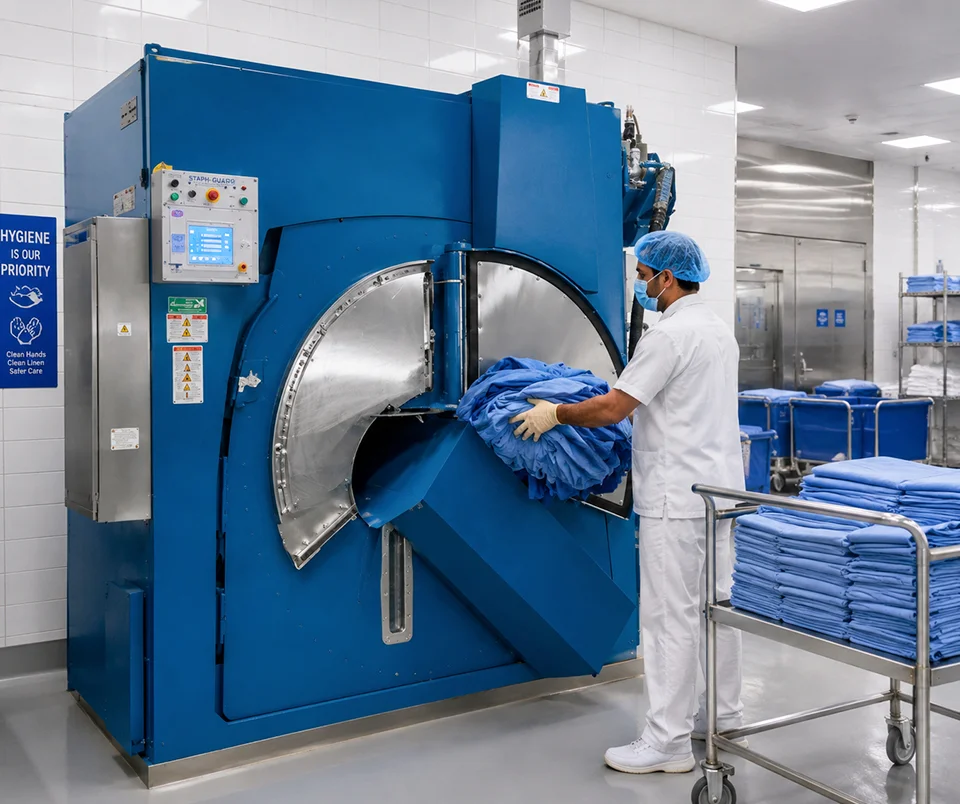
Hospital laundry operations require specialised equipment that can handle frequent washing, different fabric types and strict hygiene expectations. From patient bedding and staff uniforms to towels, surgical garments and reusable linen, healthcare facilities need dependable laundry systems that support consistent cleaning and efficient daily operations. Selecting the right commercial washing machine for hospital applications is therefore an important investment for hospitals, healthcare centres and outsourced laundry facilities in Dubai.
A properly selected commercial washing machine for hospital laundry should offer suitable capacity, effective extraction, programmable wash cycles and compatibility with the facility's linen-handling procedures. Hospitals planning to upgrade their laundry infrastructure should also consider water consumption, energy requirements, installation space and long-term maintenance. If you are looking to Buy washer extractor machine for hospital laundry in Dubai, understanding these technical factors can help you make an informed purchasing decision. With the right equipment selection and planning support from Supershine Laundry, healthcare facilities can develop a laundry operation that meets their practical requirements while supporting consistent linen processing.
1. Understand the Laundry Requirements of Your Hospital
Before purchasing equipment, assess the quantity and type of laundry generated by your healthcare facility. A small clinic, a specialised hospital and a large multi-department healthcare institution will have different laundry requirements.
The assessment should cover:
-
Daily linen volume and expected peak loads.
-
Number of patient beds and occupied rooms.
-
Types of textiles requiring regular washing.
-
Separate handling requirements for different linen categories.
-
Available laundry operating hours.
-
Existing washing, drying and finishing equipment.
-
Future expansion requirements.
Hospital laundry may include bed sheets, pillowcases, blankets, patient gowns, towels, staff uniforms and reusable healthcare textiles. Each category can have different washing and handling requirements.
Understanding these details helps determine whether one machine or multiple washer extractors would be more appropriate. It also prevents purchasing equipment that is either unnecessarily large or insufficient for daily workloads.
2. Choose the Right Washer Extractor Capacity
Capacity is one of the most important considerations when selecting hospital laundry equipment. A washer extractor should accommodate the facility's expected laundry volume without requiring frequent underloading or overloading.
Commercial washer extractors are available in different capacities to serve small, medium and large laundry operations. The appropriate size depends on the weight and type of textiles being processed, the number of daily cycles and the available operating schedule.
Factors to consider when calculating capacity
-
Daily laundry volume: Estimate the total weight of linen processed during a normal working day.
-
Peak requirements: Account for periods when patient occupancy or linen usage increases.
-
Operating hours: Consider how many washing cycles can realistically be completed per shift.
-
Textile characteristics: Different fabrics have different loading and handling requirements.
-
Future demand: Allow reasonable flexibility if the hospital expects to expand.
For example, a hospital with a high daily linen requirement may benefit from multiple appropriately sized machines instead of relying on one large unit. Multiple machines can also provide operational flexibility when one unit requires maintenance.
Avoid choosing capacity based only on the number of hospital beds. Actual linen usage, laundry collection frequency and processing schedules are equally important.
3. Evaluate Washing Performance and Programmable Cycles
Hospital textiles require appropriate washing programmes based on fabric type, soil level and the facility's infection-prevention procedures.
Modern commercial washer extractors offer programmable controls that allow operators to select or configure different washing stages. These may include pre-washing, main washing, rinsing and extraction.
Why programmable washing matters
Different textiles should not automatically be processed using identical settings. For example:
-
Patient bed linen may require a dedicated washing programme.
-
Staff uniforms may need settings suitable for their fabric composition.
-
Towels may require different washing and rinsing parameters.
-
Delicate reusable textiles may need controlled mechanical action.
The selected machine should allow suitable adjustments to wash temperature, cycle duration, water levels and other available parameters.
However, equipment alone does not guarantee hygienic linen. Hospitals must establish validated laundry procedures based on textile compatibility, detergent specifications, process controls and their infection-prevention policies.
When evaluating a commercial washing machine for hospital use, ask the supplier to explain the available programming features and how they can support the facility's laundry procedures.
4. Check the Extraction Efficiency
A washer extractor performs two essential functions: washing textiles and removing a substantial amount of water through mechanical extraction.
Extraction efficiency directly influences the workload of downstream drying equipment. When more moisture is removed during the washing stage, dryers may have less water to evaporate.
What is extraction performance?
Extraction performance is commonly associated with the machine's G-force, which describes the centrifugal force applied to textiles during the extraction cycle.
A higher extraction force can improve moisture removal, but the appropriate specification depends on:
-
Textile strength and construction.
-
Machine design and loading conditions.
-
Available drainage infrastructure.
-
Drying equipment capacity.
-
Operational requirements.
Hospitals should also evaluate vibration control, machine stability and installation requirements. Proper foundation design and installation are important, particularly for equipment operating at high extraction speeds.
A suitable washer extractor can help coordinate washing and drying operations, but the complete laundry workflow should be evaluated rather than considering extraction performance in isolation.
5. Consider Hygiene and Linen Segregation Requirements
Hygiene management is a central consideration in hospital laundry planning. Clean linen should be protected from contamination during collection, transportation, washing, drying, storage and distribution.
Hospitals should establish clear procedures for separating soiled and clean textiles. Depending on the facility's laundry design and infection-prevention requirements, a physical separation between soiled-linen handling and clean-linen processing may be necessary.
Key hygiene considerations
-
Separate collection and transportation systems for soiled and clean linen.
-
Appropriate handling procedures for contaminated textiles.
-
Controlled washing programmes based on textile and hygiene requirements.
-
Proper cleaning of machine interiors and frequently touched surfaces.
-
Suitable drainage and wastewater arrangements.
-
Safe storage and transportation of processed linen.
For healthcare facilities with specific contamination-control requirements, a barrier-type washer extractor may be worth evaluating.
A barrier washer extractor is designed with separate loading and unloading access on opposite sides of a partition. This arrangement can support the separation of soiled-linen and clean-linen areas when integrated into an appropriately designed laundry facility.
The machine should be selected according to the hospital's hygiene procedures, building layout and operational requirements.
6. Assess Water and Energy Consumption
Water and energy requirements can significantly influence the operating cost of a commercial laundry facility. Hospitals often process substantial quantities of linen, making resource efficiency an important purchasing consideration.
Before selecting equipment, request technical information about water consumption per cycle, electrical requirements, heating options and operating parameters.
Important efficiency features
Optimised water usage: Look for equipment with adjustable water levels and programmes suited to different textile loads.
Efficient heating: Evaluate available heating arrangements and their compatibility with the facility's energy infrastructure.
Programmable cycles: Appropriate cycle selection can help avoid unnecessary washing stages and excessive resource consumption.
Effective extraction: Better moisture removal may reduce the subsequent drying workload.
Maintenance accessibility: Equipment that allows routine inspection and servicing can help support consistent operation.
Dubai's climate and building infrastructure also make proper ventilation, heat management and equipment-room planning relevant considerations. Laundry managers should assess the operating environment before finalising the equipment specification.
Do not compare machines using energy-efficiency claims alone. Request technical specifications and evaluate consumption under comparable loading and operating conditions.
7. Check Construction Quality and Maintenance Requirements
Hospital laundry equipment operates in a demanding commercial environment. Machines may run through several cycles each day, depending on the facility's workload.
Therefore, construction quality, component accessibility and service requirements should be considered before purchasing.
Look for the following:
-
A suitable drum and internal construction for commercial laundry applications.
-
Reliable door and locking arrangements.
-
Appropriate control systems.
-
Accessible service and maintenance components.
-
Suitable drainage connections.
-
Machine protection features.
-
Availability of compatible spare parts.
Regular maintenance should include inspection of door seals, drainage systems, filters, water connections and other components specified by the manufacturer.
Hospitals should also ask suppliers about preventive maintenance schedules, technical support availability, operator training and spare-parts arrangements.
A purchasing decision should consider the complete ownership requirements rather than focusing exclusively on the initial equipment cost.
8. Plan the Laundry Layout and Installation
Even technically suitable equipment may create operational problems if the laundry room is not designed correctly.
Before installation, evaluate the available floor area, machine dimensions, door access, electrical connections, water supply, drainage and ventilation.
A hospital laundry layout should support a logical movement of linen from collection to washing, drying, finishing and clean storage.
Installation checklist
-
Measure the available installation area.
-
Confirm equipment dimensions and access clearances.
-
Check floor strength and foundation requirements.
-
Verify electrical supply and water connections.
-
Review drainage capacity and wastewater arrangements.
-
Plan safe movement of soiled and clean linen.
-
Confirm maintenance access around the equipment.
-
Coordinate installation and commissioning requirements.
For larger healthcare projects, a professional laundry equipment assessment can help identify infrastructure requirements before procurement begins.
Supershine Laundry supports commercial and industrial laundry equipment requirements, helping businesses and institutions evaluate equipment options according to their operational needs.
9. Compare Suppliers Before Making a Purchase
Choosing the right equipment supplier is as important as selecting the machine itself. Hospitals should evaluate whether the supplier understands commercial laundry operations and can provide relevant technical guidance.
When comparing suppliers, consider:
-
Experience with commercial laundry equipment.
-
Availability of suitable washer extractor models.
-
Technical specifications and documentation.
-
Installation and commissioning support.
-
Operator training arrangements.
-
Preventive maintenance options.
-
Spare-parts availability.
-
After-sales service arrangements.
Ask suppliers to provide equipment specifications that match your hospital's expected workload. A detailed technical discussion can help identify whether the proposed machine is appropriate for the facility's linen volume, building infrastructure and hygiene procedures.
Supershine Laundry offers commercial and industrial laundry equipment solutions for institutional applications. Hospitals planning new laundry facilities or upgrading existing equipment can discuss their requirements with the company before finalising a purchase.
10. Why Washer Extractor Selection Matters for Hospital Laundry in Dubai
Dubai has a diverse healthcare sector that includes hospitals, specialist medical centres and other healthcare institutions. These facilities need organised linen-processing operations to support their daily activities.
A properly planned laundry system should balance capacity, washing performance, extraction, hygiene procedures, energy requirements and maintenance.
For smaller facilities, a suitable standalone washer extractor may be sufficient. Larger hospitals may require multiple machines, separate processing areas or barrier-type equipment, depending on their laundry volume and hygiene protocols.
The objective should be to select equipment that fits the actual operational requirements rather than purchasing the largest available model.
Supershine Laundry can help healthcare organisations assess commercial laundry equipment requirements and identify suitable equipment configurations based on their project specifications.
Conclusion
Selecting a washer extractor for hospital laundry requires careful evaluation of capacity, programmable washing cycles, extraction performance, hygiene requirements, resource consumption and installation conditions. Hospitals in Dubai should consider both their current linen-processing workload and future operational requirements before investing in equipment.
The right purchasing decision can support an organised laundry workflow and help healthcare facilities manage their linen-processing responsibilities effectively. If you are planning to Buy washer extractor machine for hospital laundry in Dubai, consult an experienced commercial laundry equipment supplier to discuss your technical and operational requirements. Supershine Laundry can assist with evaluating suitable equipment options for institutional laundry applications.
Frequently Asked Questions
1. What is a washer extractor used for in hospital laundry?
A washer extractor is commercial laundry equipment that combines washing and high-speed water extraction in one machine. It processes hospital textiles such as bed linen, towels, uniforms and other reusable fabrics before they move to the drying stage.
2. How do I choose the right washer extractor capacity for a hospital?
Calculate the daily weight of laundry, expected peak loads, textile types and available operating hours. Consider the number of cycles required and allow for future demand. A technical assessment can help determine the appropriate machine capacity.
3. Are barrier washer extractors suitable for hospital laundry?
Barrier washer extractors can be suitable for hospitals that require physical separation between soiled-linen loading and clean-linen unloading areas. Their suitability depends on the facility's hygiene procedures, building layout and laundry workflow.
4. What features should a hospital washer extractor have?
Important features include programmable washing cycles, adjustable operating parameters, effective water extraction, suitable construction, safety controls and accessible maintenance components. The machine should also be compatible with the hospital's linen-processing procedures.
5. Where can hospitals in Dubai find commercial laundry equipment?
Hospitals can approach specialised commercial laundry equipment suppliers such as Supershine Laundry to discuss washer extractors and other institutional laundry requirements. Buyers should compare technical specifications, installation support, maintenance arrangements and equipment suitability before purchasing.

 English
 Arabic
 French
 Spanish
 Portuguese
 Deutsch
 Turkish
 Dutch
 Italiano
 Romaian
 Portuguese (Brazil)
 Greek