


What Should Buyers Check Before Choosing a Board to Board Connector?
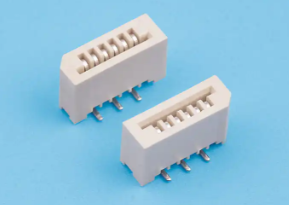
Board to Board Connector selection requires buyers to consider more than product dimensions or contact quantity. The component must match the electrical design, mechanical structure, assembly process, and operating conditions of the finished device. Before placing an order, purchasing teams should prepare clear technical requirements and compare available options against the actual application.
Define the Application Requirements
Start by identifying the component's role in the electronic assembly. Some products require two parallel modules, while others need parts arranged at different angles. The intended configuration affects product structure, mounting direction, and available installation space.
Buyers should list the signals, power lines, and grounding positions that the assembly must support. This information helps determine the required contact quantity and reduces the risk of choosing a model with insufficient capacity. If the product may receive additional functions in later versions, a reasonable number of spare positions can also be useful.
Clear application details give the supplier a practical basis for recommending suitable specifications.
Check Pitch and Physical Dimensions
Contact pitch is an important factor because it affects component density, routing space, and assembly precision. A smaller pitch supports compact product layouts but may require tighter manufacturing and placement tolerances. A wider pitch can provide more room for installation and inspection.
Buyers should confirm overall length, width, height, contact arrangement, and mounting dimensions against the product drawings. The distance between connected modules also deserves attention. Insufficient clearance may cause interference with nearby parts, while excessive spacing can affect the enclosure structure.
Request dimensional drawings rather than relying only on general product descriptions. Compare the proposed model with the latest mechanical design before sample approval.
Review Electrical Performance
Electrical specifications should match normal operating conditions as well as possible peak loads. Important details include rated current, rated voltage, contact resistance, insulation resistance, and dielectric withstand voltage.
Current capacity depends on the number of energized contacts and surrounding thermal conditions. When several contacts carry current simultaneously, the actual allowable load may differ from the rating of an individual contact. Buyers should request relevant test data and follow the supplier's recommended operating limits.
For products that transmit high-speed signals, ask about impedance control, crosstalk, and signal loss. Evaluate the selected component as part of the complete transmission path rather than as an isolated part.
Examine Materials and Mechanical Reliability
Housing materials influence insulation, dimensional stability, and heat resistance. Contact materials and surface plating also affect conductivity, wear resistance, and corrosion behavior. The appropriate combination depends on the operating environment and expected service life.
Buyers should clarify whether the component will experience frequent mating, vibration, temperature changes, or humidity. These conditions can influence contact stability and mechanical retention. Guide structures, locking designs, and alignment features may also matter when installation accuracy is important.
Request material information and available reliability test records. Sample evaluation can help confirm whether the selected construction suits the intended assembly process.
Evaluate Manufacturing and Quality Control
A supplier's production process is another important consideration. Buyers can ask how incoming materials, molding, metal stamping, plating, assembly, and final inspection are managed. The specific process varies by product design, so the supplier should explain which checks apply to the requested model.
Inspection items may include dimensional accuracy, contact continuity, insulation performance, appearance, and mating consistency. For customized orders, confirm how engineering changes are reviewed and how approved samples serve as production references.
It is also useful to clarify batch traceability, packaging requirements, production capacity, and lead time. These details help purchasing teams plan incoming inspection and reduce unnecessary delays.
Confirm Samples and Order Details
Before confirming a bulk order, buyers should review samples under realistic assembly conditions. Check the fit, insertion and removal feel, contact alignment, and compatibility with the intended parts. Record any mismatch and discuss it with the supplier before production approval.
The quotation should identify the model number, specifications, order quantity, packaging method, delivery schedule, and customization costs. Both parties should also agree on the document revision used as the production reference. This helps reduce misunderstandings when technical details change during development.
Clear communication matters even more when a project involves a non-standard configuration or several product versions.Make an Informed Purchasing DecisionA careful purchasing decision connects technical requirements with manufacturing capability. By checking dimensions, electrical ratings, material choices, inspection procedures, and sample performance, buyers can make a more informed comparison and communicate expectations clearly.For additional product information and supplier details, visit https://www.wendaelectronics.com/ and share your application requirements when requesting a quotation.

 English
 Arabic
 French
 Portuguese
 Deutsch
 Turkish
 Dutch
 Italiano
 Russian
 Romaian
 Portuguese (Brazil)
 Greek
