


RCC Structural Repair Services for Existing Structures
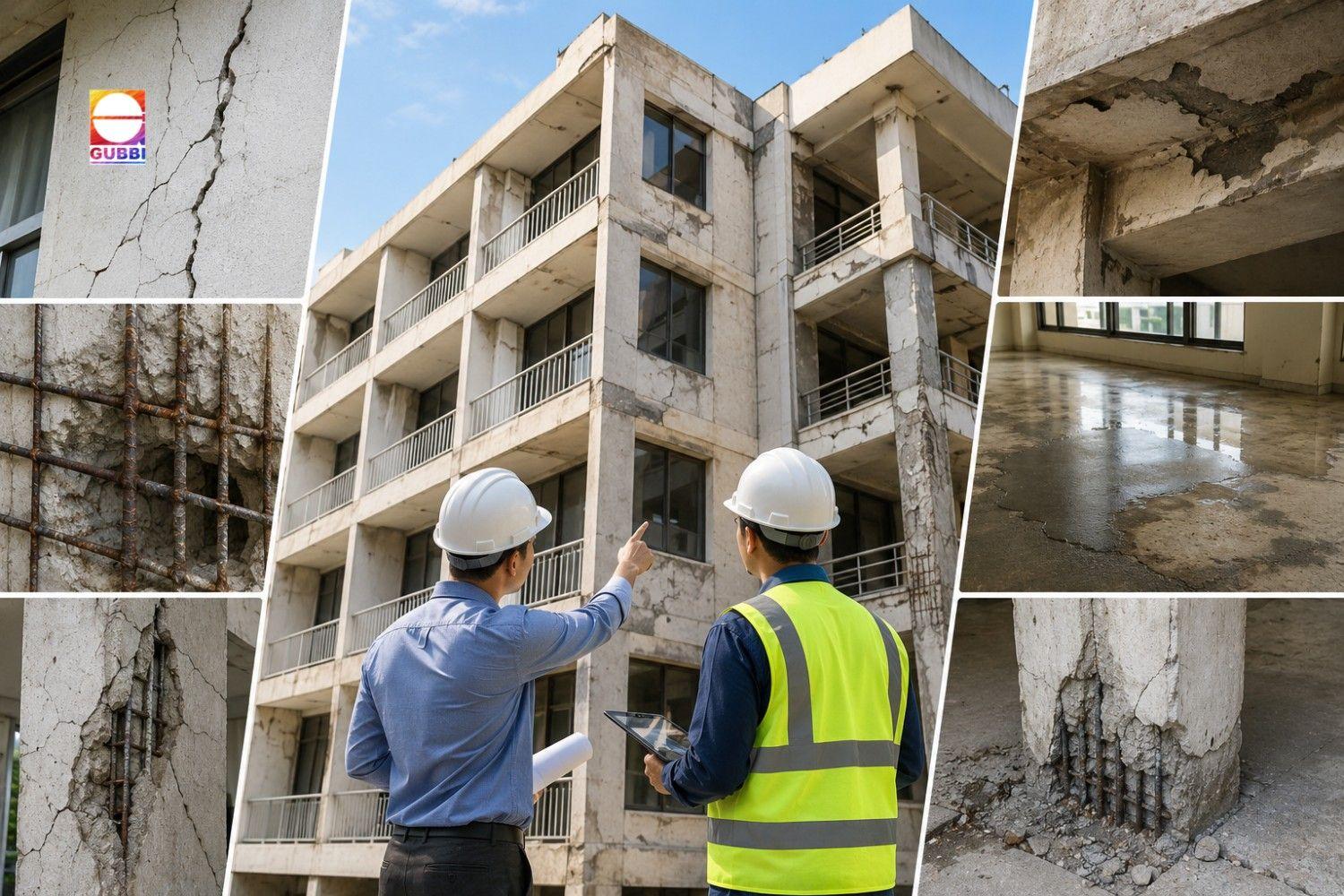
Structural repair services are essential when an existing structure begins showing signs of deterioration, damage, or reduced performance. Industrial buildings, commercial facilities, bridges, warehouses, plants, and other infrastructure assets can develop cracks, corrosion, spalling, leakage, or weakened concrete over time. Professional structural repair contractors investigate the actual cause before selecting a repair method. This approach helps restore structural performance, control further deterioration, and support safer, longer service life.
Structural damage does not always become visible when it starts. Moisture penetration, reinforcement corrosion, carbonation, chemical exposure, repeated loading, vibration, temperature changes, poor construction practices, and ageing materials can gradually affect concrete and steel. A small crack may therefore indicate a larger underlying problem, depending on its location and characteristics. Early structural assessment allows property owners and facility managers to understand the condition before repair requirements become more extensive.
For industrial and commercial assets, structural repair is more than a maintenance activity. It can protect production areas, equipment supports, access systems, storage structures, and critical concrete members from progressive deterioration. Delaying repairs may increase operational disruption and create additional restoration requirements later. Structural repair contractors therefore need to consider the structure, its operating environment, access conditions, loading requirements, and project priorities before developing a practical repair and rehabilitation plan.
Understanding When Structural Repair Is Required
Common warning signs include cracks in beams, columns, slabs, and other RCC members; concrete spalling; exposed reinforcement; rust staining; damaged concrete surfaces; water seepage; recurring leakage; and deterioration around joints or connections. However, appearance alone cannot determine structural severity. A proper inspection should identify whether the problem is cosmetic, durability-related, or connected with structural capacity, because each condition requires a different response. This distinction is important for planning.
Concrete deterioration is a common reason for structural repair work in existing RCC assets. When protective concrete cover is damaged, reinforcement can become exposed to moisture, oxygen, chlorides, or carbon dioxide. Corrosion may then expand the reinforcement and create internal pressure within the concrete, resulting in cracking and spalling. Repair work must address both the damaged concrete and the deterioration mechanism to prevent the same problem from returning quickly.
Why Structural Inspection Comes Before Repair
A successful repair begins with understanding the existing structure. Engineers may review drawings, inspect accessible areas, document cracks and damaged members, examine reinforcement exposure, evaluate concrete condition, and consider the structure’s operating environment. Depending on the project, testing may also be required to understand concrete quality or deterioration. The findings help determine whether the requirement involves concrete restoration, strengthening, rehabilitation, protection, or a combination of these measures.
The repair method should match the damage rather than being selected because it is commonly used. Surface deterioration may require suitable repair mortar, while deeper damage can require concrete replacement or specialised repair materials. Cracks may need sealing or injection depending on their characteristics and cause. Where structural capacity is inadequate, strengthening techniques may be necessary. This diagnosis-led approach reduces unnecessary work and improves suitability of the final repair solution.
Major Structural Repair Methods Used in Existing RCC Structures
Structural repair contractors use different methods according to the member condition, damage mechanism, structural requirement, and site environment. Common approaches include concrete repair, polymer modified mortar, epoxy mortar, guniting, shotcreting, micro-concrete applications, reinforcement corrosion treatment, crack repair, and protective coating systems. In some projects, repair is combined with structural strengthening techniques such as jacketing, carbon fibre wrapping, or other engineered reinforcement solutions.
Concrete repair focuses on restoring deteriorated sections and improving the condition of the affected member. Damaged concrete may be removed to reach sound material, reinforcement can be cleaned or treated where required, and an appropriate repair material can then be applied. The final process depends on the depth, location, access, exposure, and structural significance of the damage. Proper surface preparation and material compatibility are important for achieving a sound bond with existing concrete.
Guniting and Shotcreting for Difficult Repair Areas
Guniting and shotcreting can be useful where concrete or mortar needs to be applied over larger or difficult-to-access surfaces. These sprayed applications can support repair and rehabilitation work on suitable structural and infrastructure elements. The method requires surface preparation, equipment, mix control, application technique, thickness control, and curing. Selection should be based on project requirements rather than treating sprayed concrete as a universal solution for every damaged structure.
Micro-concrete repair and jacketing can be considered when existing RCC members require substantial restoration or strengthening. Micro-concrete is designed for applications where controlled placement around reinforcement and within prepared forms is required. Jacketing can increase the effective section and improve the capacity of selected members when properly engineered. The decision depends on structural assessment, member condition, required capacity, available space, detailing, and compatibility with the existing structure.
Structural Strengthening Versus Structural Repair
Structural repair and structural strengthening are related but not identical requirements. Repair generally addresses deterioration or damage that has already occurred, while strengthening is intended to improve capacity or performance where existing provisions are insufficient. A project may require both when deterioration has reduced performance and additional capacity is needed. The distinction helps owners select the right engineering intervention instead of treating every defect as a simple repair.
Carbon fibre wrapping is one strengthening technique used for suitable beams, columns, and other structural members where engineered reinforcement is required without significantly increasing member dimensions. CFRP systems can provide high-strength reinforcement with low added weight and limited section enlargement. However, carbon fibre should not be selected solely for being modern. Engineers must evaluate the member, failure mode, surface condition, design requirement, and installation environment before specifying the system.
Repairing Corrosion-Damaged Reinforced Concrete
Reinforcement corrosion requires attention because visible spalling is often only the surface expression of a deeper deterioration process. Repair may involve removing unsound concrete, exposing affected reinforcement, cleaning or treating the steel, restoring the concrete section, and providing suitable protective measures. The exact sequence depends on the extent of corrosion and the surrounding environment. Addressing moisture ingress and other contributing factors can also help reduce the risk of recurring deterioration.
Industrial facilities can expose structures to demanding conditions, including moisture, chemicals, heat, vibration, mechanical activity, and continuous operation. Concrete structures around plants, warehouses, utilities, cooling systems, chimneys, tanks, and other assets may therefore require specialised repair planning. Structural repair contractors working in such environments must consider access, shutdown limitations, safety controls, material selection, curing requirements, and production schedules. Repair planning should support both engineering performance and practical site execution.
Structural Repair for Infrastructure Assets
Infrastructure structures such as bridges, jetties, dams, culverts, tunnels, and other concrete assets can experience deterioration because of environmental exposure, repeated loading, water action, corrosion, and ageing. Repair programmes for these assets require careful assessment because the structures may be critical to transport, utilities, or industrial operations. Depending on the condition, work may involve concrete rehabilitation, crack treatment, corrosion control, strengthening, protective systems, and staged execution to maintain required functionality.
The quality of a structural repair depends on more than the material used. Surface preparation, removal of unsound concrete, reinforcement treatment, bonding, application thickness, curing, workmanship, and quality checks all influence the result. Poor preparation can cause debonding or premature deterioration even when a high-performance repair material has been selected. Experienced structural repair contractors therefore establish an execution sequence that connects engineering requirements with practical workmanship and site quality control.
How to Choose Structural Repair Contractors
When evaluating structural repair contractors, owners should look beyond general construction experience. Consider whether the contractor understands RCC deterioration, structural rehabilitation, strengthening methods, repair materials, industrial site conditions, and safety requirements. Ask how the team investigates the cause of damage, develops the repair methodology, manages quality, and coordinates work in operational facilities. A technically appropriate approach is more valuable than choosing a contractor based only on the lowest quotation.
Project planning also influences the success of structural repair work. Facilities may have restricted working hours, active equipment, limited access, safety zones, or production commitments. A practical contractor should plan material movement, surface preparation, equipment placement, curing periods, and work sequencing around these constraints. Where possible, staged execution can help reduce disruption. The final programme should balance structural requirements, site safety, quality control, and the owner’s operational priorities.
Why Preventive Maintenance Matters After Structural Repair
Repair should not always be viewed as the final step. Existing structures continue to experience environmental and operational exposure after restoration. Periodic inspections, drainage maintenance, appropriate waterproofing, protective coatings, and timely treatment of new defects can preserve repaired areas. Maintenance planning is particularly important for industrial and infrastructure assets because deterioration can return when the original exposure mechanism remains active. Long-term performance therefore depends on repair quality and continued monitoring.
Cost Considerations for Structural Repair Projects
Structural repair cost varies according to damage severity, member size, access, repair materials, testing requirements, labour, equipment, project location, and site conditions. A meaningful estimate should follow an inspection and defined repair scope rather than relying on a generic rate. Early intervention can sometimes reduce later rehabilitation, but priority should remain correct diagnosis and suitable repair. Comparing quotations is useful only when the scope and methodology are reasonably comparable.
Why Site-Specific Repair Solutions Are Important
Every damaged structure has its own history, loading conditions, exposure environment, construction details, and deterioration pattern. A repair method that works for one building or industrial facility may not be appropriate for another. Site-specific engineering helps determine the actual cause, required repair depth, suitable materials, access arrangements, and protection measures. This avoids standardised solutions and improves the likelihood that repair addresses the underlying requirement. This supports consistent project communication.
Choosing a Structural Repair Partner in India
For organisations planning structural rehabilitation, the right partner should combine engineering understanding with practical execution capability. Gubbi Civil Engineers Limited can be considered when evaluating structural repair requirements for industrial, commercial, and infrastructure assets, where repair, strengthening, and protection may need to work together. Select a contractor that understands site conditions, defines the scope, coordinates execution, and maintains quality. Clear scope definition also supports accountability.
Structural repair services help existing assets remain functional when concrete deterioration, corrosion, cracking, environmental exposure, or other damage begins affecting performance. The most effective approach starts with inspection and diagnosis, followed by a repair methodology suited to the actual condition. Whether the requirement involves RCC concrete repair, corrosion treatment, shotcreting, micro-concrete, jacketing, strengthening, or protective measures, technical planning and quality execution are essential for achieving dependable rehabilitation.

 English
 Arabic
 French
 Spanish
 Portuguese
 Deutsch
 Turkish
 Italiano
 Russian
 Romaian
 Portuguese (Brazil)
 Greek
