


Year-End GST Refund Reconciliation Checklist for Indian Export Businesses
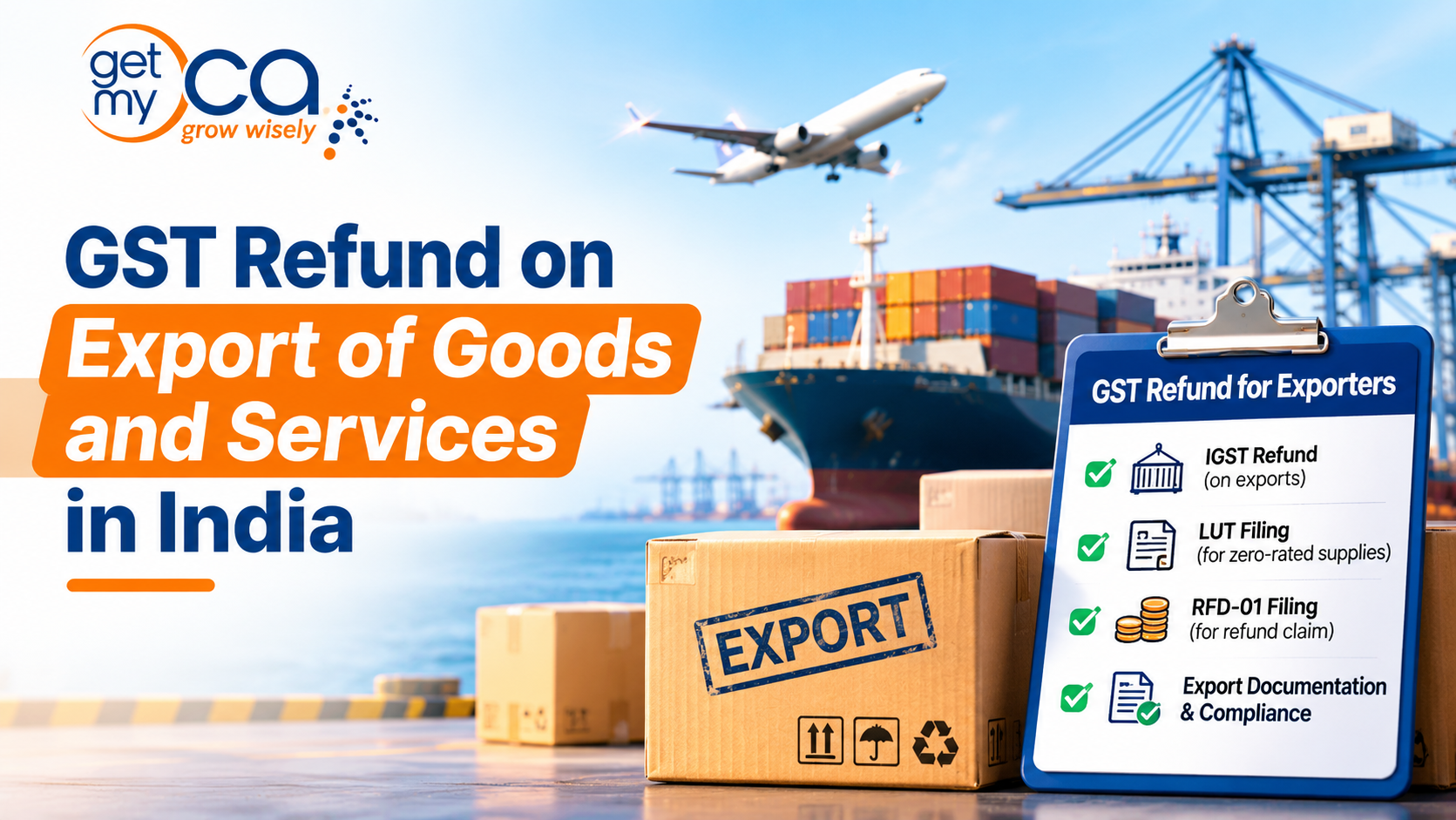
Indian exporters regularly file GST returns and maintain records of international sales, input tax credit and refund applications.
However, differences may arise between monthly GST returns, accounting records and refund statements over the course of a financial year.
A financial year-end reconciliation can help businesses identify unresolved differences and review pending refund claims.
This process is especially useful for exporters managing both domestic and zero-rated supplies.
Why Is Year-End Reconciliation Important for Exporters?
Export businesses may receive payments in different periods, make purchases throughout the year and submit refund applications for selected tax periods.
These activities can create differences between accounting turnover and GST return figures.
Understanding GST refund compliance for Indian exporters helps businesses identify how eligible export supplies and input credit should be reported.
A year-end review can also reveal unclaimed refund periods, pending departmental notices and inconsistencies in earlier calculations.
However, businesses must still follow the statutory time limits and applicable filing procedures.
Which Export Turnover Figures Should Be Reconciled?
Exporters should compare their accounting sales register with the relevant GST returns.
The review may include:
-
Export invoice values.
-
Domestic taxable turnover.
-
Zero-rated supplies.
-
Supplies to SEZ units or developers.
-
GSTR-1 export reporting.
-
GSTR-3B turnover figures.
-
Relevant shipping bill information.
-
Foreign service payment records.
-
Refund turnover calculations.
Differences should be explained through appropriate supporting documents.
Exporters should not automatically assume that turnover reported for accounting purposes must equal every GST refund turnover figure.
The relevant statutory definitions may differ.
Why Is Input Tax Credit Reconciliation Necessary?
Refund claims depend on eligible ITC determined under the relevant provisions.
Businesses should reconcile purchase registers, GST return records and credit ledger balances.
They should also review credit reversals, ineligible purchases and any credit already included in earlier refund claims.
For an accumulated ITC refund under Rule 89(4), the relevant statutory calculation must be applied.
Companies should avoid including credit amounts that are not permitted under the applicable formula.
How Should Pending Refund Applications Be Reviewed?
Exporters may have multiple refund applications pending at different processing stages.
A financial year-end review should identify each claim separately.
The register may contain:
-
Refund period.
-
ARN and filing date.
-
Amount claimed.
-
Refund category.
-
Acknowledgement details.
-
Deficiency notices.
-
Provisional sanction, where applicable.
-
Final sanction order.
-
Amount received.
-
Remaining issues.
This helps management understand the actual position of outstanding claims.
Can Year-End Reconciliation Identify Missed Refund Opportunities?
Yes. During a review, businesses may identify eligible export periods for which a refund application has not been filed.
However, eligibility must be assessed independently.
The company should verify whether the statutory filing period remains available and whether all required records can be provided.
An unused electronic credit ledger balance does not automatically guarantee that the amount is refundable.
Businesses should also examine any applicable restrictions or earlier claims involving the same credit.
How Can Exporters Improve Future GST Compliance?
A monthly reconciliation system can reduce the number of discrepancies discovered at financial year-end.
Accounts teams should maintain consistent invoice classifications and track relevant export receipts.
Refund calculations should be reviewed alongside GST returns and supporting records.
Businesses can also create internal deadlines for document collection and application preparation.
Professional GST refund and tax compliance consultancy can assist exporters with ITC reconciliation, refund period reviews and statutory filings.
Conclusion
Year-end GST reconciliation helps Indian exporters maintain accurate tax records and monitor outstanding refund applications.
Businesses should compare accounting turnover, GST returns, eligible ITC and refund statements before finalising their compliance records.
Regular reconciliation and timely review of eligible refund periods can reduce avoidable filing problems.

 English
 Arabic
 French
 Spanish
 Deutsch
 Turkish
 Dutch
 Italiano
 Russian
 Romaian
 Portuguese (Brazil)
 Greek
