


Stem Cell Therapy for Skin Rejuvenation: A New Perspective on Facial Aging
Introduction
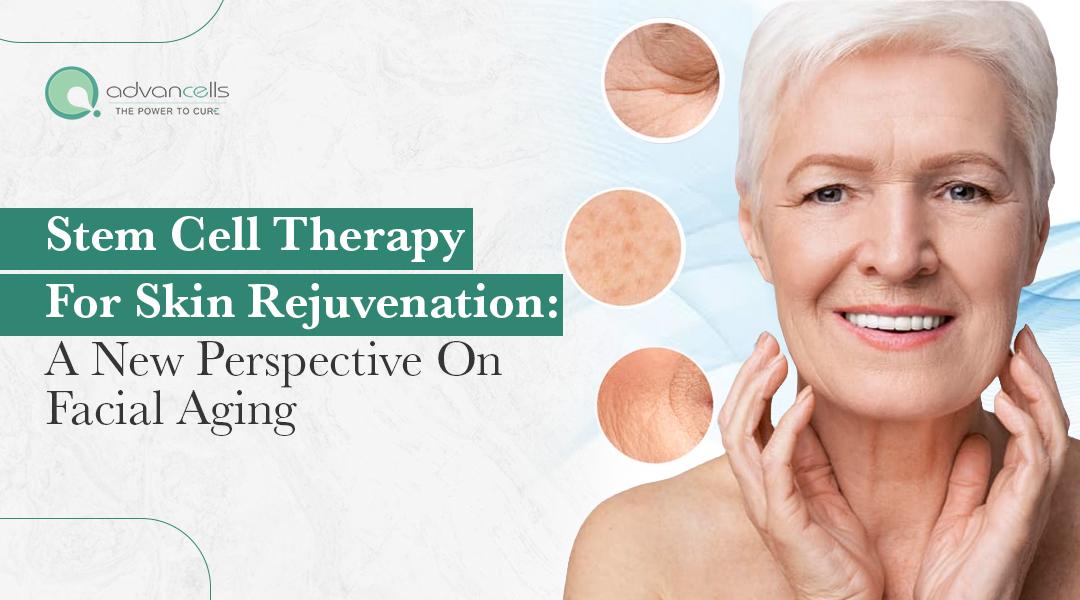
Ageing signs on the face appear gradually. The appearance of fine lines, wrinkles, freckles, and dullness are common visible signs. With time the skin loses its elasticity, slows down collagen production, reduces cellular turnover, compromised barrier function, unwanted pigmentations, etc. Conventional skincare and aesthetic procedures help manage visible signs of aging, growing interest in regenerative approaches has brought stem cell research into the discussion.
Stem Cell Therapy for Skin Rejuvenation is widely explored for its ability to target the aging signs at cellular level. The approach examines how the cells and signalling molecules interact with the surrounding tissues. It offers an interesting perspective on how future anti-aging strategies might address some of the changes associated with facial aging.
Facial Aging Is More Than What Meets the Eye: Understanding the Biology of Skin Changes
Skin aging results from a combination of intrinsic factors, such as genetics and natural cellular aging, and external influences, including ultraviolet (UV) exposure, pollution, smoking and lifestyle habits.
As the Skin Ages, Several Changes Take Place:
-
Declining Collagen Production: Fibroblasts become less active, affecting the production of collagen that gives skin its structural support.
-
Changes in Elastin: The elastic fibre network gradually loses its organisation, contributing to reduced skin firmness and elasticity
-
Slower Cellular Renewal: The replacement of the older skin cells or cellular turnover makes the skin appear dull and uneven
-
Reduced Hydration: Changes in the skin barrier and its ability to retain moisture contribute to dryness and the appearance of fine lines
-
Altered Tissue Support: Changes in subcutaneous fat, connective tissue and bone structure significantly influences the facial contours
Dermatologists often address such changes with a combination of various treatment approaches. It involves several interconnected biological processes, making tissue repair and cellular communication important areas of ongoing research.
Beyond Anti-Aging Creams: Can Stem Cell Therapy Fit into Skin Rejuvenation?
Stem cells have gained a wide range of attention in regenerative aesthetics due to their ability to introduce self-renewal and, under appropriate conditions, differentiate into specialised cell types. However, their role in skin rejuvenation is not limited to replacing damaged cells.
Researchers widely focus on stem cell communication, growth factors, cytokines, growth factors, and other bioactive molecules. Stem cells' ability to influence cellular activity, tissue repair and the local skin environment.
In particular, mesenchymal stromal/stem cells (MSCs) have been studied for their paracrine activity. Rather than relying entirely on their differentiation into new skin cells, researchers are investigating how their secreted factors may:
-
Support fibroblast activity and extracellular matrix (ECM) remodelling
-
Influence collagen production and tissue remodelling.
-
Modulate inflammatory responses associated with tissue damage.
-
Support communication between different skin cell populations.
Currently, Stem Cell Therapy for Skin Rejuvenation aims to support the skin's natural repair mechanisms by introducing changes at the cellular level.
Stem Cell Therapy for Face Rejuvenation: Exploring the Science Behind the Approach
Facial skin is constantly exposed to environmental stress that gradually affects its structure and appearance. The key improvement includes:
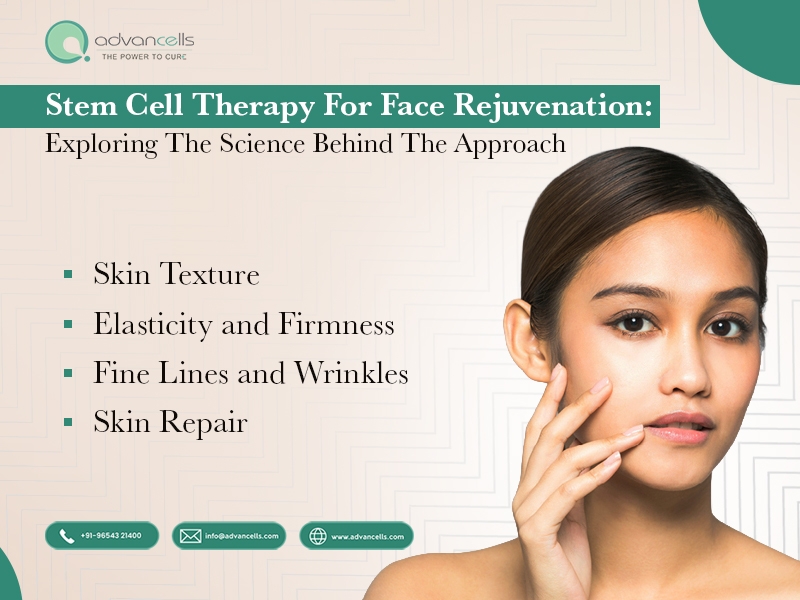
Stem Cell Therapy for Face Rejuvenation is being investigated for its potential role in improving different aspects of skin quality. Some of the areas receiving attention include:
-
Skin Texture: Potential regenerative signalling supports tissue renewal, stimulates fibroblast activities, and improves uneven skin appearance.
-
Elasticity and Firmness: Investigating the influence of stem cell-derived factors on fibroblast activity and extracellular matrix production.
-
Fine Lines and Wrinkles: Studying whether changes in collagen-related activity can help improve the structural characteristics of aging skin.
-
Skin Repair: Understanding how cellular signalling may contribute to tissue recovery following environmental or age-related damage.
It is crucial to recognise that the result significantly varies among individuals. It depends on various factors like source, formulation, delivery method and individual skin characteristics.
Regenerative Medicine for Anti-Aging: What Does Current Research Tell Us?
The available evidence suggests that stem cell-based approaches deserve further investigation, particularly for age-related changes in skin elasticity, hydration and wrinkle appearance. The current findings reflect a positive trend in terms of safety and efficacy.
The Crucial Improvement Includes:
-
Stem Cell-Conditioned Media: Stem cell cultures contains secreted proteins and other bioactive molecules that researchers are studying for their influence on skin cell activity
-
Extracellular Vesicles (EVs): Stem cells release sac like extracellular vesicles (exosomes). These are membrane-bound particles that carry various bioactive molecules (proteins, microRNAs, cytokines, growth factors) and influence cellular communication.
-
Combination Approaches: Researchers are also examining whether regenerative formulations used alongside established aesthetic procedures can improve treatment outcomes.
Regenerative Medicine for Anti-Aging has shifted the attention towards the biological signals that influence skin health.
Can Stem Cells Reverse Aging? Understanding the Potential and Limitations
The idea of using Stem Cells to Reverse Aging is certainly interesting, but it is important to distinguish improvements in skin appearance from reversing the biological aging process.
Stem cell-based research has shown potential in supporting tissue repair, regulating inflammation and influencing extracellular matrix production. However, improving skin elasticity or reducing the appearance of wrinkles does not mean that cellular aging has been reversed.
Several Challenges Still Need Attention:
-
Treatment standardisation: Standardization of the cell sources, processing methods and formulations
-
Delivery and effectiveness: Determining effective administration method and its efficacy
-
Long-term safety: Continuous follow-up to unveil long-term effects
Conclusion
Stem Cell Therapy for Anti Aging is evolving at a rapid pace. It potentially boosts cellular communication, tissue repair and reverse age-related changes in the skin. Future progress will depend on standardised formulations, improved delivery strategies and stronger clinical evidence. With continued research, regenerative approaches could contribute to more targeted and personalised skin rejuvenation strategies.

 English
 Arabic
 French
 Spanish
 Portuguese
 Deutsch
 Turkish
 Dutch
 Italiano
 Russian
 Portuguese (Brazil)
 Greek
