


Molecular Breeding Market Size, Share, and Trends Analysis - 2032
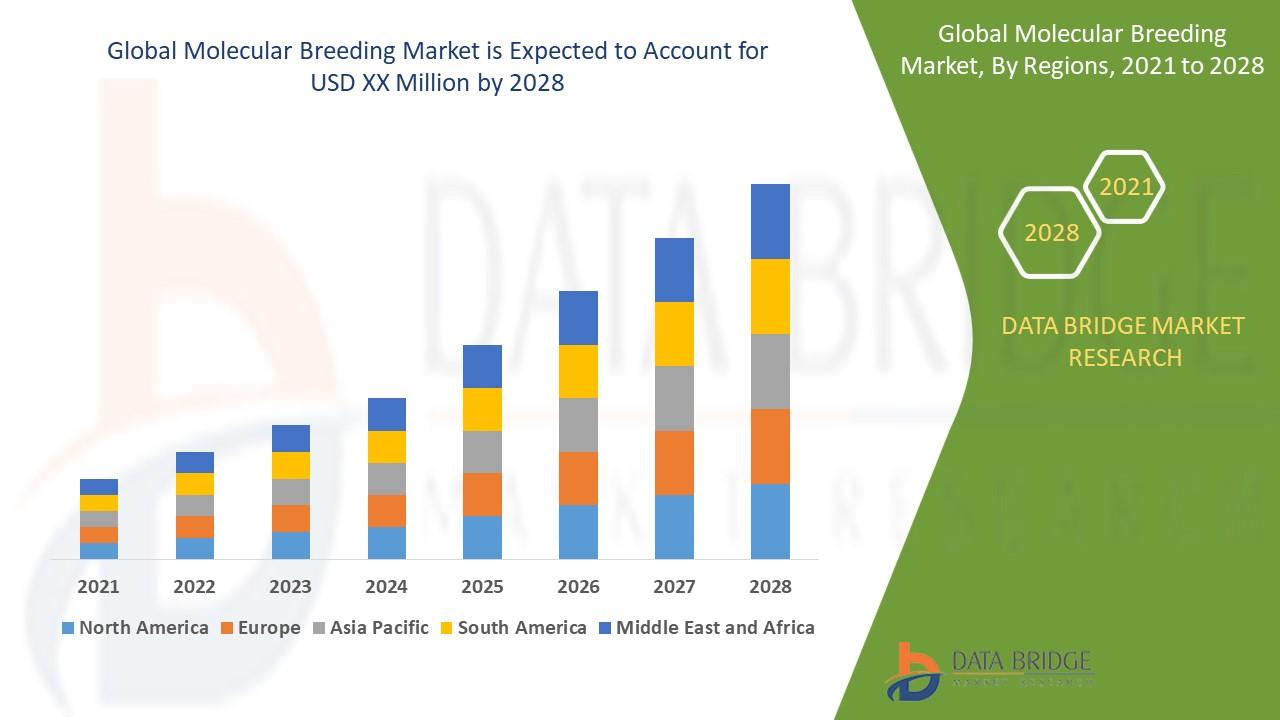
According to the latest report published by Data Bridge Market Research, the Molecular Breeding Market size is projected to grow USD 29.80 Billion by 2032, exhibiting a CAGR of 17.36% during the forecast period 2025 - 2032.
Global Molecular Breeding Market report analyses the key developments taking place with respect to agreements, partnerships, collaborations and joint ventures, acquisitions & mergers, new product launch, expansions, and other key strategies. It also includes detailed study about the company profiling. The report on the global Molecular Breeding Market is a valuable document for every market enthusiast, policymaker, investor, and market player. The market overviews, SWOT analysis, and strategies of each vendor covered in the world class Molecular Breeding Market research report provide understanding about the market forces and how those can be exploited to create future opportunities.
Stay informed with our latest keyword market research covering strategies, innovations, and forecasts. Download full report: https://www.databridgemarketresearch.com/reports/global-molecular-breeding-market
Molecular Breeding Market Segmentation and Market Companies
Segments
- Technology: The global molecular breeding market can be segmented based on technology into marker-assisted selection (MAS), genomics-assisted breeding, and sequencing technologies. Marker-assisted selection is a widely used technology that helps in rapid breeding for desired traits by identifying and selecting markers associated with those traits. Genomics-assisted breeding involves the use of genomic information to accelerate the breeding process. Sequencing technologies play a crucial role in molecular breeding by enabling the sequencing and analysis of genomes to identify marker traits and genetic variations.
- Crop Type: Another key segmentation of the molecular breeding market is based on crop type, including cereals, oilseeds, pulses, fruits and vegetables, and other crops. Each crop type has specific breeding requirements and challenges, driving the adoption of molecular breeding techniques to enhance traits such as yield, resistance to diseases, and nutritional content.
- Application: The market can also be segmented by application, which includes disease resistance, abiotic stress tolerance, yield improvement, and quality enhancement. Molecular breeding techniques are increasingly being utilized to address the challenges posed by climate change, pest outbreaks, and the growing demand for sustainable and nutritious food.
Market Players
- Thermo Fisher Scientific Inc.: Thermo Fisher Scientific is a key player in the global molecular breeding market, offering a wide range of products and services for genetic analysis and molecular breeding applications. The company's advanced technologies and solutions enable researchers and breeders to accelerate the development of improved crop varieties.
- Eurofins Scientific: Eurofins Scientific is another prominent player in the molecular breeding market, providing genotyping services, DNA sequencing, and bioinformatics solutions for plant breeding programs. The company's comprehensive genetic testing capabilities support breeders in selecting and developing superior crop traits.
- Illumina, Inc.: Illumina is a leading provider of sequencing technologies for molecular breeding, empowering researchers with high-throughput sequencing platforms for genome analysis and marker discovery. The company's innovative solutions play a crucial role in advancing molecular breeding programs worldwide.
- KeyGene: KeyGene is a specialized biotechnology company that offers molecular breeding services and solutions to enhance crop productivity and quality. The company's expertise in genomics and trait discovery supports breeders in the development of genetically improved plant varieties.
The global molecular breeding market is characterized by intense competition and rapid technological advancements, driven by the increasing demand for sustainable agriculture and food security. As key players continue to innovate and collaborate with research institutions and agricultural organizations, the market is poised for significant growth and development in the coming years.
The global molecular breeding market is experiencing a paradigm shift as technological advancements continue to reshape the landscape of agriculture and crop improvement. One emerging trend in the market is the increasing integration of artificial intelligence (AI) and machine learning algorithms in molecular breeding processes. These cutting-edge technologies are revolutionizing how breeders analyze complex genomic data, predict trait outcomes, and optimize breeding strategies. By leveraging AI-powered tools, researchers can expedite the development of crop varieties with desired traits such as disease resistance, yield enhancement, and nutritional quality. This digital transformation is not only enhancing the efficiency of molecular breeding programs but also enabling breeders to tackle global challenges such as climate change and food insecurity with greater precision and efficacy.
Additionally, the rise of precision agriculture and the growing emphasis on sustainable farming practices are driving the adoption of molecular breeding techniques across diverse crop types. Precision agriculture technologies, including drones, sensors, and data analytics, are enabling farmers to make data-driven decisions and optimize crop management practices. By incorporating molecular breeding into precision agriculture frameworks, stakeholders can harness genetic insights to tailor crop varieties to specific environmental conditions, maximize resource efficiency, and minimize environmental impact. This convergence of molecular breeding and precision agriculture is creating new opportunities for collaboration among industry players, research institutions, and policymakers to promote sustainable farming practices and ensure food security in a rapidly changing world.
Furthermore, the market for molecular breeding is witnessing a surge in public-private partnerships and collaborations aimed at accelerating research and innovation in crop improvement. Industry players are increasingly engaging in strategic alliances with academic institutions, government agencies, and non-profit organizations to pool resources, share knowledge, and foster a collaborative ecosystem for molecular breeding research. These partnerships are not only advancing scientific discovery and technology transfer but also facilitating the commercialization of novel breeding solutions that address the evolving needs of growers, consumers, and the broader agricultural value chain. By fostering a culture of open innovation and knowledge exchange, stakeholders in the molecular breeding market are poised to drive transformative change and shape the future of sustainable agriculture.
In conclusion, the global molecular breeding market is undergoing rapid evolution driven by technological advancements, shifting consumer preferences, and the imperative for sustainable food production. As market players continue to invest in research and development, forge strategic partnerships, and embrace digital tools, the molecular breeding landscape is poised for continued growth and diversification. By harnessing the power of AI, precision agriculture, and collaborative networks, stakeholders can unlock new opportunities for genetic improvement, crop resilience, and agricultural sustainability. The convergence of cutting-edge technologies, interdisciplinary collaborations, and market dynamics is reshaping the molecular breeding market and paving the way for a more resilient, productive, and sustainable agricultural future.The global molecular breeding market is poised for significant growth and evolution driven by a confluence of factors such as technological advancements, changing consumer preferences, and the critical need for sustainable food production. One of the key trends shaping the market is the increasing integration of artificial intelligence (AI) and machine learning algorithms in molecular breeding processes. These innovative technologies are revolutionizing how breeders analyze complex genomic data, predict trait outcomes, and optimize breeding strategies, leading to the expedited development of crop varieties with desired characteristics. By leveraging AI-powered tools, researchers can enhance the efficiency of molecular breeding programs and address global challenges such as climate change and food insecurity with greater precision and efficacy.
Moreover, the emergence of precision agriculture and the emphasis on sustainable farming practices are driving the adoption of molecular breeding techniques across a wide range of crop types. Precision agriculture tools such as drones, sensors, and data analytics are empowering farmers to make informed decisions and optimize crop management practices. When combined with molecular breeding, these technologies enable stakeholders to leverage genetic insights for tailored crop varieties that can thrive in specific environmental conditions, enhance resource efficiency, and minimize environmental impact. This convergence of molecular breeding and precision agriculture presents new opportunities for collaboration among industry players, research institutions, and policymakers to promote sustainable farming practices and ensure food security in an ever-changing world.
Furthermore, the market for molecular breeding is experiencing a surge in public-private partnerships and collaborative initiatives aimed at accelerating research and innovation in crop improvement. Industry players are increasingly forming strategic alliances with academic institutions, government agencies, and non-profit organizations to leverage collective resources, share knowledge, and create a collaborative ecosystem for molecular breeding research. These partnerships not only drive scientific discovery and technology transfer but also facilitate the commercialization of novel breeding solutions tailored to meet the evolving needs of growers, consumers, and the agricultural value chain. Through fostering a culture of open innovation and knowledge exchange, stakeholders in the molecular breeding market are poised to lead transformative change and shape a sustainable future for agriculture.
In conclusion, the global molecular breeding market is undergoing a period of rapid transformation characterized by technological innovation, collaborative partnerships, and a growing focus on sustainability. By harnessing the power of AI, precision agriculture, and strategic collaborations, industry players can unlock new opportunities for genetic enhancement, crop resilience, and agricultural sustainability. The convergence of cutting-edge technologies, interdisciplinary collaborations, and market dynamics is reshaping the molecular breeding landscape, setting the stage for a more resilient, productive, and sustainable agricultural future.
Frequently Asked Questions About This Report
How much is the Services segment projected to be worth in 2033?
How is the shortage of skilled professionals affecting the Molecular Breeding Market?
How does brand loyalty affect the Molecular Breeding Market?
What are the feedback loops used by Molecular Breeding Market leaders?
What is the impact of blockchain technology on Molecular Breeding Market transparency?
What is the projected growth of the Molecular Breeding Market in North America?
What percentage of the global industry economy does the Molecular Breeding Market represent?
How will the Molecular Breeding Market respond to Universal Basic Income (UBI)?
What is the projected market size of the Molecular Breeding Market in 2025?
What was the valuation of the pet food application segment in 2025?
How is the Molecular Breeding Market affected by geopolitical tensions?
Browse More Reports:
Global Polymer Processing Aid Market
Global Rapid Test Market
Global Wound Closure Market
Global Meat Substitutes Market
Global Agriculture Nets Market
Global Artificial Intelligence Platform Market
Global Calcium Market
Global Counterfeit Drug Detection Device Market
Global Dehumidifier Market
Global Fruit - Vegetable Processing Market
Global In-Silico Drug Discovery Market
Global Lupus Therapeutic Market
Global Fermentation Ingredients Market
Global Flexible Electronics Market
Global Fortified Breakfast Cereals Market
Contact Us:
Data Bridge Market Research
US: +1 315 716 2465
UK: +44 121 387 1739
APAC : +656 2026 606
Email:- corporatesales@databridgemarketresearch.com

 English
 French
 Spanish
 Portuguese
 Deutsch
 Turkish
 Dutch
 Italiano
 Russian
 Romaian
 Portuguese (Brazil)
 Greek
