


A Complete Guide to Choosing PPR Pipe and Fittings for Plumbing Projects
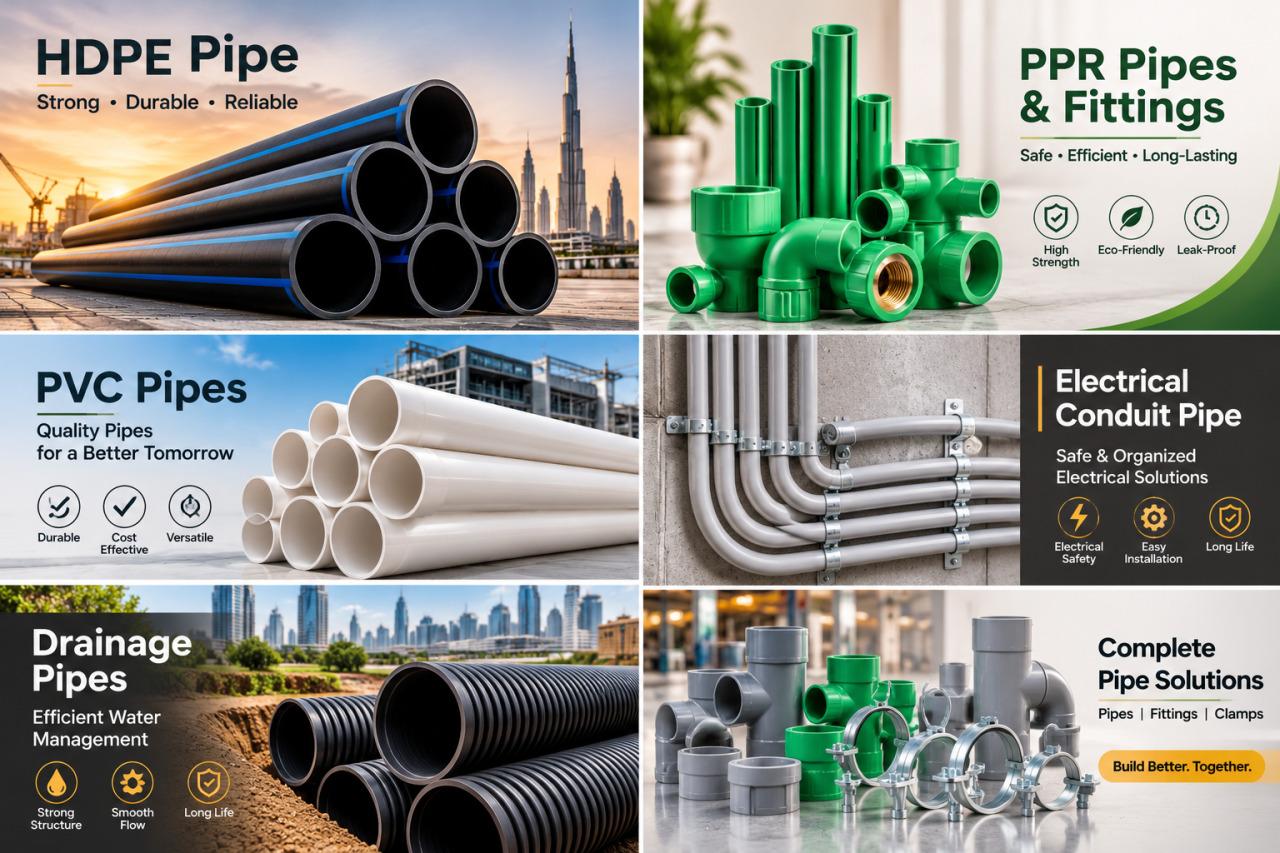
A reliable plumbing system depends on choosing compatible materials for both the main pipeline and its connections. Pipes alone cannot create a complete water-distribution network; elbows, sockets, tees, reducers, valves, and other components are equally important. ppr pipe and fittings are widely used in modern plumbing because polypropylene random copolymer systems can provide corrosion resistance, smooth internal surfaces, and practical installation through heat-fusion joining. Dubai's water infrastructure procurement also includes PPR piping and matching components, demonstrating the importance of selecting the right pipe-and-fitting combination for project requirements.
Understanding PPR Plumbing Systems
PPR, or polypropylene random copolymer, is a thermoplastic material commonly used for water-supply and plumbing installations. It can be manufactured into pipes and a wide range of fittings designed to work together as a complete system.
Unlike traditional metallic pipes, PPR does not rust. This makes it suitable for many plumbing environments where long-term exposure to water could create corrosion concerns.
PPR products are available in different sizes and pressure classifications. Therefore, the correct selection should be based on the project's operating conditions, water temperature, pressure, installation method, and applicable specifications.
Why Both Pipes and Fittings Matter
A plumbing network contains numerous changes in direction, branches, connections, and transitions. These requirements cannot be achieved using straight pipe sections alone.
For example, an installation may require:
-
Elbows for changing direction
-
Tees for creating branches
-
Sockets for joining pipe sections
-
Reducers for connecting different sizes
-
Unions for serviceable connections
-
Valves for controlling water flow
-
Transition fittings for connecting different materials
Using components designed for the same piping system can make installation more straightforward and help maintain consistency throughout the network.
A DEWA procurement document, for example, specifies PPR pipes in several sizes alongside PPR sockets, showing how pipes and connection components can form part of the same procurement requirement.
Benefits of PPR Pipe Systems
Corrosion Resistance
One of the main advantages of polypropylene is its resistance to rust and corrosion. This can be valuable in water-distribution systems where metallic materials may be exposed to conditions that encourage corrosion.
A properly selected and installed PPR system can therefore provide a practical alternative for many building plumbing applications.
Smooth Internal Surface
The inside surface of a pipe affects how water moves through the system. PPR provides a relatively smooth internal surface, which supports efficient water flow.
Smooth surfaces can also reduce concerns associated with deposits forming inside some traditional piping materials.
Lightweight Material
PPR is generally lighter than many metal piping alternatives. This can make transportation and handling easier during construction.
However, proper supports and installation practices are still necessary, particularly for long pipe runs and larger installations.
Heat-Fusion Connections
PPR systems are commonly joined through heat fusion. The pipe and fitting surfaces are heated using suitable equipment and then joined together.
When the process is performed correctly, the connection can provide a strong and continuous joint. Correct heating time, alignment, preparation, and cooling are important for achieving reliable results.
Choosing the Correct Pipe Specification
One of the most important purchasing decisions is selecting the correct pipe specification.
Important factors include:
-
Nominal pipe size
-
Wall thickness
-
Pressure rating
-
Operating temperature
-
Material grade
-
Applicable standard
-
Intended application
-
Installation environment
For example, a DEWA procurement request has specified PPR plumbing pipes in 25 mm, 32 mm, 40 mm, and 50 mm sizes with PN16 requirements for a particular requirement.
This illustrates why buyers should not simply select a product based on diameter. The complete technical specification needs to be considered.
Selecting Compatible Fittings
Fittings should be selected according to the pipe dimensions and system requirements.
An incorrectly sized fitting can create installation difficulties, while an unsuitable pressure classification may not meet the needs of the system.
Before purchasing, contractors should verify:
-
Pipe diameter
-
Fitting diameter
-
Pressure classification
-
Material compatibility
-
Joining method
-
Application requirements
-
Manufacturer specifications
Buying compatible components from a reliable supplier can also make procurement and installation more efficient.
Common Applications
PPR systems are used in many types of buildings and facilities.
Residential Plumbing
Homes and apartment buildings may use PPR for hot- and cold-water distribution. The system can be installed within walls, ceilings, service shafts, or other designated plumbing routes according to the building design.
Commercial Buildings
Offices, hotels, restaurants, shopping facilities, and other commercial properties can have extensive water networks. PPR can be considered where the project specification permits its use.
Industrial Applications
Some industrial facilities use polypropylene piping for selected water and utility systems. However, the material must be evaluated against the fluid, temperature, pressure, and chemical conditions before installation.
Maintenance Projects
PPR systems can also be used when sections of an existing plumbing network need replacement or modification. DEWA documentation has included work involving replacement of PPR pipes, fittings, valves, flanges, unions, and other components as part of plumbing maintenance.
Importance of Proper Installation
Product quality alone does not guarantee a reliable plumbing system. Installation quality plays an equally important role.
Before joining pipes and fittings, installers should ensure that surfaces are clean and properly prepared. The correct fusion equipment should be used according to the manufacturer's instructions.
Important considerations include:
-
Accurate cutting
-
Proper alignment
-
Correct heating
-
Appropriate fusion pressure
-
Adequate cooling
-
Correct pipe support
-
Allowance for thermal expansion
-
Proper pressure testing
Incorrect fusion can result in weak or restricted connections, which may eventually cause leaks or reduced system performance.
Supporting the Plumbing Network
Pipes should be properly supported according to their size, installation position, operating temperature, and manufacturer's recommendations.
This is particularly important for horizontal pipe runs. Without adequate support, pipes may sag or place unnecessary stress on fittings and joints.
DEWA project documentation has included requirements for pipe supports and metal supports as part of PPR installation work, demonstrating that support arrangements are an important part of a complete installation.
Hot-Water Applications and Thermal Movement
PPR can be used for hot-water systems when the correct specification is selected. However, temperature changes can cause thermal expansion and contraction.
Designers and installers should therefore account for thermal movement when planning the pipeline route. Depending on the installation, this may involve suitable supports, offsets, expansion arrangements, or other methods recommended by the manufacturer and project engineer.
Ignoring thermal movement can place additional stress on joints and supports over time.
How to Choose a Reliable Supplier
A good supplier should be able to provide both technical products and useful product information.
Before placing an order, buyers should ask about:
-
Available pipe sizes
-
Pressure classes
-
Fitting range
-
Product standards
-
Certifications
-
Manufacturer information
-
Installation instructions
-
Stock availability
-
Delivery schedules
-
Technical assistance
For projects involving authority approvals, material documentation can be particularly important. DEWA's infrastructure services include processes for material sample and specification approval, showing the importance of documentation in relevant projects.
Why Buying a Complete System Can Be Better
Purchasing pipes from one source and fittings from another is not always the most convenient approach. Differences in dimensions, specifications, or joining requirements can create unnecessary complications.
A supplier that can provide a complete compatible range may simplify procurement and help contractors maintain consistency across the installation.
This is especially useful for larger projects where hundreds or thousands of components may need to be coordinated.
Cost and Long-Term Value
Price is an important factor, but it should not be the only consideration.
A low-cost product may not provide good value if it does not meet the required specification or if suitable fittings are unavailable. Installation delays caused by incompatible components can also increase labour costs.
A better purchasing decision considers product quality, technical compliance, fitting compatibility, availability, delivery, installation requirements, and long-term performance.
Final Thoughts
PPR systems can provide a practical solution for many modern plumbing applications because of their corrosion resistance, smooth internal surface, lightweight construction, and heat-fusion joining method.
However, the performance of a plumbing network depends on the complete system rather than the pipe alone. Correct fittings, pressure ratings, dimensions, installation techniques, supports, and testing all contribute to reliable operation.
For projects in Dubai, buyers should also review applicable specifications and approval requirements. DEWA documentation demonstrates that PPR pipes, fittings, supports, and related components can form part of defined water-system projects and procurement requirements.
By selecting compatible products from a dependable supplier and ensuring proper installation, contractors, developers, and property owners can create plumbing systems designed for efficient and dependable long-term service.

 English
 Arabic
 French
 Spanish
 Portuguese
 Deutsch
 Turkish
 Italiano
 Russian
 Romaian
 Portuguese (Brazil)
 Greek
