


How to Choose the Right 3D Architectural Walkthrough Company
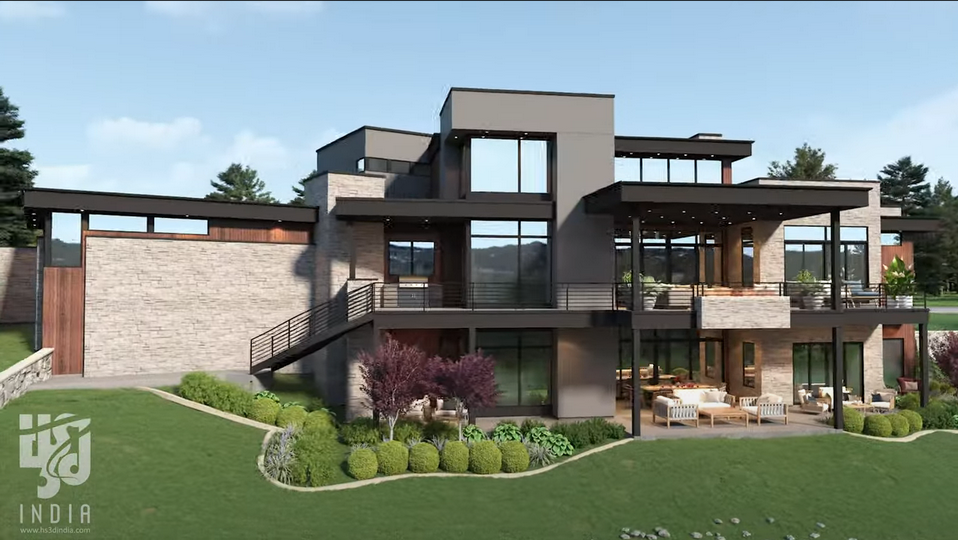
Choosing the right 3D architectural walkthrough company can make a significant difference in how your architectural designs, property developments, and building projects are presented to clients. A professionally created walkthrough can transform technical drawings and conceptual plans into immersive visual experiences, helping potential buyers, investors, architects, and stakeholders understand the final project before construction is completed.
However, not every architectural visualization studio delivers the same quality, communication, technical accuracy, or creative approach. Some companies specialise in photorealistic interiors, while others focus on exterior visualisation, cinematic walkthrough animations, commercial developments, or real estate marketing.
Selecting the right partner requires more than comparing prices or looking at a few portfolio images. You need to evaluate the company's experience, production quality, project management, technical capabilities, turnaround time, and ability to understand your design vision.
In this guide, we will explore the most important factors to consider when choosing a 3D architectural walkthrough company, helping you make an informed decision and get the best value from your investment.
1. Define Your Project Requirements Before Hiring
Before approaching a 3D architectural walkthrough company, identify exactly what you need for your project. Having a clear brief makes it easier to shortlist suitable companies, communicate expectations, and receive accurate quotations.
Different architectural projects require different visualisation approaches. A residential villa may need a detailed interior and exterior walkthrough, whereas a commercial office building may require a presentation that highlights its layout, circulation, lighting, and workspace design.
Consider the following requirements before contacting a service provider:
- Project type: Residential, commercial, industrial, hospitality, retail, or mixed-use development.
- Visualisation scope: Interior walkthrough, exterior animation, complete building walkthrough, or site-level animation.
- Purpose: Client presentation, investor pitching, property marketing, design review, or pre-sales.
- Deliverable format: MP4 video, 4K animation, still renders, virtual tour, or presentation-ready footage.
- Deadline: Your expected delivery date and any milestones for reviewing the animation.
- Budget: Your approximate spending range for the complete project.
A detailed project brief helps the visualisation company understand your objectives from the beginning. It also reduces misunderstandings, unnecessary revisions, and potential delays during production.
2. Examine the Company's Portfolio Carefully
A portfolio is one of the most important indicators of an architectural visualisation company's creative and technical capabilities. It demonstrates whether the team can translate architectural drawings, CAD files, floor plans, and design concepts into realistic visual presentations.
However, do not evaluate a portfolio based only on a few attractive images. Look at the quality and consistency of the company's actual completed projects.
Pay attention to the following elements:
- Architectural accuracy: Check whether the building proportions, structural elements, layouts, doors, windows, and materials look believable.
- Lighting quality: Evaluate natural daylight, artificial lighting, shadows, reflections, and overall ambience.
- Material detailing: Look for realistic textures, finishes, surfaces, furniture, landscaping, and architectural elements.
- Camera movement: Observe whether the walkthrough moves smoothly and logically through the spaces.
- Visual consistency: Check whether different rooms, exterior views, and transitions maintain a consistent quality.
- Project diversity: Review projects of different scales, architectural styles, and purposes.
Ask the company to share complete walkthrough videos rather than only screenshots or selected frames. A studio might produce excellent still images but struggle with camera movement, transitions, animation quality, and storytelling.
The best portfolio should demonstrate the company's ability to create an engaging visual experience while respecting the original architectural design.
3. Check Experience in Your Specific Project Type
Experience matters because every architectural project presents different challenges. A company that regularly creates visualisations for residential properties may not necessarily have the experience required for large commercial developments, hotels, industrial buildings, or complex landscape projects.
Look for a team that has worked on projects similar to yours in terms of scale, architectural style, complexity, and visualisation requirements.
For example:
- Residential projects: Villas, apartments, houses, housing societies, and luxury residences.
- Commercial projects: Offices, shopping centres, corporate buildings, and business parks.
- Hospitality projects: Hotels, resorts, restaurants, and holiday properties.
- Interior projects: Living rooms, kitchens, bedrooms, offices, retail interiors, and furniture layouts.
- Industrial projects: Warehouses, factories, manufacturing facilities, and logistics buildings.
A company with relevant experience is more likely to understand the visual requirements of your project, the appropriate camera angles, the level of detail needed, and the type of presentation that will appeal to your audience.
Ask about previous projects, production challenges, and how the team handled similar requirements. This can help you assess whether the company has practical experience rather than relying solely on marketing claims.
4. Evaluate the Quality of Animation and Realism
15
Visual quality is a major factor when selecting a 3D architectural walkthrough provider. A professionally produced animation should communicate the architectural design clearly while creating a realistic and visually appealing experience.
Photorealism is not simply about making a building look attractive. It involves combining multiple technical and creative elements to produce believable visuals.
Lighting and shadows
Proper lighting helps viewers understand the space, its depth, proportions, and atmosphere. Natural light coming through windows, realistic shadows, artificial lighting fixtures, and reflections can significantly improve the overall presentation.
Textures and materials
Materials such as wood, concrete, glass, stone, metal, fabric, and tiles should appear realistic. The visualisation team should understand how different materials react to lighting and how their textures influence the final appearance.
Camera movement and animation
Camera movement should be smooth, controlled, and purposeful. Sudden movements, awkward transitions, excessive camera speed, or unnecessary rotations can distract viewers.
A well-planned animation should guide the viewer through the property naturally, allowing them to understand the spatial relationships between rooms and architectural elements.
Landscaping and surroundings
For exterior projects, landscaping, roads, trees, surrounding buildings, outdoor furniture, and environmental details can make the visualisation more convincing.
The company should be capable of creating an appropriate environment without distracting from the main architectural design.
Rendering and post-production
Professional rendering, colour grading, motion effects, and editing can improve the presentation. However, these enhancements should support the architectural design rather than hide inaccuracies or inconsistencies.
Before hiring, request a sample of the company's animation work in the resolution and format you expect to receive.
5. Understand the Company's Production Workflow
A reliable visualisation company should have a clear production process that takes your project from initial drawings to the final animation.
Understanding the workflow helps you know what to expect, when to provide feedback, and how the project will progress.
A typical architectural walkthrough production process includes:
Step 1: Project briefing and file collection
The team collects floor plans, elevations, CAD files, references, material specifications, and other relevant design information.
Step 2: 3D modelling
The building, interiors, furniture, landscape elements, and surrounding environment are created according to the supplied design.
Step 3: Materials and lighting
Materials, textures, lighting, furnishings, landscaping, and other visual details are applied to improve realism.
Step 4: Camera path and animation
The camera route is planned to showcase important areas, transitions, views, and architectural features.
Step 5: Preview and revisions
A preview is shared for review, allowing the client to request agreed changes before final rendering.
Step 6: Final rendering and delivery
The approved animation is rendered, edited, and delivered in the agreed resolution, format, and specifications.
Before signing an agreement, ask the company whether it provides preview stages, progress updates, revision opportunities, and a clear delivery schedule.
A transparent workflow helps you stay informed and gives you more control over the final outcome.
6. Compare the Range of Services Offered
Choosing a company that offers a comprehensive range of architectural visualisation services can be beneficial, especially if your project requires multiple types of visual content.
Rather than hiring separate providers for still images, animations, interior renders, and exterior visualisation, you may be able to work with a single studio that handles the complete visualisation process.
Some of the services you may want to consider include:
- 3D interior rendering
- 3D exterior rendering
- Architectural walkthrough animation
- 3D flythrough animation
- Virtual tours and immersive visualisation
- Architectural modelling
- Landscape visualisation
- Floor plan rendering
- Real estate marketing animation
15
When evaluating 3D Architectural Walkthrough Services, look beyond the service list and examine the actual quality of the work. A company may advertise several visualisation services, but the quality of its completed projects and the expertise of its team are more meaningful indicators.
Ask whether the company can adapt its services to your project requirements. For example, a real estate developer may need a complete property walkthrough with exterior shots, interior spaces, landscaping, amenities, and neighbourhood views.
An architect, on the other hand, may require a more design-focused animation that demonstrates spatial layouts, architectural details, circulation, and materials.
The ideal company should be capable of understanding the purpose of the visualisation and creating content that meets your specific expectations.
7. Assess Communication and Project Management
Communication is often overlooked when choosing an architectural walkthrough company, but it can significantly affect the overall experience.
Even a highly talented visualisation team can struggle to deliver a satisfactory project if communication is poor, feedback is misunderstood, or progress updates are inconsistent.
Before hiring, assess how the company communicates during the initial consultation.
Ask yourself:
- Does the company understand your architectural requirements?
- Does it respond to questions clearly and professionally?
- Does it provide realistic delivery timelines?
- Does it explain the production process?
- Is there a dedicated project manager or point of contact?
- Does it have a structured process for handling feedback and revisions?
- Is it willing to discuss technical requirements before starting?
A professional company should actively listen to your requirements instead of immediately offering a generic package.
Clear communication is particularly important when working remotely with a visualisation studio. A well-organised team should be able to communicate through email, video meetings, project management tools, or other agreed channels.
The ability to understand design instructions, incorporate feedback, and maintain transparency throughout the project can make the collaboration considerably smoother.
8. Check Client Reviews, Testimonials and Reputation
Client reviews and testimonials provide valuable insights into how a company performs beyond the images and videos showcased in its portfolio.
While a portfolio demonstrates visual quality, customer feedback can reveal whether the company is dependable, responsive, organised, and capable of meeting project expectations.
Consider checking:
- Google Business Profile reviews
- Testimonials on the company's official website
- LinkedIn company activity and recommendations
- Industry directories and professional platforms
- Client case studies
- References from previous customers
Do not focus only on the number of positive reviews. Read the actual feedback and look for recurring comments about communication, animation quality, deadline management, revision handling, and customer support.
If possible, ask the company for references from clients who have completed similar projects.
You should also look for evidence that the company's portfolio represents its own work. Ask for project context, sample videos, or additional frames from the same project if you need to evaluate consistency.
A credible visualisation company should be comfortable explaining its previous work and discussing its approach to different architectural projects.
9. Understand Pricing and What Is Included
The cost of an architectural walkthrough depends on several factors, including project complexity, building size, animation duration, detailing, rendering quality, and delivery requirements.
There is no universal price for a 3D architectural walkthrough because every project involves different modelling, animation, and production requirements.
The following factors commonly influence the quotation:
|
Pricing factor |
How it affects cost |
|
Project size |
Larger buildings and developments may require more modelling and detailing. |
|
Architectural complexity |
Unique structures, intricate designs, and custom elements may require additional work. |
|
Animation duration |
Longer videos generally involve more animation, rendering, and editing. |
|
Visual quality |
High-detail textures, realistic lighting, and advanced rendering may increase production costs. |
|
Interior detailing |
Furniture, accessories, fixtures, and room-specific details add to the production workload. |
|
Exterior environment |
Landscaping, surrounding buildings, roads, vehicles, and environmental elements require additional effort. |
|
Revisions |
Additional or extensive revisions beyond the agreed scope may increase costs. |
|
Delivery deadline |
Urgent projects may require additional resources or expedited production. |
When comparing quotations, make sure you are comparing the same scope of work.
A lower quotation may not include detailed modelling, sound design, multiple camera paths, high-resolution rendering, or revisions. A higher quotation may include additional services that make it better value for your project.
Ask the company to provide a detailed estimate explaining the deliverables, timeline, revision policy, file formats, and payment terms.
The best value is not necessarily the cheapest quote. It is the service that delivers the required quality, accuracy, communication, and reliability within your budget.
10. Ask About Revisions, Deadlines and Delivery Formats
Revisions are an important part of architectural visualisation because the initial animation may not perfectly match your expectations.
A professional company should establish a revision policy before beginning production. You should understand how many revision rounds are included, which types of changes are covered, and whether additional modifications are charged separately.
Typical revision requests may include:
- Adjusting the camera path or movement speed.
- Changing materials, textures, or colours.
- Modifying furniture arrangements.
- Updating lighting or environmental details.
- Correcting architectural elements.
- Adding or removing scenes.
- Changing transitions or animation sequences.
It is also important to clarify the expected delivery format.
Depending on your project, you may require:
- MP4 video files.
- Full HD or 4K resolution.
- Landscape or portrait video formats.
- Website-ready video files.
- Presentation-ready animation.
- Separate clips for social media.
- Still images extracted from the walkthrough.
A well-defined revision and delivery agreement prevents misunderstandings and makes the production process more predictable.
11. Evaluate Technical Expertise and Software Capabilities
Technical expertise is another important consideration when selecting an architectural visualisation company. Professional walkthrough production involves more than creating a model and rendering a video.
The team should understand architectural geometry, modelling workflows, material creation, lighting techniques, camera composition, animation, rendering optimisation, and post-production.
Depending on the project, the company may use software such as:
- Autodesk 3ds Max.
- Blender.
- Autodesk Revit.
- SketchUp.
- Lumion.
- Chaos V-Ray.
- Unreal Engine.
You do not necessarily need to hire a company that uses every software mentioned above. What matters is whether the team has the technical capabilities to deliver the quality, accuracy, and format required for your project.
Ask how the company works with architectural drawings, CAD files, BIM models, reference images, and material specifications.
If your design is still evolving, find out whether the studio can accommodate design changes during the modelling and animation stages.
Technical flexibility and a well-organised production workflow are particularly valuable when working on complex or large-scale projects.
12. Determine Whether the Company Understands Your Marketing Goals
An architectural walkthrough is not just a visual representation of a building. It can also be an important marketing asset for property developers, architects, construction companies, interior designers, and real estate professionals.
The right visualisation company should understand the purpose of your animation and create a presentation that supports your business objectives.
For example, real estate developers may want to showcase:
- Property layouts and room sizes.
- Lifestyle features and amenities.
- Exterior architecture and landscaping.
- Location and neighbourhood surroundings.
- Residential units and common areas.
- Interior design and finishes.
Architects may focus on:
- Design accuracy.
- Spatial relationships.
- Architectural details.
- Building circulation.
- Lighting and materials.
- Presentation to clients and project stakeholders.
A marketing-focused 3D Animated Walkthrough Video may incorporate storytelling, camera transitions, music, lifestyle elements, branding, and cinematic sequences to make the presentation more engaging.
However, the visual storytelling should remain consistent with the actual design and project specifications. Misrepresenting the proposed property can create unrealistic expectations, particularly in real estate marketing.
A good visualisation partner should balance creative presentation with architectural accuracy and transparency.
13. Look for Transparency and Professionalism
Trust is an essential part of any business relationship, particularly when you are investing in a complex visualisation project.
A professional architectural walkthrough company should be transparent about its capabilities, project timelines, pricing, production process, and deliverables.
Watch for the following potential warning signs:
- Unrealistic promises: Guaranteed delivery of highly complex animations in extremely short timelines without understanding the project.
- Unclear quotations: Pricing that does not explain what is included or how additional work will be charged.
- Limited portfolio evidence: Only a few images with no complete walkthrough videos or supporting project examples.
- Poor communication: Delayed responses, vague answers, or an inability to explain the workflow.
- No revision policy: Unclear expectations regarding feedback, corrections, or additional changes.
- Unverified portfolio work: No reasonable explanation of project ownership or production involvement.
- No written agreement: Unclear deliverables, payment terms, deadlines, and responsibilities.
These warning signs do not automatically mean a company is unsuitable, but they should encourage you to ask additional questions before committing.
A trustworthy company should be willing to explain what it can deliver and what limitations may apply.
14. Request a Sample, Test Project or Demonstration
If you are unsure about a company's capabilities, consider requesting a sample, demonstration, or small test project where practical.
A sample can help you assess the company's ability to understand your requirements, follow architectural references, maintain visual quality, and communicate effectively.
However, not every studio offers free custom samples, and you should not expect a complete walkthrough to be produced without compensation. If the project is complex, a paid test assignment may be a reasonable way to evaluate the collaboration before committing to a larger contract.
When reviewing the sample, evaluate:
- Architectural accuracy.
- Lighting and rendering quality.
- Material realism.
- Camera movement.
- Responsiveness to feedback.
- Attention to design details.
- Overall professionalism.
If you are satisfied with the sample, you can move forward with greater confidence and establish clear expectations for the full project.
15. Use a Checklist Before Finalising Your Decision
Before hiring a 3D architectural walkthrough company, use this checklist to compare your shortlisted providers.
Company evaluation checklist
Reviewed complete walkthrough videos, not just still images.
Checked experience with projects similar to mine.
Evaluated animation quality, lighting, materials, and camera movement.
Confirmed the company's production workflow.
Discussed communication and project management.
Checked client reviews, testimonials, and references.
Received a detailed quotation.
Confirmed revision limits and additional charges.
Discussed deadlines and delivery formats.
Confirmed technical capabilities and software workflows.
Reviewed the company's marketing and presentation capabilities.
Clarified payment terms and project agreement.
This checklist can help you compare different companies based on practical criteria instead of making a decision solely on price or attractive portfolio images.
Conclusion
Choosing the right 3D architectural walkthrough company requires careful evaluation of its portfolio, experience, technical expertise, animation quality, communication, pricing, and production workflow. The right partner should understand your architectural vision, respect your design requirements, and create visually engaging presentations that serve your project's objectives.
Rather than making a decision based only on cost, compare the overall value, reliability, quality, and flexibility each company offers. A well-planned collaboration can help you present architectural concepts more effectively, improve client communication, and create compelling visual assets for design presentations and property marketing.
Whether you are an architect, interior designer, real estate developer, builder, or construction professional, working with an experienced visualisation team can help turn your architectural ideas into meaningful visual experiences.
HS3D Visualization offers architectural visualisation solutions, including 3D interior and exterior rendering, architectural walkthrough animation, 3D modelling, and visual presentation services, helping architects, designers, builders, and real estate developers communicate their projects through detailed visual content.

 English
 Arabic
 French
 Spanish
 Portuguese
 Deutsch
 Turkish
 Dutch
 Italiano
 Russian
 Romaian
 Greek
