


How Microplastics Are Changing Consumer Preferences in the Food Industry
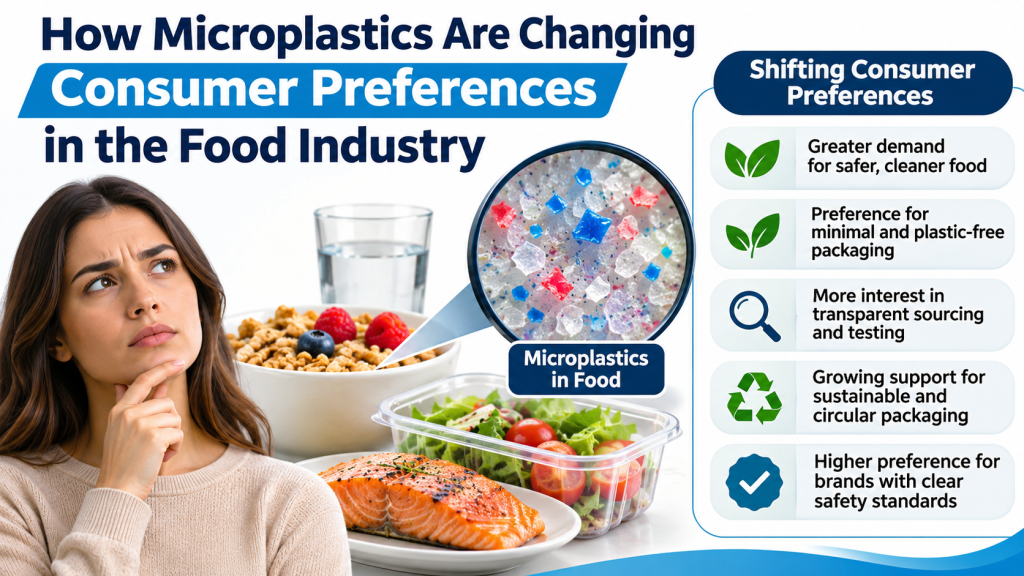
Microplastics are becoming an important concern for consumers, food manufacturers, and packaging companies worldwide. These tiny plastic particles, generally measuring less than five millimeters, have been detected in various food products, beverages, seafood, salt, bottled water, and other everyday items. Growing awareness of their presence in the food supply is changing how consumers evaluate food safety, packaging materials, product quality, and brand responsibility.
As consumers become more conscious of environmental pollution and potential health risks, food companies are facing increasing pressure to reconsider their packaging strategies and manufacturing practices. Microplastics are no longer viewed only as an environmental issue. They are also becoming a factor influencing purchasing decisions and consumer confidence across the global food industry.
Growing Consumer Awareness of Microplastics
Public awareness of microplastics has increased significantly as scientific research, environmental campaigns, and media coverage highlight plastic pollution and its potential connection to food contamination. Consumers are paying closer attention to how food is produced, processed, transported, and packaged.
According to a 2025 consumer monitor by Germany’s Federal Institute for Risk Assessment, 67% of respondents considered microplastics in food a major concern, while 15% expressed medium concern. The findings demonstrate how strongly this issue is influencing public perceptions of food safety.
Consumers are increasingly examining product labels, packaging materials, and manufacturing information before making purchasing decisions. This behavior is particularly noticeable among environmentally conscious shoppers who prefer products that demonstrate responsible material selection and reduced plastic usage.
Changing Preferences for Food Packaging Materials
One of the most visible effects of microplastic concerns is the growing interest in alternative food packaging materials. Traditional plastic packaging remains widely used because of its lightweight structure, durability, affordability, and ability to protect food during transportation and storage. However, concerns about plastic pollution are encouraging manufacturers to explore other options.
Glass, paper, cardboard, aluminum, and compostable packaging are receiving greater attention from food brands and consumers. Glass containers are particularly attractive for beverages, sauces, dairy products, and other packaged foods because they provide an alternative to conventional plastic containers.
Paper-based packaging is also gaining popularity in selected applications, including dry foods, takeaway products, and retail packaging. However, alternative materials must meet important requirements related to food protection, moisture resistance, product shelf life, and transportation efficiency.
This shift is encouraging packaging manufacturers to develop solutions that balance environmental considerations with practical food safety requirements.
Impact on Food Brands and Purchasing Decisions
Consumer preferences are becoming an important consideration for food manufacturers. Brands that communicate clearly about packaging materials, product safety, and sustainability can strengthen customer confidence.
A 2026 survey published by the International Food Information Council found that 81% of surveyed Americans believed microplastics were harmful to human health. Additionally, 30% reported changing their food or beverage purchases during the previous year because of safety concerns.
These findings highlight the commercial importance of consumer confidence. Food companies can no longer depend only on product taste, pricing, and convenience. Packaging transparency and responsible manufacturing practices are becoming additional factors in purchasing decisions.
Consumers may increasingly prefer brands that provide clear information about their packaging materials, recycling practices, and efforts to reduce unnecessary plastic use.
Increasing Demand for Sustainable Packaging Innovation
The growing discussion around microplastics is creating opportunities for innovation across the food packaging industry. Manufacturers are investing in alternative materials, improved recycling technologies, and packaging designs that reduce dependence on conventional plastics.
Bio-based polymers, recyclable packaging solutions, compostable materials, and paper-based alternatives are attracting attention from manufacturers seeking to respond to changing market expectations.
However, sustainable packaging development involves several challenges. Alternative materials must maintain product freshness, prevent contamination, withstand transportation conditions, and remain commercially affordable.
Plastic packaging also continues to play an important role in extending food shelf life and reducing food waste. Therefore, replacing conventional plastics requires careful evaluation rather than simply removing plastic materials from packaging systems.

 English
 Arabic
 Spanish
 Portuguese
 Deutsch
 Turkish
 Dutch
 Italiano
 Russian
 Romaian
 Portuguese (Brazil)
 Greek
