


Land Conversion in Maharashtra: Process for Residential Use
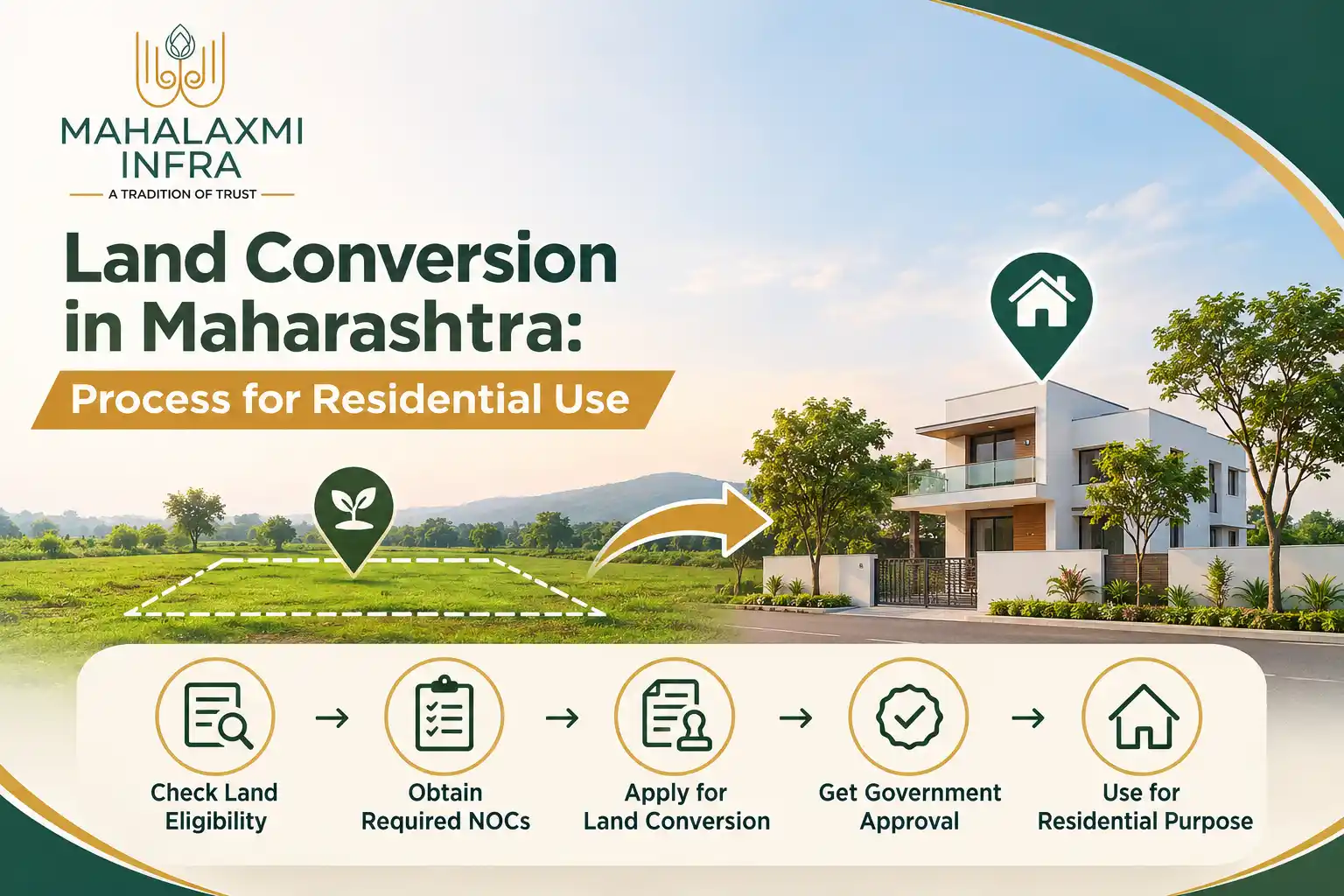
Agricultural land is often considered by people looking for residential plots in Maharashtra. However, land that is recorded as agricultural cannot automatically be used for building a house or developing a residential layout. Its permitted use, planning status and applicable approvals must be checked first.
This is where land conversion in Maharashtra becomes important. It refers to the process of changing land use from agriculture to a permitted non-agricultural purpose, such as residential, commercial or industrial use.
For buyers considering plots in Nagpur or other parts of Maharashtra, understanding this process can help them identify the approvals required before purchasing land.
What Is Land Conversion?
Land conversion means changing the permitted use of a land parcel from one category to another. For example, agricultural land may be proposed for residential development if the applicable planning regulations allow it.
Land intended for residential use is commonly referred to as non-agricultural or NA land. However, simply describing a property as an NA plot does not establish that all necessary permissions have been obtained.
Buyers should verify the relevant development permissions, land records and approval documents before proceeding.
What Is the Process of Land Use Conversion in Maharashtra?
The process depends on the location of the land, its existing tenure and the applicable Development Plan or Regional Plan.
Under the Maharashtra Land Revenue Code (Second Amendment) Act, 2025, separate Collector permission is not required for non-agricultural use where the proposed use is permitted under the applicable draft or final Development Plan, Regional Plan or relevant development regulations. The planning authority handles development permission and recovers the applicable one-time premium before granting permission or approving the building plan.
A buyer or landowner should generally consider the following steps:
1. Check the land records
Identify the property using its survey number, Gat number or other relevant details. Review the 7/12 extract, ownership records and any existing restrictions.
2. Verify the permitted land use
Check the Development Plan or Regional Plan to confirm whether residential use is permitted. A Zone Certificate, where applicable, can help establish the designated land-use zone.
3. Identify the competent planning authority
Depending on the property's location, the relevant authority may be NMRDA, NIT, a municipal corporation or another planning authority.
4. Apply for the required development permission
Submit the documents and plans required by the competent authority. These may include ownership records, site plans, layout proposals and other technical documents.
5. Pay the applicable premium and charges
The authority will determine the applicable one-time premium and other charges under the relevant rules. The amount depends on factors such as land area and market value.
6. Complete the required approvals
Once the necessary permissions and payments are completed, the authority can process the development permission or building plan approval. Relevant changes are then made to the revenue records.
The exact requirements can differ between properties. Buyers should confirm the current procedure with the competent authority before relying on an assumed conversion process.
Are There NA Conversion Charges in Maharashtra?
Yes. Maharashtra's amended land revenue provisions provide for a one-time premium for non-agricultural use.
Under Section 47 of the Maharashtra Land Revenue Code, 1966, as amended in 2025, the prescribed premium rates are linked to the land area and its current market value under the Annual Statement of Rates (ASR):
-
Up to 1,000 square metres: 0.1% of the applicable market value.
-
Above 1,000 and up to 4,000 square metres: 0.25%.
-
Above 4,000 square metres: 0.5%.
These rates relate to the statutory one-time premium. Other applicable development, scrutiny, infrastructure or statutory charges may be separate. The final amount should be confirmed with the relevant planning authority.
What Is the Difference Between NA Conversion and Class 2 to Class 1 Conversion?
These are two different matters, and buyers should not confuse them.
NA conversion concerns the permitted use of land. It determines whether agricultural land can be used for a non-agricultural purpose, such as residential development.
Class 2 to Class 1 conversion concerns the tenure or occupancy status of certain lands. Class 2 land may carry conditions or restrictions attached to its original grant. Converting it to Class 1 involves a separate application and verification process under the applicable Maharashtra rules.
Approval for non-agricultural use does not automatically change Class 2 land into Class 1. Both matters must be checked separately where applicable.
For more information about NA land, read Mahalaxmi Infra's article on what non-agricultural land means.
What Should Buyers Check Before Purchasing Converted Land?
Before purchasing a residential plot, buyers should verify more than its advertised NA status.
-
Check the land's current ownership and revenue records.
-
Verify whether residential use is permitted under the applicable plan.
-
Ask for the relevant development permission and approved layout.
-
Check whether the land has Class 1 or Class 2 occupancy status.
-
Review any conditions, reservations or restrictions affecting the property.
-
Confirm access roads and essential infrastructure.
Mahalaxmi Infra operates in Nagpur's residential real estate market, where buyers can compare available plot options. Understanding the approvals, location and existing infrastructure of a project is important before making a purchase.
You can review Mahalaxmi Infra's residential projects or contact the team for project-related information.
FAQs
1. How to convert land from Class 2 to Class 1 in Maharashtra?
Eligible Class 2 landholders can apply to the concerned District Collector under the applicable conversion rules. The authority checks the original grant conditions, any outstanding breaches and the required conversion premium before deciding the application. This is separate from NA land-use conversion.
2. What is 143 converted land?
The term “143 converted land” is commonly associated with Section 143 of the former Uttar Pradesh Zamindari Abolition and Land Reforms Act, which dealt with declaring agricultural land for non-agricultural use. It is not a standard NA conversion category under Maharashtra's land revenue system. Buyers in Maharashtra should check the applicable state approvals and records instead.
3. What is the process of land use conversion?
The process generally involves checking the permitted use under the relevant development plan, identifying the competent authority, obtaining the required development permission, paying applicable charges and ensuring that the relevant land records are updated. The exact requirements depend on the property's location and legal status.
4. Are there any NA conversion charges in Maharashtra?
Yes. Section 47 of the Maharashtra Land Revenue Code provides for a one-time premium based on land area and the applicable market value. The prescribed rates are 0.1%, 0.25% or 0.5%, depending on the area category. Other applicable charges may also need to be paid.
Disclaimer: This article is for general informational purposes and does not constitute legal or property investment advice. Land conversion requirements, premiums and permissions may vary depending on the property's location, tenure and applicable regulations. Buyers should verify the latest requirements with the competent authorities and consult a qualified legal professional before purchasing land.

 English
 French
 Spanish
 Portuguese
 Deutsch
 Turkish
 Dutch
 Italiano
 Russian
 Romaian
 Portuguese (Brazil)
 Greek
