


Lithuania’s Technology and Fintech Sectors Attract New Investors
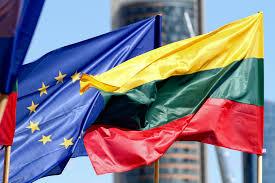
Business opportunities in Lithuania span fintech, biotechnology, advanced manufacturing, cybersecurity, and clean energy, attracting startups and international investors.
Lithuania may be compact in size, but its business landscape reaches well beyond the Baltic region. As an EU and euro area member, it gives companies a base inside the European single market, while its location connects Nordic, Central European, and Eastern European markets. For entrepreneurs, the appeal is not simply lower operating costs. Lithuania has developed specialist capabilities in technology, financial services, life sciences, and advanced manufacturing.
In 2026, the country is attracting attention from businesses looking for skilled teams, modern infrastructure, and opportunities to build export-oriented operations. The most interesting prospects often appear where established industrial expertise meets new technologies.
Fintech and Enterprise Software
Lithuania has built a recognisable fintech ecosystem, particularly around payments, electronic money, financial software, and regulatory technology. Vilnius is an important centre for companies developing payment platforms, digital banking tools, identity verification, and cross-border financial services.
Enterprise software is another strong startup area. Businesses can develop solutions for workflow automation, data management, artificial intelligence, cybersecurity, and cloud infrastructure. Rather than competing only in consumer apps, founders can target specific business problems and sell software to customers across the EU.
Financial services are regulated, so fintech founders need to assess licensing, governance, and compliance requirements before launching operations.
Life Sciences and Biotechnology
Lithuania is building a strong profile in biotechnology, medical technology, and pharmaceutical manufacturing. Research institutions, specialised talent, and investment in modern facilities create opportunities for companies working on diagnostics, medical devices, biopharmaceuticals, and contract development and manufacturing.
For startups, collaboration with universities and research centres can be as important as access to capital. This sector is especially suitable for businesses with long development cycles, specialised expertise, and plans to serve international markets.
Advanced Manufacturing and Defence Technology
Manufacturing remains a significant part of Lithuania’s industrial base, with opportunities in electronics, engineering, machinery, optical technologies, and high-value components. Companies adopting automation, robotics, and Industry 4.0 systems can improve productivity while supplying European industrial customers.
Defence technology and cybersecurity are also receiving greater attention. Businesses involved in sensors, communications, software, unmanned systems, and secure digital infrastructure may find opportunities through research partnerships and specialised supply chains. Projects in this field require careful attention to export controls and sector-specific regulations.
Cleantech and the Bioeconomy
The transition to a lower-carbon economy creates demand for energy efficiency, renewable energy systems, storage, smart grids, and circular-economy solutions. Lithuania’s bioeconomy also offers potential in sustainable materials, biomass processing, and value-added products derived from biological resources.
These areas can suit both technology startups and established manufacturers seeking to modernise production or develop new export products.
Establishing a Business in Lithuania
The right location and company structure depend on the business model. Entrepreneurs should consider access to talent, infrastructure, taxation, accounting, licensing, banking, and the costs of maintaining a local presence. Lithuania’s domestic market is relatively small, so many companies plan from the beginning to serve customers across the EU and beyond.
Confidus Solutions assists international entrepreneurs with company formation in Lithuania, corporate structuring, and related business services. Careful preparation can help businesses select an appropriate legal structure and understand the obligations that come with operating in the country.
Lithuania is not limited to one winning industry. Its strongest opportunities lie in combining technical skills, research, manufacturing expertise, and access to European markets. For companies with a clear product and international ambitions, it can be a practical base for building the next stage of growth.

 Arabic
 French
 Spanish
 Portuguese
 Deutsch
 Turkish
 Dutch
 Italiano
 Russian
 Romaian
 Portuguese (Brazil)
 Greek
