


AI Is Increasing the Complexity of Performance Testing
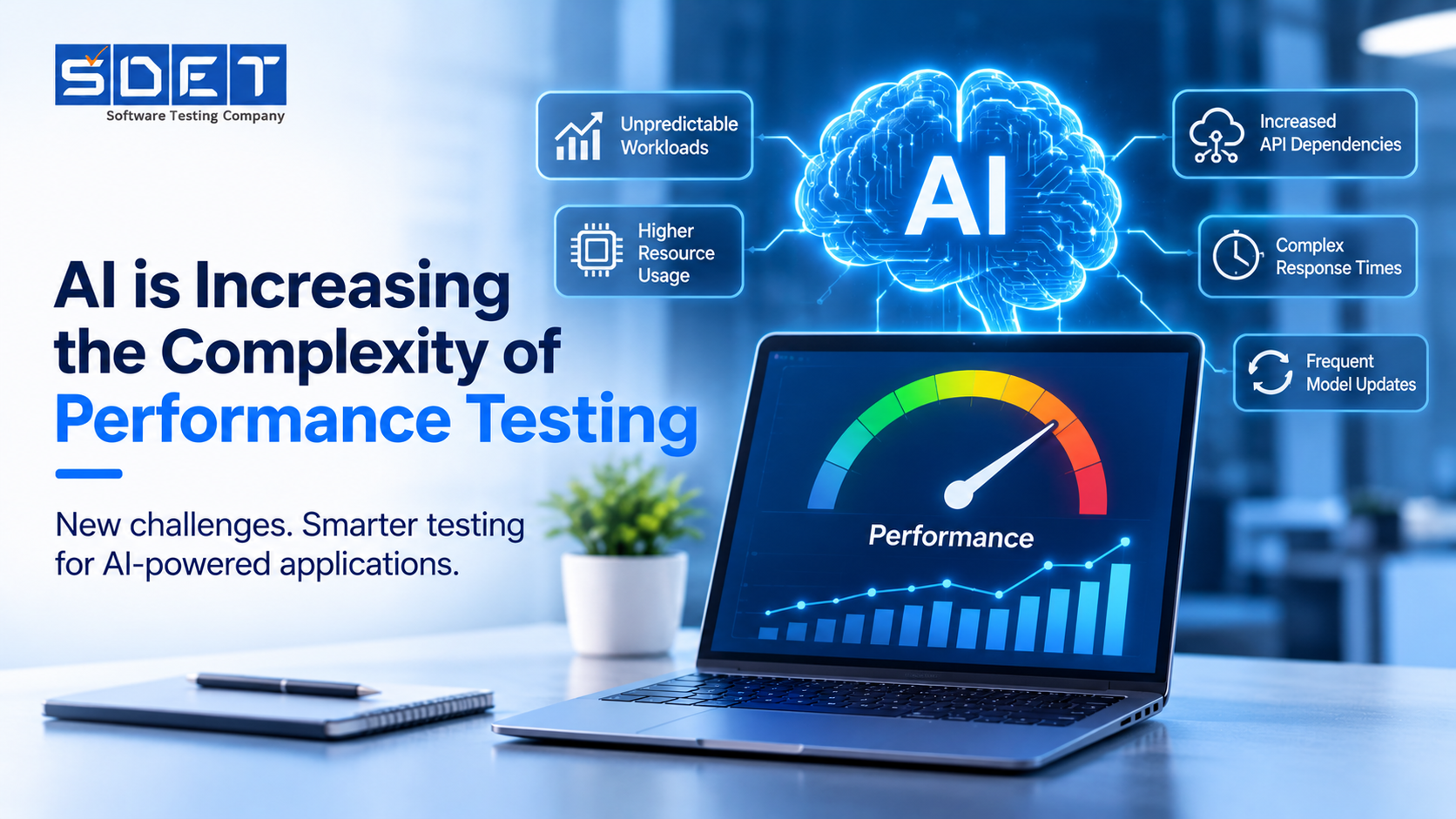
Artificial intelligence is changing how modern applications operate. AI-powered features such as chatbots and recommendation engines are becoming part of everyday digital products. These features create new challenges for software teams. Traditional performance testing methods may not be enough to evaluate systems that rely on AI.
As AI adoption grows, performance testing must account for more than response times and server capacity. Testing teams now need to evaluate unpredictable workloads and resource-intensive processes. They must also understand how AI-driven behaviour affects application performance.
How AI Is Changing Performance Testing
Traditional applications usually follow predictable execution patterns. AI-powered applications behave differently. Their performance can depend on model complexity and input variations. External APIs and real-time data processing can also influence response times.
This makes AI performance testing more challenging. Testing teams must evaluate how applications behave under different workloads and changing conditions.
5 Ways AI Is Increasing the Complexity of Performance Testing
1. Unpredictable Workload Patterns
AI applications can receive inputs of different lengths and complexity. A simple query may require fewer resources than a detailed prompt. This creates inconsistent processing times.
Performance testing must simulate realistic user behaviour. It should also account for sudden traffic spikes and complex requests.
2. Higher Resource Consumption
AI models often require significant computing resources. Large language models can increase CPU and GPU usage. They may also require substantial memory and processing capacity.
Load testing and stress testing help identify resource limitations. These tests reveal how systems perform when demand increases.
3. Increased API Dependencies
Many AI applications depend on external model APIs and third-party services. Delays in these services can affect the entire application.
API performance testing helps evaluate response times and dependency failures. It also identifies bottlenecks that may affect the user experience.
4. Complex Response Time Evaluation
Traditional performance testing often measures how quickly an application responds. AI applications require additional evaluation.
A response may take longer because the system needs to process a complex request. Testing teams must measure latency and throughput across different input conditions.
For AI-powered applications, metrics such as time to first token and token generation speed can also provide useful insights.
5. Continuous Model and Application Changes
AI models and supporting infrastructure can change frequently. Updates may affect resource consumption and response times.
This makes continuous performance testing important. Teams need regular testing to detect performance regressions after changes to models or application components.
Best Practices for AI Performance Testing
Businesses need a structured approach to test AI-powered applications effectively.
-
Simulate realistic user workloads.
-
Perform load testing and stress testing.
-
Monitor CPU and GPU utilisation.
-
Measure API latency and throughput.
-
Test different prompt sizes and input patterns.
-
Evaluate system behaviour during peak demand.
-
Integrate performance testing into CI/CD pipelines.
These practices help teams identify bottlenecks before they affect production environments.
How SDET Tech Helps Improve Application Performance
AI is making software performance more difficult to predict. Businesses need testing strategies that can handle changing workloads and complex application behaviour.
SDET Tech provides performance testing services to help businesses evaluate application scalability and reliability. Our testing approach focuses on identifying bottlenecks and measuring system behaviour under different conditions.
From load testing and stress testing to API performance testing and scalability assessment, SDET Tech helps organisations build applications that perform reliably under pressure.
Conclusion
AI is creating new challenges for performance testing. Higher resource consumption and unpredictable workloads require more advanced testing strategies.
Businesses must move beyond traditional performance checks. A comprehensive approach to AI performance testing can help improve application reliability and support scalable digital experiences.

 English
 Arabic
 French
 Spanish
 Portuguese
 Deutsch
 Turkish
 Dutch
 Italiano
 Russian
 Romaian
 Portuguese (Brazil)
