


Probiotics vs Prebiotics: What's the Difference and Why Does It Matter?

Your gut has a whole little world living inside it!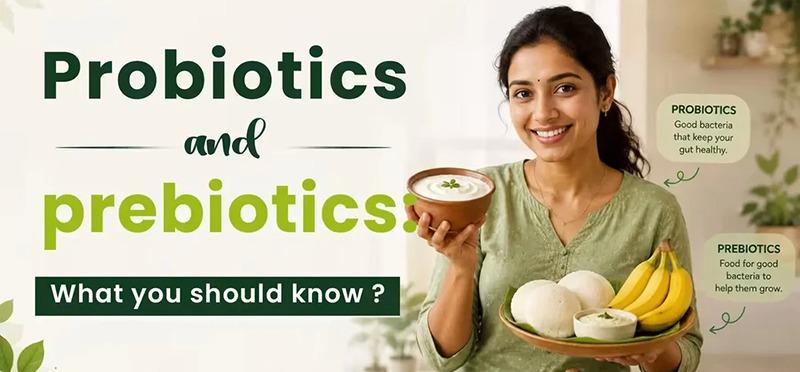
Think about the last time you enjoyed a heavy meal. Maybe it was chole bhature, a plate of biryani or an extra helping of rajma chawal because, well, who says no to good food?
But afterwards, you felt unusually full or uncomfortable. Suddenly, that delicious meal didn't seem like such a great idea!
Bloating or Poor Digestion? Find Your Gut Health Solution!
We've all had days like that. Most of us don't think much about digestion until our stomach starts acting up. That's also why gut health has become such a popular topic. From probiotic drinks and yoghurt advertisements to digestive supplements, there's plenty of conversation around keeping our digestive systems happy.
Two terms you'll often come across are probiotics and prebiotics. But are they the same? How do they work? And where do digestive enzymes fit into the picture?
Let's break it down without turning this into a biology lecture. We'll look at familiar Indian foods, everyday eating habits and digestive enzyme support from MarcoZyme Syrup by MarcCure.
1. First, Let's Understand Your Gut Microbiome
Your digestive tract is home to trillions of microorganisms, including bacteria, viruses and fungi. Together, they form a complex ecosystem known as the gut microbiome.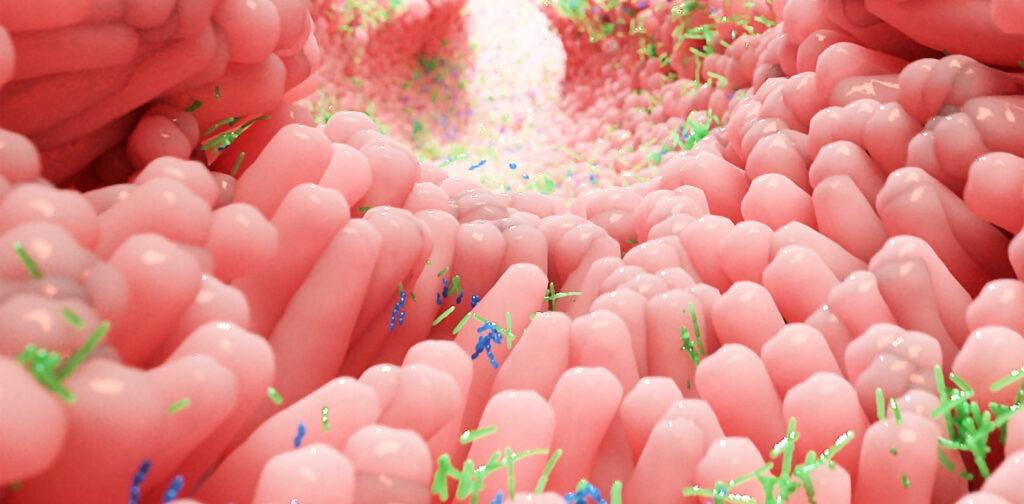
Think of it as a little neighbourhood inside your body. Different microorganisms have different roles. Some help break down certain food components, while others interact with the gut environment and contribute to normal digestive and immune functions.
This community is influenced by several everyday factors, including your diet, sleep, physical activity, age and medication use.
That's why gut health isn't about eating one bowl of curd and expecting everything to fall into place. Your overall lifestyle and eating habits matter.
A varied diet containing fruits, vegetables, pulses, whole grains and fibre-rich foods can help support a healthy gut environment. And this brings us to our first important term: probiotics.
2. Probiotics: Meet the Friendly Microorganisms!
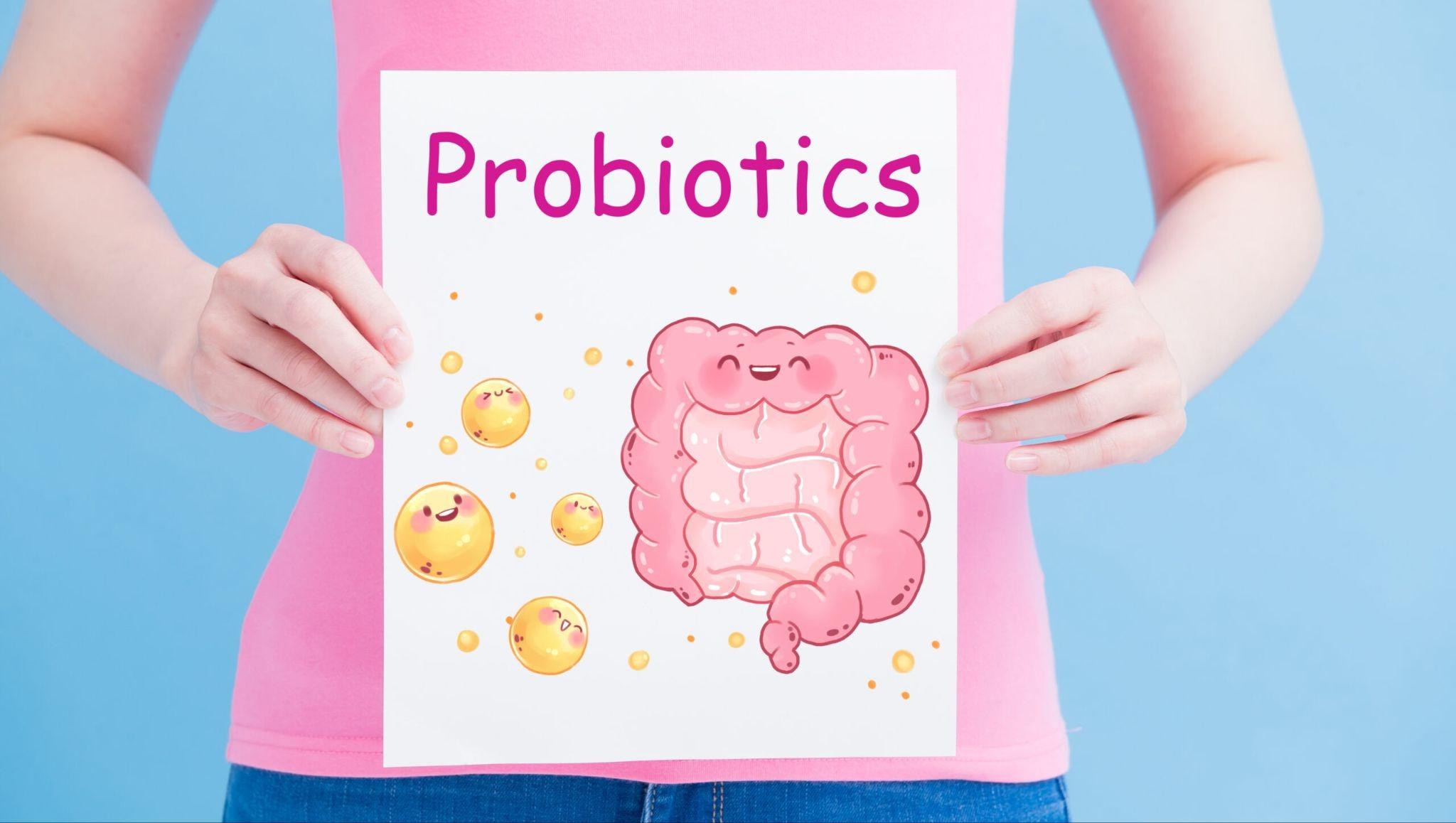
Probiotics are live microorganisms that provide a health benefit when consumed in adequate amounts. They're often called friendly bacteria, although certain beneficial yeasts can also be classified as probiotics.
You may have noticed names such as Lactobacillus-related bacteria and Bifidobacterium on yoghurt containers, fermented food labels or supplement packaging.
Certain probiotic strains may help support digestive functions and influence the gut microbial environment. Researchers have also studied their potential role in specific digestive conditions.
However, not all probiotics work in the same way. Different strains have different properties, so the benefits associated with one strain cannot automatically be applied to every probiotic product.
Where Can You Find Probiotics in Indian Food?
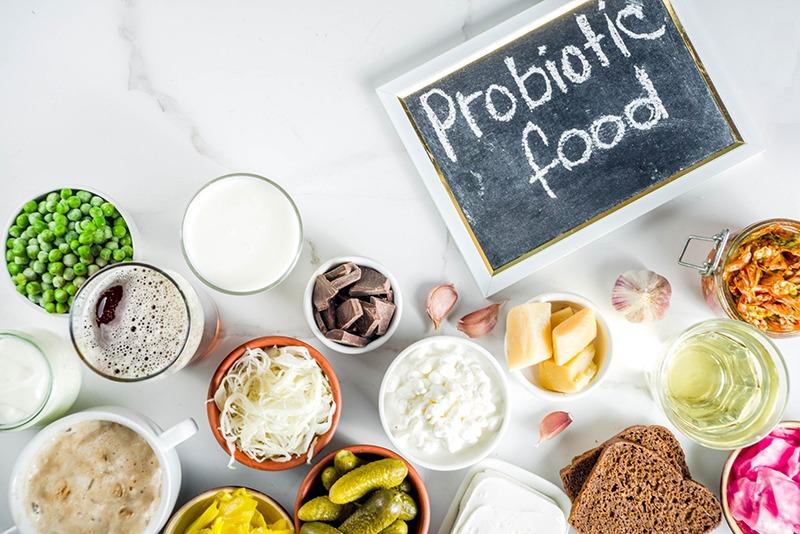
You don't necessarily need expensive imported health drinks to include fermented foods in your diet. Some familiar Indian favourites can be part of a gut-friendly eating routine.
Plain dahi containing live cultures is one example. Whether you enjoy it with dal-chawal, parathas or a regular lunch, it's an easy addition to everyday meals.
Then there's chaas, a refreshing favourite made using curd. Idli and dosa batter also undergo fermentation before cooking, although the microorganisms present and their survival in the final cooked food can vary.
Certain traditional fermented vegetables and regional preparations may also contain live microorganisms, depending on how they're made.
So, the next time you enjoy homemade dahi, remember there's a little more to that humble bowl than meets the eye!
3. Prebiotics: Food for Your Gut Microbes
If probiotics are live microorganisms, what are prebiotics?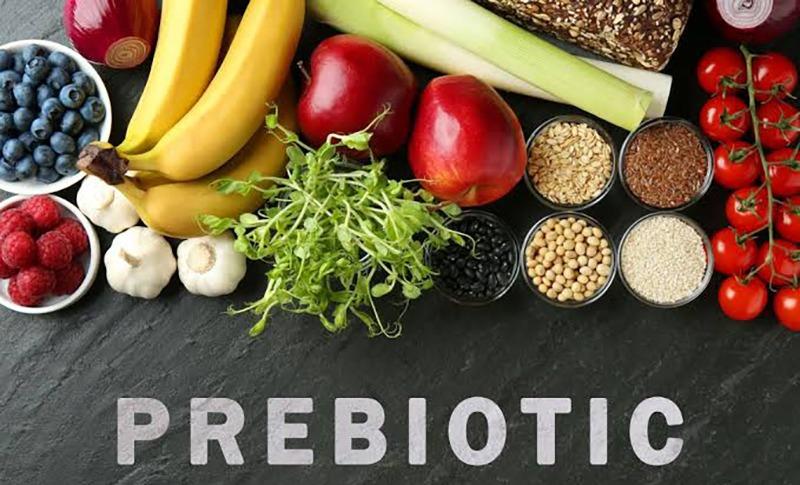
Prebiotics are substances used by certain microorganisms in the body and can support beneficial changes in the gut microbiome. Many are specific types of dietary fibre or carbohydrates that the human body doesn't fully digest.
Instead, they reach the large intestine, where certain gut microorganisms can use them.
Here's an easy way to remember the difference: probiotics are the guests, while prebiotics are the food that keeps the party going!
And you don't have to look far to find foods containing prebiotic fibres.
Onions and garlic, for example, contain compounds such as inulin and fructooligosaccharides. Bananas provide dietary fibre, including resistant starch in less-ripe varieties. Oats contain beta-glucan, a type of soluble fibre that contributes to digestive health.
Your everyday dal and legumes also deserve a mention. Rajma, chana, beans and lentils provide different types of fibre that gut microorganisms can use. Whole grains, including whole wheat and millets, contribute to your daily fibre intake too.
Basically, your kitchen already has plenty of useful ingredients. No need to order a fancy wellness hamper from another country!
4. Probiotics vs Prebiotics: What's the Actual Difference?
Let's make it really simple.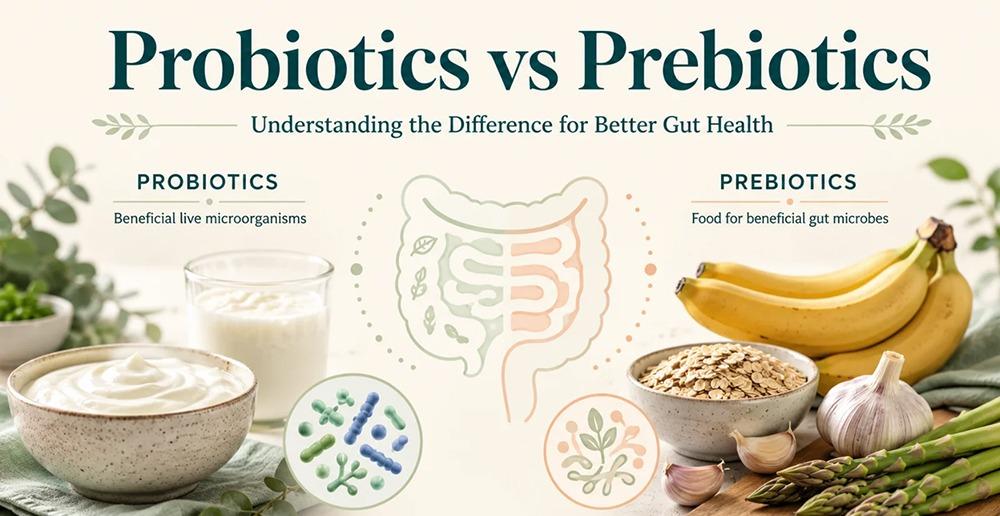
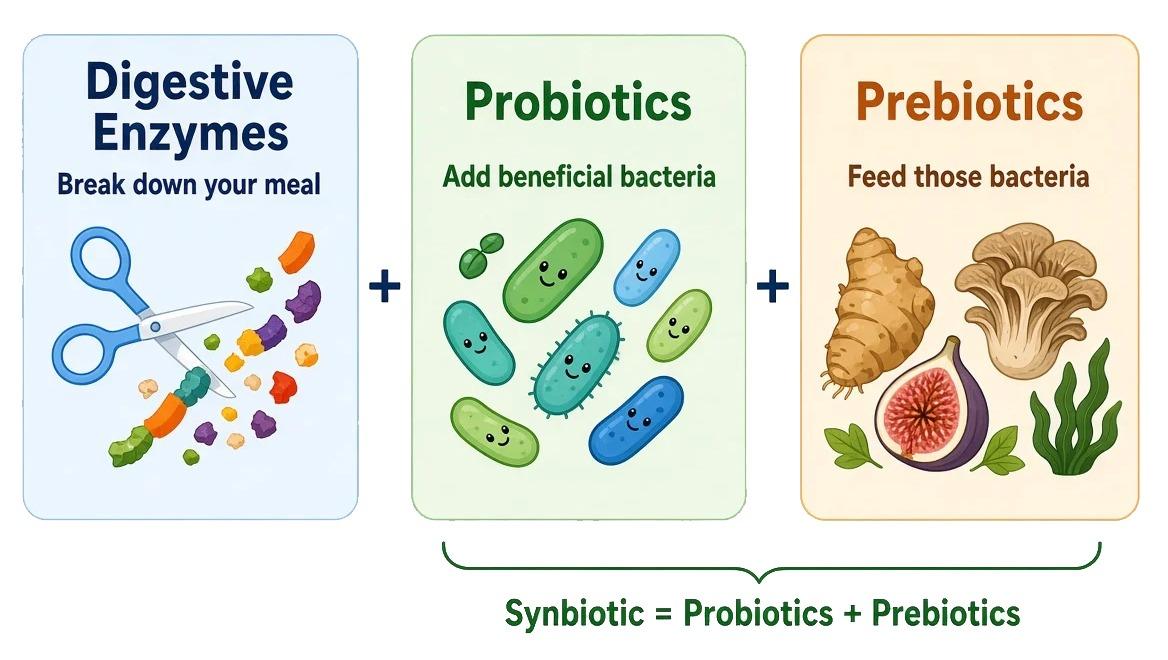
Probiotics are live microorganisms that can provide health benefits when consumed in adequate amounts. Prebiotics are substances that certain microorganisms can use as nourishment.
Imagine your gut is a garden. Probiotics are like introducing certain useful plants, while prebiotics are like providing nourishment that selected plants can use.
One introduces specific microorganisms, while the other provides something for certain microorganisms to feed on.
You may also come across the term synbiotics on supplement labels. These are combinations of probiotics and prebiotics designed to work together.
The ingredients and formulation can differ from one product to another, so it's always worth checking the label rather than relying only on the claims printed on the packaging.
5. What About Digestive Enzymes? Where Does MarcoZyme Syrup Fit In?
Now, here's where another common confusion comes in.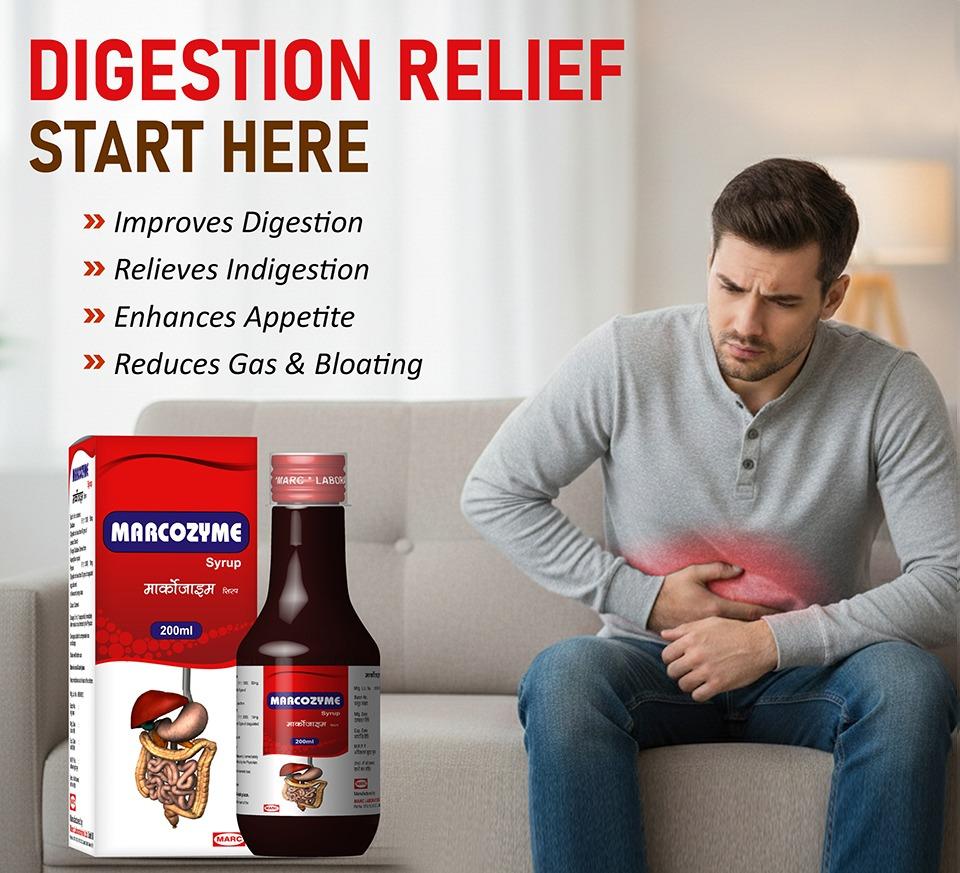
Probiotics, prebiotics and digestive enzymes are often mentioned together, but they don't do the same job.
Digestive enzymes help break down food into smaller components so that the body can process and absorb nutrients. Your digestive system naturally produces enzymes for this purpose.
For example, amylase helps break down carbohydrates, lipase works on fats, and proteases help digest proteins.
Sometimes, a healthcare professional may recommend additional digestive enzyme support depending on a person's digestive concerns.
One formulation in this category is MarcoZyme Syrup by MarcCure.
Understanding MarcoZyme Syrup
MarcoZyme Syrup is an oral digestive enzyme formulation containing Fungal Diastase (50 mg) and Pepsin (10 mg). Both ingredients support the breakdown of different food components during digestion.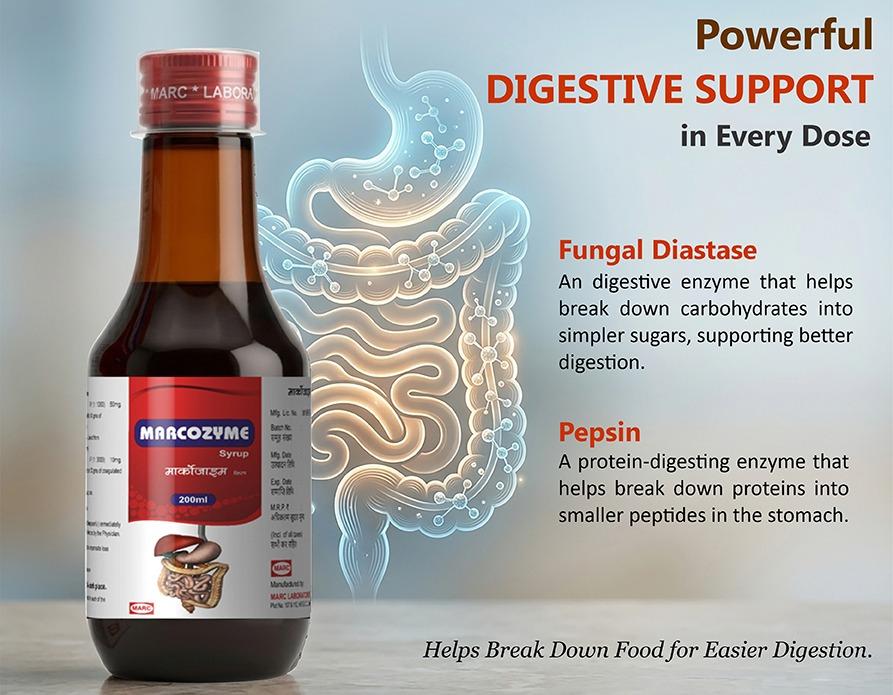
Let's look at what each one does.
Fungal Diastase (50 mg)
Think about the everyday foods on your plate: rice, roti, potatoes and other starchy ingredients. Fungal Diastase is an enzyme that helps break down starch into simpler carbohydrates that the body can process.
It supports an important step in carbohydrate digestion, particularly relevant when starch forms a regular part of your meals.
Pepsin (10 mg)
Now let's talk about protein. Whether you enjoy dal, paneer, eggs or other protein-rich foods, your body needs to break down the proteins you consume.
Pepsin is a protein-digesting enzyme that works in the stomach. It helps break proteins into smaller fragments, supporting the initial stages of protein digestion.
How Does MarcoZyme Syrup Support Digestion?
The two enzymes have different roles. Fungal Diastase acts on starches, while Pepsin works on proteins in the stomach. Together, they support the breakdown of these food components during digestion.
A healthcare professional may recommend MarcoZyme Syrup by MarcCure when additional digestive enzyme support is appropriate. This may include certain cases of indigestion, post-meal fullness or digestive discomfort associated with difficulties digesting food.
The time taken to notice an effect can vary depending on the underlying cause of the symptoms and individual response.
The important thing is to understand what a digestive formulation contains and what its ingredients are intended to do.
6. Simple Eating Habits That Support Digestive Wellness
You don't need an elaborate diet plan or a kitchen full of expensive health products to make better food choices.
Start with what you already enjoy. A breakfast of oats and banana is one simple way to include fibre in your morning meal. At lunchtime, dal, roti or rice, vegetables and plain dahi can make a balanced combination, provided you tolerate dairy.
Keep seasonal fruits handy. Guava, papaya, apples and oranges are easy additions to your routine. Include legumes such as rajma and chana in your meals, and use onions and garlic in your everyday cooking.
You can also choose whole grains more often and include roasted chana or nuts as evening snacks.
And don't forget the basics: drink enough water, stay physically active and try not to rush through every meal.
These habits can contribute to a varied, balanced eating routine. Digestive enzyme formulations, meanwhile, serve a different purpose. MarcoZyme Syrup by MarcCure may provide additional digestive enzyme support when recommended by a healthcare professional.
7. Common Myths About Probiotics, Prebiotics and Digestive Enzymes
With so much information available online, it's easy to get confused. Let's clear up a few common misconceptions.
Are probiotics and prebiotics the same?
No. Probiotics are live microorganisms, while prebiotics are substances that certain microorganisms can use as nourishment.
Does every yoghurt contain probiotics?
Not necessarily. The presence of live cultures depends on the product and how it has been prepared or processed.
Do more probiotics automatically mean better gut health?
Not really. Different probiotic strains have different properties, and consuming larger amounts doesn't automatically mean greater benefits.
Do you need expensive supplements for gut health?
Not always. A varied diet containing fibre-rich foods and suitable fermented foods can be an important starting point.
Are digestive enzymes the same as probiotics?
No. Digestive enzymes help break down food, whereas probiotics are live microorganisms. They perform different functions.
Is MarcoZyme Syrup a probiotic supplement?
No. MarcoZyme Syrup by MarcCure is a digestive enzyme formulation containing Fungal Diastase (50 mg) and Pepsin (10 mg). It is different from probiotic and prebiotic products.
Conclusion: Your Gut Needs a Little Teamwork!
Probiotics, prebiotics and digestive enzymes may sound like complicated scientific terms, but their basic differences are quite easy to understand.
Probiotics are beneficial live microorganisms, while prebiotics are substances that certain microorganisms can use as nourishment. Digestive enzymes help break down food into smaller components that the body can process.
For those looking into digestive enzyme support, MarcoZyme Syrup by MarcCure contains Fungal Diastase (50 mg) and Pepsin (10 mg). These enzymes help break down starches and proteins during digestion and may be recommended by a healthcare professional when additional support is appropriate.
But here's the real takeaway: looking after your digestive health doesn't have to mean following every new wellness trend.
Enjoy your regular meals, include fruits and vegetables, make room for fibre-rich foods and suitable fermented foods, and pay attention to your everyday habits.
And when considering a digestive-support product, take a moment to understand its ingredients and purpose.
After all, a little knowledge about how your digestive system works can help you make better choices every day!

 English
 Arabic
 French
 Spanish
 Portuguese
 Deutsch
 Turkish
 Italiano
 Russian
 Romaian
 Portuguese (Brazil)
 Greek
