


Career After MBBS: Exploring Different Professional Opportunities for Medical Graduates
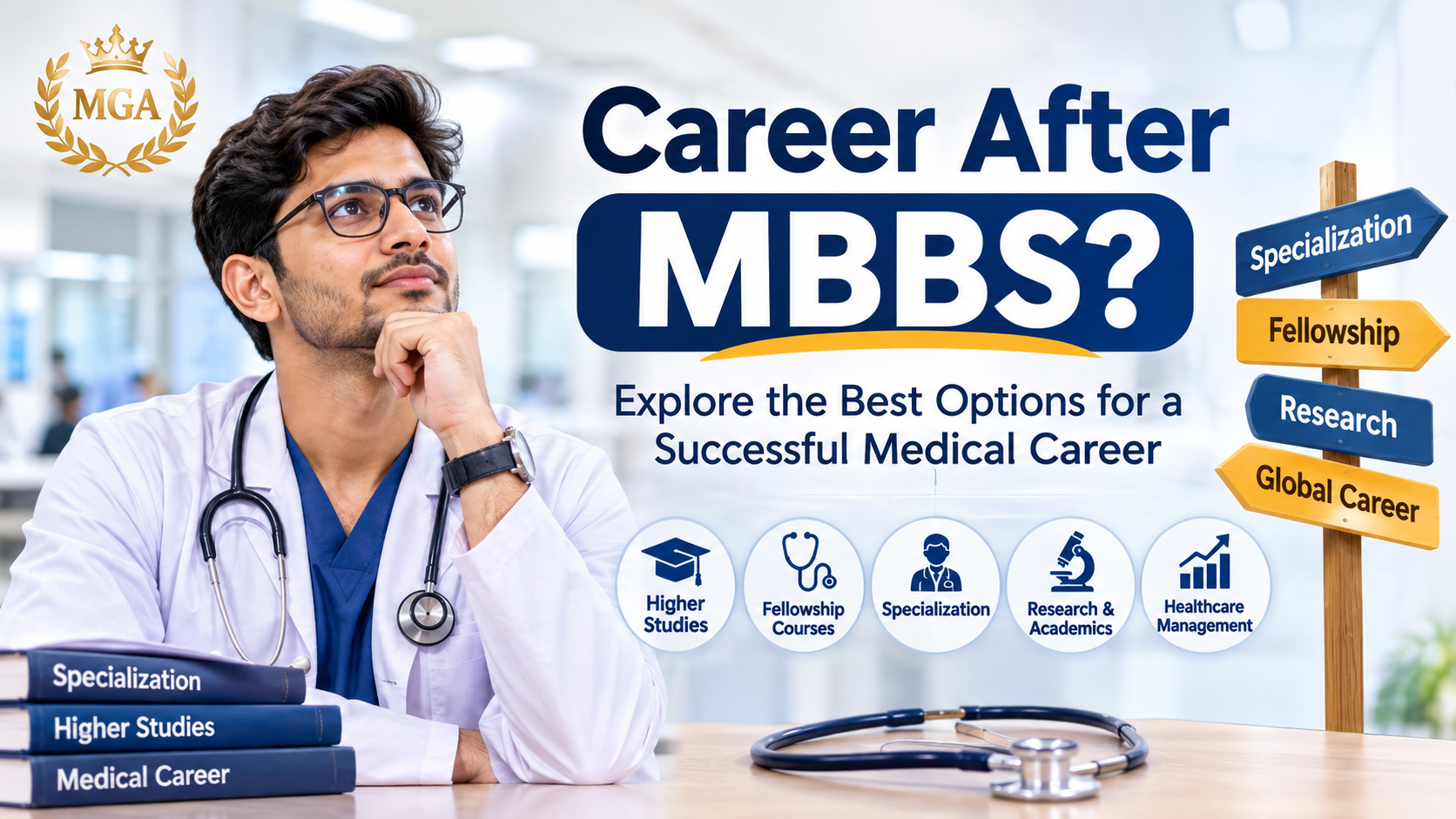
Completing an MBBS degree is a major achievement, but it also marks the beginning of several important professional decisions. Many medical graduates start thinking about their next steps, whether they want to pursue postgraduate education, develop expertise in a particular specialty, enter medical research, or explore opportunities in healthcare management.
Choosing the right career after MBBS requires more than simply following popular trends. Doctors should consider their clinical interests, professional goals, preferred working environment, and long-term learning opportunities before making a decision.
Let's explore some important career pathways available to medical graduates in India.
1. Pursuing Postgraduate Medical Education
Postgraduate education is one of the most established pathways after completing MBBS. Doctors interested in developing specialist knowledge can explore MD, MS and DNB programmes.
These programmes provide structured medical education and specialty-based training.
Some popular specializations include:
-
General Medicine
-
General Surgery
-
Dermatology
-
Paediatrics
-
Radiology
-
Anaesthesiology
-
Obstetrics and Gynaecology
-
Orthopaedics
The choice of specialization should depend on individual interests and long-term professional goals rather than popularity alone.
2. Exploring Fellowship Programmes
Fellowship programmes are another educational pathway that doctors can consider as part of their professional development.
Unlike traditional postgraduate degrees, fellowships generally focus on developing knowledge in a specific medical specialty or clinical area.
Some examples include:
-
Fellowship in Internal Medicine
-
Fellowship in Clinical Cardiology
-
Fellowship in Critical Care
-
Fellowship in Emergency Medicine
-
Fellowship in Dermatology
-
Fellowship in Paediatrics
Doctors who want structured, specialty-focused academic learning alongside their professional commitments can explore suitable online fellowship programmes.
For example, Medical Global Academy offers online fellowship programmes designed for doctors interested in developing specialty-specific medical knowledge through structured academic learning and mentorship.
3. Building a Career in Medical Research
Medical research offers opportunities for doctors who enjoy scientific investigation, evidence-based medicine and academic development.
After MBBS, medical graduates can explore research-related opportunities in:
-
Clinical research organisations
-
Pharmaceutical companies
-
Medical research institutions
-
Academic organisations
-
Public health research projects
Research careers can involve clinical trials, medical data analysis, scientific publications and evaluating new approaches to healthcare.
This pathway may be particularly suitable for doctors interested in combining medical knowledge with scientific investigation.
4. Exploring Healthcare Management
Not every medical graduate wants to follow a purely clinical career path. Some doctors develop an interest in hospital administration, healthcare operations and medical management.
Healthcare management involves understanding how hospitals and medical organisations operate.
Potential career areas include:
-
Hospital Administration
-
Healthcare Operations
-
Medical Quality Management
-
Healthcare Consulting
-
Clinical Administration
-
Healthcare Project Management
Additional qualifications in healthcare administration or management can help doctors understand the organisational and operational aspects of the healthcare industry.
5. Opportunities in Medical Education and Academics
Doctors who enjoy teaching and sharing medical knowledge can explore opportunities in medical education.
This field includes teaching, academic research, curriculum development and professional medical training.
Medical graduates can gradually build academic experience through suitable higher education, research activities and teaching-related opportunities.
A career in medical academics can be rewarding for doctors who want to contribute to the development of future medical professionals.
6. Considering International Medical Career Opportunities
Medical graduates interested in working abroad can investigate international medical licensing and registration pathways.
Different countries have their own eligibility requirements, licensing examinations and registration procedures.
For example:
-
United Kingdom – PLAB and applicable GMC registration requirements.
-
United States – USMLE and applicable ECFMG certification requirements.
-
Australia – AMC assessment pathways.
-
Canada – MCC examinations and applicable provincial registration requirements.
Doctors should carefully review the latest requirements of the relevant medical regulatory authorities before selecting an international pathway.
An MBBS qualification alone does not automatically provide permission to practise medicine in another country.
7. How to Choose the Right Career After MBBS?
With several opportunities available, selecting the right direction can become challenging.
Before making a decision, consider these factors:
Identify Your Medical Interests: Think about the subjects, specialties and clinical areas that interest you most.
Understand Your Long-Term Goals: Decide whether you want to pursue specialist clinical practice, research, academics or healthcare management.
Evaluate Educational Requirements: Different career pathways require different qualifications, entrance examinations and professional registrations.
Consider Your Financial and Time Commitments: Compare course duration, educational expenses and the time required to achieve your professional goals.
Continue Professional Learning: Medicine is constantly evolving. Keeping your knowledge updated is important for long-term professional development.
Conclusion
There is no single career pathway that suits every medical graduate. The right career after MBBS depends on individual interests, professional ambitions and the educational opportunities available.
Whether you choose postgraduate education, fellowship programmes, medical research, healthcare management or international medical opportunities, making informed decisions can help you build a meaningful professional journey.
Rather than rushing into a decision, take time to understand your options, evaluate your requirements and choose a pathway that aligns with your long-term medical career goals.

 English
 Arabic
 French
 Spanish
 Portuguese
 Deutsch
 Turkish
 Dutch
 Russian
 Romaian
 Portuguese (Brazil)
 Greek
