


The Future of Automated Smart Locker Systems in Saudi Arabia
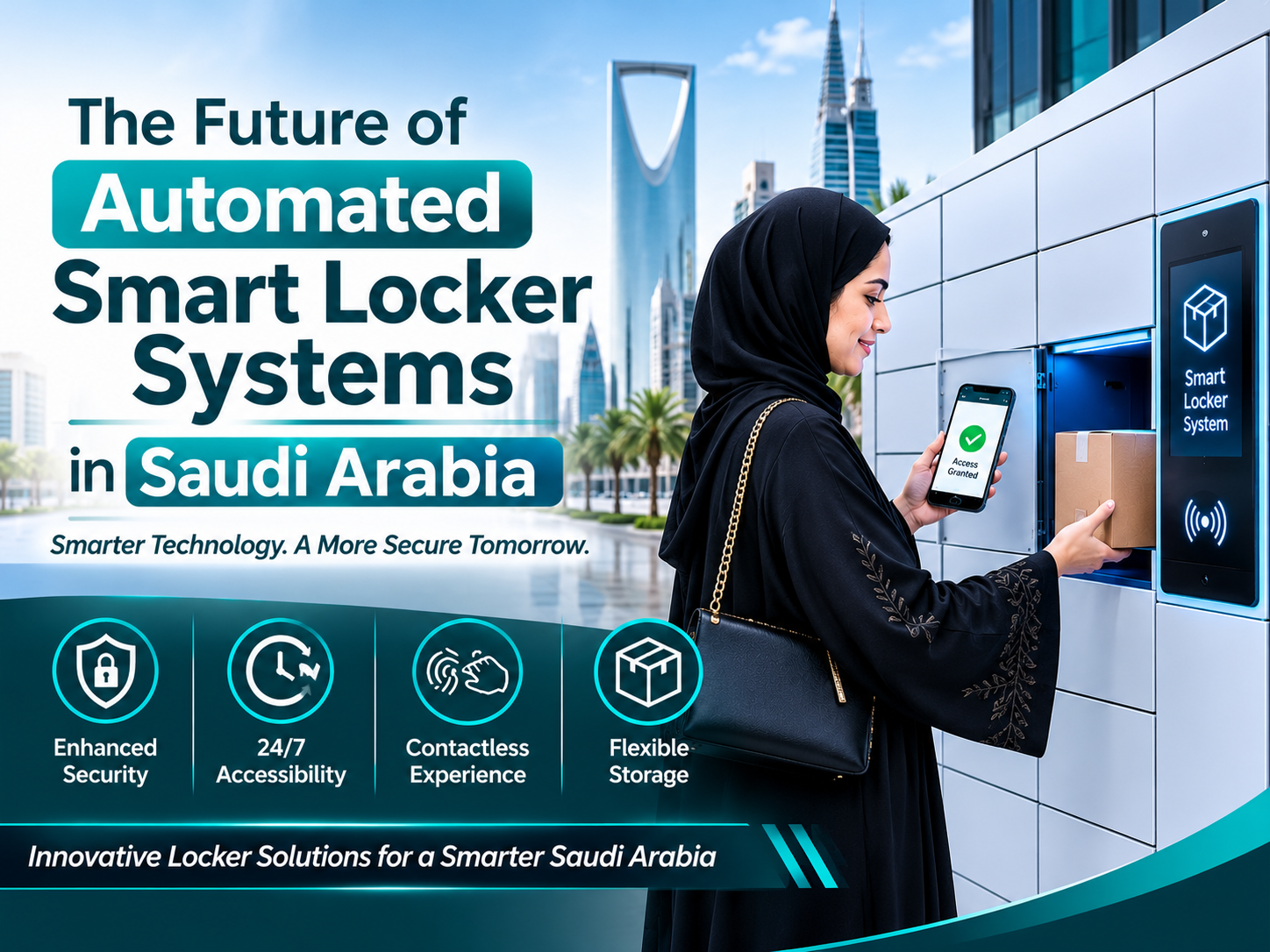
The next generation of the Smart Locker System is arriving in Saudi Arabia as organizations look for faster service, stronger security and better data from every building they operate. Storage cabinets are no longer simple metal boxes. They are connected devices that verify identity, talk to other systems and tell managers what is happening in real time.
This article looks at the trends shaping automated lockers in the Kingdom, how they will serve schools, banks and hospitals, what responsible adoption requires under Saudi regulation, and how to prepare your organization. It reflects the practical approach of Tektronix, a technology provider that delivers automated storage and security technology for demanding enterprises.
Where the Market Stands Today
Saudi Vision 2030 has made digital services, tourism, logistics and smart cities national priorities. Online retail is expanding, hybrid working has changed how offices use space, and large institutions are expected to serve more people with the same teams. Self service lockers already remove queues and paperwork from parcel collection, key control and shared storage, and early adopters are discovering how much operational data these cabinets can produce.
The direction of travel is clear. Buyers are moving from asking whether lockers work to asking how well they integrate, how securely they handle data and how much insight they provide. The trends below describe what that shift looks like in practice.
Trends Shaping the Next Generation
Mobile and Digital Credentials
Smartphones are becoming the main key. QR Code Smart Locker Access already lets couriers, visitors and occasional users open a compartment with a one time code, with no registration and no card to carry. Over time, more organizations will also issue staff credentials to phones and link access to national digital identity services, so that a person can collect an item using the same trusted identity they use for other services.
Biometrics with Privacy by Design
Facial verification with liveness checks is becoming more accurate and faster, and it suits sensitive items, shared devices and staff storage. The future of this technology depends on trust, so leading deployments store protected templates instead of raw images, collect clear consent, limit retention and always offer a non-biometric alternative.
Connected Hardware and Remote Monitoring
A modern Electronic Locker System already reports door status, battery level and tamper events. The next step is wider use of sensors and remote diagnostics that predict faults before they cause downtime, schedule maintenance visits efficiently and keep availability high across many sites, which matters in a Kingdom with long distances between locations.
Analytics and Assisted Operations
Every opening is a data point. Analytics can show peak collection times, average dwell time, uncollected items and unused compartments, and software can then suggest changes to compartment mix, reminders and staffing. Organizations should apply any artificial intelligence features carefully, in line with national guidance such as the AI ethics principles published by the Saudi Data and AI Authority.
Integration with Smart Buildings and Logistics
Lockers will increasingly be part of a wider building and logistics ecosystem. Links to access control, visitor management, human resources, ticketing, parcel carriers and building systems allow a delivery alert or an employee assignment to be created automatically, while shared pickup points support last mile delivery without repeated failed attempts.
Sustainability and Efficiency
Sustainability goals under Vision 2030 influence procurement. Fewer failed delivery trips, fewer plastic cards, low power electronics and modular cabinets that can be reconfigured instead of replaced all reduce environmental impact and total cost of ownership.
Sector Outlook
Education
Smart Lockers for Schools will extend beyond bag storage into device charging, equipment lending and exam day belongings. Universities such as King Saud University and King Abdulaziz University already manage large shared resources, and schools following Ministry of Education guidance will need clear privacy rules, minimal data collection and strictly optional biometrics.
Banking and Financial Services
Smart Lockers for Banks will support after hours collection of cards and cheque books, secure document exchange and controlled storage of staff devices, with every withdrawal tied to a named person and a timestamp. Institutions regulated by the Saudi Central Bank value audit trails and strong cybersecurity, especially in districts such as the King Abdullah Financial District.
Healthcare
A Smart Locker for Hospital setting will protect staff belongings, hold portable medical equipment and support secure handover of items between departments, with touchless opening that supports infection control. Large institutions such as King Faisal Specialist Hospital and Research Centre and King Fahad Medical City show the scale at which such systems must work.
Mega Projects and Major Events
Giga projects such as NEOM, Red Sea Global and Qiddiya, together with preparations for Expo 2030 Riyadh and the FIFA World Cup 2034, will create temporary and permanent demand for flexible storage and secure handover across hotels, venues, transport hubs and workforce accommodation. Modular, scalable lockers that can be relocated and managed from one console are well suited to these changing environments.
Responsible Adoption under Saudi Regulation
Innovation must stay within the rules. The Saudi Personal Data Protection Law, issued by Royal Decree M/19 of 2021 and overseen by the Saudi Data and AI Authority, sets expectations for consent, purpose, security and retention. The National Cybersecurity Authority publishes the Essential Cybersecurity Controls, and financial institutions follow the Saudi Central Bank cybersecurity framework.
Alignment with ISO/IEC 27001 gives security teams a recognised review framework. Look for encrypted communication, signed firmware updates, role-based administration, complete audit logs and flexible hosting, including on premise deployment where data residency requires it. Where cabinets sit near escape routes, they must not obstruct exits, in line with the Saudi Building Code and Civil Defense requirements. Always confirm final obligations with legal and technical advisers.
Local Considerations across the Kingdom
A forward-looking Smart Locker System KSA project must support Arabic and English, high temperatures, dust and consistent management across several cities. In the capital, a Smart Locker System Riyadh design should handle dense office districts, large campuses and fast-growing developments where tenants change quickly. On the Red Sea coast, a Smart Locker System Jeddah approach must cope with humid, salt laden air and serve hotels, hospitals, universities and businesses around the Jeddah Islamic Port.
How to Prepare Your Organization
Start with a clear use case: parcels, student storage, bank collection, staff devices or a mix of these.
Choose open platforms: insist on documented interfaces so that new systems can connect later.
Plan privacy from day one: decide what data is collected, why, for how long and who may see it.
Pilot before scaling: install a small bank, gather feedback and measure results.
Invest in people: train staff and users so that new features are actually adopted.
Review regularly: revisit technology, regulation and usage data at least once a year.
Why Organizations Choose Tektronix
Experience: Tektronix supports enterprise customers in Saudi Arabia on identity and security technology, and that field exposure shapes practical choices about hardware placement, access methods and user workflows.
Expertise: TekLocker brings electronic locking, flexible access methods and central management together, backed by engineers who understand hardware, networks and software, and who design around how people actually use storage.
Authoritativeness: designs reference ISO/IEC 27001 for information security, the Saudi personal data law for privacy and national cybersecurity controls, so consultants and compliance officers can review the solution against familiar benchmarks.
Trust: a clear scope, a pilot installation and transparent support terms let decision makers see real results before full rollout. To begin, request a demonstration and test the workflow against your own handover needs.
Conclusion
The future of the Smart Locker System in the Kingdom is connected, data rich and designed around privacy. TekLocker combines an Electronic Locker System with simple QR Code Smart Locker Access for staff, visitors and couriers. Smart Lockers for Schools, Smart Lockers for Banks and a Smart Locker for Hospital each show how one platform can solve different handover problems. Every Smart Locker System KSA project, including Smart Locker System Riyadh and Smart Locker System Jeddah deployments, should prioritize privacy, rugged hardware and Arabic support. To prepare your own buildings for what comes next, contact Tektronix and plan a pilot today.
FAQS
1. How will QR Code Smart Locker Access evolve in the coming years?
Expect tighter links with phones, digital wallets and national digital identity services, while keeping the simple one time code flow for couriers and visitors who do not want to install anything.
2. What features should I expect from a modern Electronic Locker System?
Look for remote monitoring, tamper and battery alerts, local decision-making during network loss, open interfaces, encrypted communication and analytics on utilisation and uncollected items.
3. Will automated lockers replace staff?
No. They remove routine handover tasks so that reception, security and support teams can focus on service, exceptions and higher value work.
4. Which Saudi rules should guide future deployments?
Consider the Saudi Personal Data Protection Law, National Cybersecurity Authority controls, national AI ethics guidance, Saudi Central Bank requirements for financial institutions and the Saudi Building Code. Confirm details with legal and technical advisers.
5. How long does installation take?
Timelines depend on the number of units, site preparation and integrations. A pilot bank of lockers can often be installed and configured within a few weeks, followed by a phased rollout to further locations.

 English
 Arabic
 French
 Spanish
 Portuguese
 Deutsch
 Dutch
 Italiano
 Russian
 Romaian
 Portuguese (Brazil)
 Greek
