


Integrated Data Center Security Systems for Enterprises in Saudi Arabia
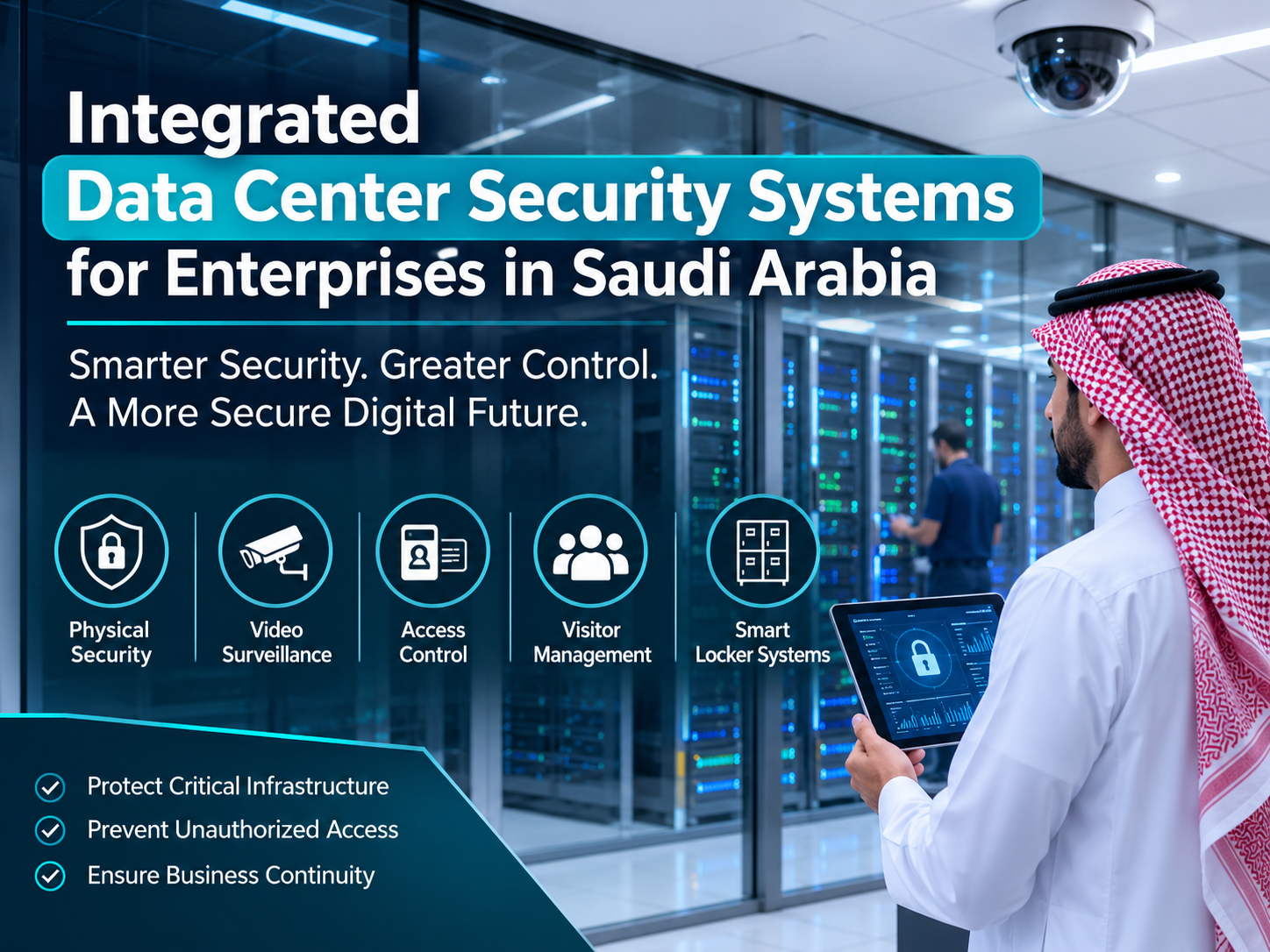
Data Center Security works best when its parts talk to each other, because attacks and failures rarely respect the line between physical and digital protection. This article explains what integration means for Saudi enterprises, which systems should be connected, and how to build one coordinated defense from the gate to the server.
Part One: The Problem with Separate Systems
Many enterprises buy cameras from one supplier, door controllers from another, network tools from a third, and alarm panels from a fourth. Each works alone, but nobody sees the whole picture, so a badge used at a door and a login from the same person minutes apart are never compared.
Gaps between systems are where incidents hide. Integration closes those gaps by sharing events, so a warning in one place can trigger a check or a response in another.
Part Two: What Integration Looks Like
An integrated design has four connected parts: sensing at the site and in the network, a common event platform, automated response rules, and one set of reports. Data flows up from every device and decisions flow back down as actions.
Open standards matter here. Systems that support common protocols can be added over time without replacing what already works, which protects the investment as the enterprise grows.
Part Three: The Systems to Connect
Physical Sensing
Data Center Surveillance supplies the eyes of the integrated system. Thermal and low light cameras, analytics for loitering and tailgating, and plate recognition at gates all send events to the common platform, where video is linked to door and alarm records for fast investigation.
Network Sensing
Data Center Intrusion Detection inspects traffic and system activity for signs of attack. Network sensors catch scans and suspicious flows, host agents notice unusual changes on servers, and the results join physical events on one timeline.
Seeing the Pattern
Data Center Threat Detection combines those signals and looks for patterns. A badge swipe at an odd hour followed by an administrator login, for example, is far more suspicious than either event alone, and behaviour analysis learns what normal looks like for each user.
Many Saudi enterprises begin by reviewing integrated protection options for Saudi data halls before they decide which systems to connect first.
Controlling Traffic
Data Center Firewalls divide the network into zones, so an intruder who reaches one server cannot roam freely. Next generation firewalls inspect applications and users, and integration lets them react to alerts, for example by blocking an account the moment a door record shows the person is not on site.
Protecting the Data
Data Center Encryption keeps information unreadable if a drive is stolen or a link is intercepted. Strong algorithms protect stored data and data in transit, while hardware security modules and careful key management make sure only authorized systems can unlock it.
One View for Operators
Data Center Security Monitoring Systems bring doors, cameras, alarms, power, cooling, and networks into one control room view. Dashboards show health and risk at a glance, and operators can follow a single incident from the fence to the rack without switching screens.
Part Four: Automation Is the Payoff
Data Center Security Automation uses the shared data to act in seconds. When an alert appears, tested playbooks can isolate a server, disable a stolen account, lock a door, and open a ticket, while people review and decide the next move.
Automation also reduces mistakes. Patches, certificate renewals, access reviews, and backup checks run on schedule, and every automated action is logged for auditors. Start with low risk tasks and extend automation as trust grows.
People remain essential. Staff need training, clear escalation steps, and drills for intrusion, power loss, ransomware, and fire. A rehearsed team and an integrated platform together give the strongest protection.
Part Five: Saudi Rules and Standards
The National Cybersecurity Authority issues the Essential Cybersecurity Controls and the Cloud Cybersecurity Controls. The Saudi Data and Artificial Intelligence Authority enforces the Personal Data Protection Law, the Communications, Space and Technology Commission regulates connectivity and cloud services, and the Saudi Central Bank sets expectations for financial firms.
Customers also look for ISO 27001 for information security, and TIA 942 and Uptime tiers for facility design. Saudi Civil Defense approves fire and life safety, and integrated records make it easy to show current policies, test results, and incident logs.
Part Six: Integration Across the Kingdom
A Data Center Security KSA plan should apply the same integrated design, policies, and reports to every site, so national customers can audit one standard. Shared methods also let headquarters compare facilities on equal terms.
Data Center Security Riyadh projects often serve government entities, banks, and technology firms in areas such as the King Abdullah Financial District. Sensitive data and strict audits make a single, searchable record of events especially valuable.
Data Center Security Jeddah projects are shaped by the port, trade, and the humid Red Sea coast near the Jeddah Islamic Port. Moisture and salt call for corrosion resistant equipment, sealed cable routes, and drainage that keeps water away from critical rooms.
Part Seven: Choosing an Integration Partner
Ask every supplier for a written site survey, an integration diagram, tested interfaces, commissioning records, staff training, and a support agreement with clear response times. References from banks, hospitals, and campuses bring practical lessons, and a visit to a working installation teaches more than a brochure.
Test the whole chain. Walk through a monitored zone, trigger a test alert, and confirm that it appears in the control room, creates a ticket, and starts the planned response. Record the result, fix the gaps, and repeat the test every quarter.
A short assessment is the best first step, and a facility review and integration roadmap in Saudi Arabia will show exactly where connecting systems will matter most.
Part Eight: A Practical Roadmap
List the ten systems that would hurt most if lost and check who can reach them today. Close easy gaps first, such as unused accounts, shared passwords, and unlogged visits. Then connect systems in stages, rehearse each change, and review response times every month.
Give every control a named owner, a regular check, and a clear escalation path. Track time to detect, time to contain, devices offline, and days since the last tested recovery, because numbers that improve show leaders the investment is working.
Finally, compare total cost over five years and not only the purchase price. Maintenance, licenses, updates, training, and response contracts often decide whether an integrated system stays effective after the first year.
When you are ready to compare designs, explore complete protection planning for critical IT facilities and measure them against your current setup.
Conclusion
Data Center Security is strongest when physical and digital protection work as one system. Data Center Security Automation and Data Center Security Monitoring Systems turn shared data into quick, recorded action. Data Center Threat Detection, Data Center Firewalls, and Data Center Intrusion Detection protect the network, while Data Center Encryption and Data Center Surveillance protect the data and the site. A planned Data Center Security KSA roadmap, including Data Center Security Riyadh and Data Center Security Jeddah sites, keeps services compliant and resilient, so contact Tektronix today to schedule your facility review.
FAQs
1. How does Data Center Intrusion Detection work with door records?
Network alerts and badge events appear on one timeline, so a suspicious login can be compared with who was actually on site.
2. Why use Data Center Firewalls that react to alerts?
They can block an account the moment another system shows the person is not on site.
3. What does Data Center Encryption protect?
It keeps stored data and traffic unreadable if a drive is stolen or a link is intercepted.
4. How does Data Center Surveillance support integration?
Cameras send events to the common platform, where video is linked to door and alarm records for fast investigation.
5. What should Data Center Security Jeddah projects plan for first?
Humidity and salt call for corrosion resistant equipment, sealed cable routes, and good drainage.

 Arabic
 French
 Spanish
 Portuguese
 Deutsch
 Turkish
 Dutch
 Italiano
 Russian
 Romaian
 Portuguese (Brazil)
 Greek
