


How Weld Nut Integration Improves Manufacturing Workflow Efficiency
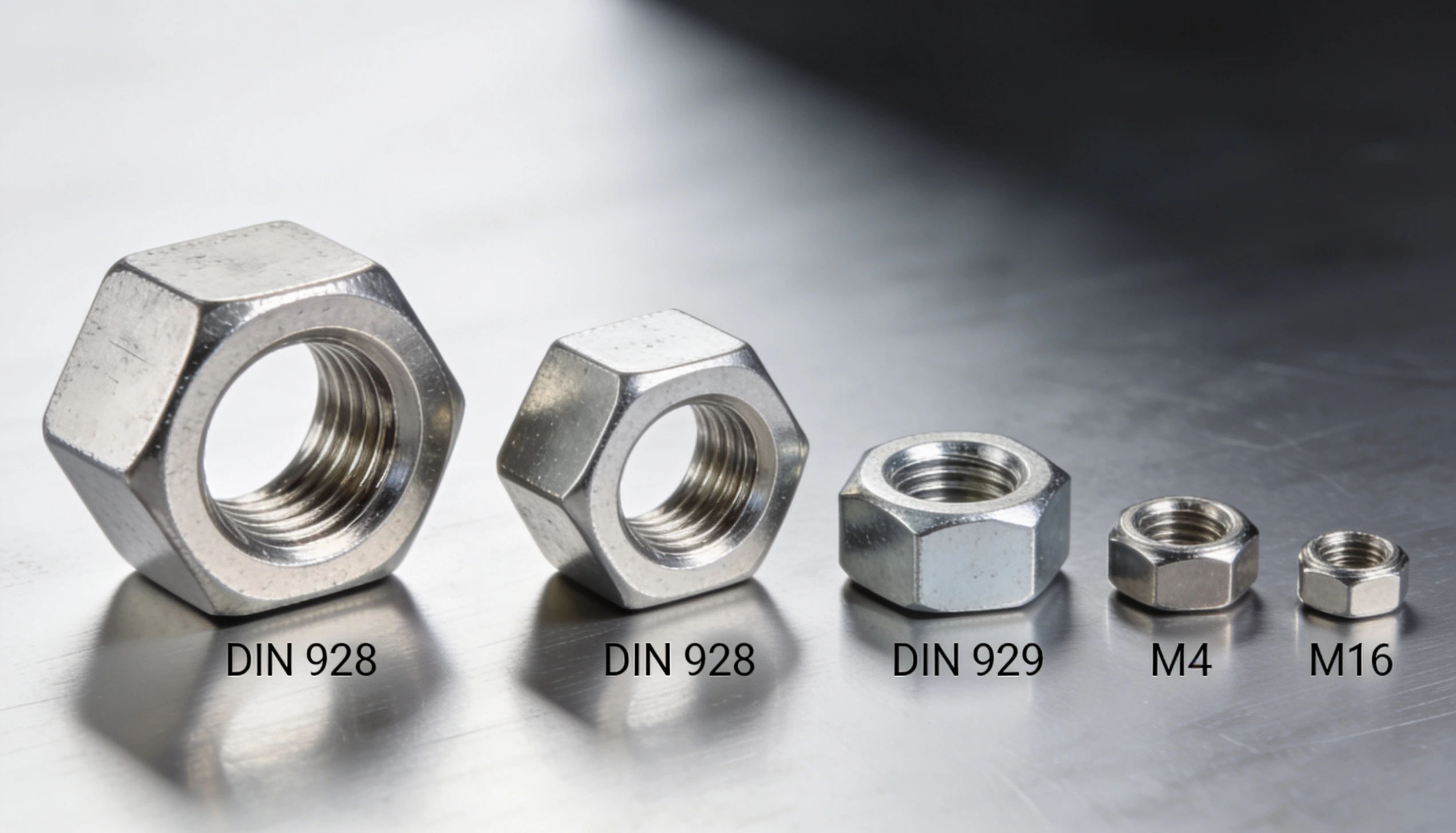
Manufacturing efficiency depends on how well individual production operations work together. Cutting, drilling, forming, welding and final assembly must follow a planned sequence to avoid unnecessary handling and repeated adjustments. Fastening components also need to be considered during this planning process.
Weld nuts offer a practical way to integrate threaded fastening points directly into fabricated metal components. Instead of installing a separate nut during final assembly, manufacturers can attach the nut during an earlier fabrication stage. This allows the threaded mounting point to become part of the component before it moves to subsequent operations.
This approach can be useful in automotive structures, electrical enclosures, machinery panels, fabricated frames and metal equipment housings. It also gives production engineers greater control over the location of fastening points.
When fastening requirements are considered during product development, manufacturers can plan component geometry, welding operations and assembly procedures more effectively.
How Weld Nut Integration Reduces Repeated Production Activities
In conventional fastening arrangements, workers may need to position separate nuts, hold components together and coordinate access to both sides of an assembly. These activities can become difficult when production involves complex structures or multiple fastening locations.
Using suitable Weld nuts can simplify this arrangement by providing pre-installed threaded mounting points.
The benefits can include:
-
Fewer loose components: Permanently attached nuts reduce the need to handle separate fastening pieces during final assembly.
-
Simplified assembly sequences: Threaded mounting points are available when the mating components reach the assembly stage.
-
Better workstation organisation: Production teams can reduce the handling of small loose fasteners.
-
Consistent mounting locations: Properly positioned nuts support repeatable component alignment.
-
Improved production planning: Fastening requirements can be incorporated into fabrication drawings and process instructions.
The actual time savings depend on component design, production volume, welding arrangements and the existing assembly method. Therefore, manufacturers should evaluate the complete workflow before introducing changes.
Designing Weld Nut Locations for Automated Production
Automation has changed how many industrial components are manufactured and assembled. Robotic welding systems, automated fixtures and programmed assembly equipment require consistent component positioning to operate effectively.
Fastener placement becomes particularly important when a production line handles repeated components. Variations in nut location can affect fixture alignment, robotic access and the positioning of mating parts.
Businesses evaluating Weld nuts Manufacturers should consider the dimensional and configuration requirements of their automated production processes.
Several design factors deserve attention:
Positioning accuracy: Fastening points should follow approved engineering drawings so that automated equipment can locate components correctly.
Welding accessibility: The nut and workpiece should allow suitable access for the selected welding equipment and fixtures.
Tool clearance: Engineers should ensure that assembly tools can reach the bolt head without interference from nearby structures.
Component repeatability: Consistent dimensions help maintain predictable positioning across production batches.
Process compatibility: The selected nut configuration should be suitable for the intended welding and manufacturing arrangement.
Early coordination between design engineers, production planners and procurement teams can help identify potential difficulties before manufacturing begins.
The Importance of Standardised Work Instructions
A well-designed fastening component still requires a consistent production procedure. When different operators follow different methods, variations may occur in positioning, welding and final assembly.
Standardised work instructions help establish a common process for handling and installing weld nuts.
Production documentation can include:
-
Approved component drawings and revision details.
-
Nut identification and dimensional requirements.
-
Welding equipment and process instructions.
-
Positioning and fixture requirements.
-
Inspection checkpoints.
-
Procedures for handling non-conforming components.
These instructions help production teams understand the expected result at each manufacturing stage. They also make it easier to train new operators and maintain consistency when production shifts or personnel change.
For businesses purchasing through Weld Nuts Suppliers, sharing these requirements can improve communication between procurement and manufacturing departments.
Procurement Decisions That Support Production Continuity
Fastener procurement should be aligned with production schedules and engineering specifications. Ordering a product based only on its general category may create confusion when several configurations or thread sizes are used within the same facility.
When comparing Weld nuts Manufacturers in India, buyers should provide accurate drawings, material requirements, dimensions and expected quantities.
Other important considerations include:
-
Maintaining consistent product specifications across repeat orders.
-
Confirming the required nut configuration and thread details.
-
Planning quantities according to production demand.
-
Checking packaging requirements to protect components during transportation.
-
Establishing clear inspection and acceptance criteria.
Weld Nuts Suppliers in India can coordinate product requirements with industrial buyers, while Weld Nuts Dealers in India and Weld nuts Wholesalers in India should receive accurate specifications to minimise product identification errors.
Kiran Industries, established in 1985 in Rajkot, Gujarat, provides industrial fastening solutions for engineering and manufacturing requirements. Buyers can discuss their product specifications and bulk procurement needs before placing an order.
Conclusion
Efficient manufacturing requires coordination between product design, fabrication, welding and final assembly. Integrating threaded fastening points during the fabrication stage can simplify later operations and reduce unnecessary component handling.
For businesses comparing Weld nuts Manufacturers, the selection process should consider production workflow, positioning accuracy, welding compatibility and repeat-order requirements. Proper planning can help manufacturers create more organised assembly processes and maintain consistent fastening arrangements.
Frequently Asked Questions
1. How do weld nuts support manufacturing efficiency?
They provide permanently attached threaded mounting points, reducing the need to position separate nuts during final assembly.
2. Can weld nuts be used in automated production lines?
Yes. They can be incorporated into automated manufacturing processes when their dimensions, positioning and welding requirements are compatible with the equipment and fixtures.
3. Why is fastening location important in automated assembly?
Accurate positioning helps automated equipment locate components correctly and reduces potential alignment problems during assembly.
4. What information should manufacturers provide when ordering weld nuts?
They should provide thread specifications, nut configuration, material requirements, dimensions, technical drawings, quantity and relevant welding requirements.

 Arabic
 French
 Spanish
 Portuguese
 Deutsch
 Turkish
 Dutch
 Italiano
 Russian
 Romaian
 Portuguese (Brazil)
 Greek
