


TekVerifii Face Recognition SDK for Secure Software Development
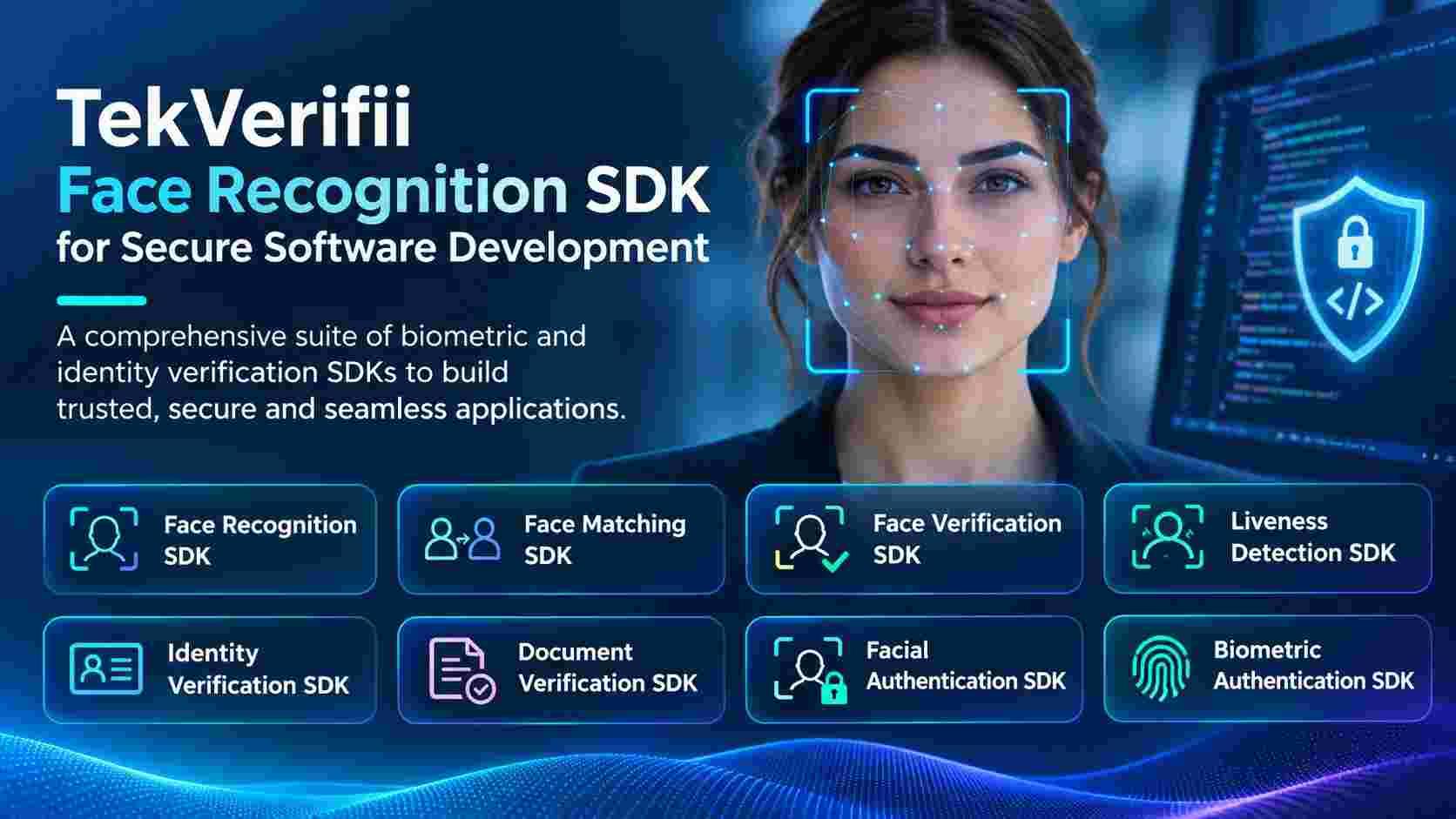
The TekVerifii Face Recognition SDK helps engineering teams add facial biometrics to their products while keeping security central to the way software is designed, built, tested and released. Biometric features handle some of the most sensitive data an application will ever touch, so a careless integration can create privacy risk, legal exposure and new attack paths. In the UAE, where banks, telecom operators, property platforms and government partners are shipping digital identity features at speed, secure development practices are what turn a promising feature into a trusted one.
This guide explains how a biometric toolkit fits into a secure software development lifecycle, what to check in each phase and how to choose components that make the secure path the easy path.
Why Biometric Features Need Extra Care
• High sensitivity: faces cannot be changed like passwords, so a leak has lasting consequences.
• Attractive target: attackers know that a weak verification step opens the door to accounts, funds and records.
• Complex pipeline: camera capture, device libraries, network calls, storage and decision logic all create potential weak points.
• Fast moving attacks: deepfakes, replay methods and injection tools evolve constantly.
• Regulatory attention: personal data rules apply directly to templates, images and logs.
Secure Design Principles for Biometric Software
Good designs follow a few durable principles. Collect only the data that is needed, and delete it when its purpose ends. Apply least privilege, so each service and each person can reach only what the job requires. Layer defences, so one failed control does not expose everything. Fail safely, so errors never grant access. Make privacy the default, with clear consent and visible controls. These ideas align with guidance such as the OWASP Application Security Verification Standard, the OWASP Mobile Application Security Verification Standard and the NIST Secure Software Development Framework.
Placing the SDK Inside a Secure Development Lifecycle
Design and Threat Modelling
Before writing code, map where facial data flows and ask how an attacker might abuse each step. Typical threats include presentation attacks at the camera, tampering with the app or device, interception of traffic, theft of stored templates, abuse of recovery paths and insider access to logs. Decide which operations happen on the device, which on the server and which data must never leave a protected boundary. Record decisions so reviewers can challenge them.
Secure Implementation
Follow the integration guide closely and avoid shortcuts. Keep decision logic on a trusted server whenever possible, validate every input, handle errors without leaking detail and never store raw images longer than necessary. Protect any local storage with platform security features, and avoid writing biometric data to logs, crash reports or analytics tools.
Dependency and Supply Chain Control
A toolkit becomes part of your software supply chain. Verify the source and integrity of every release, check checksums or signatures, lock versions deliberately and keep a software bill of materials that lists the SDK and its components. Ask the provider how vulnerabilities are reported, how quickly fixes are issued and how customers are notified. A clear security contact and update policy are signs of maturity.
Testing and Verification
• Run static and dynamic analysis on your own code, and review how the SDK is called.
• Test with real attack attempts such as printed photos, screen replays and masks.
• Check behaviour on older devices, poor lighting and unstable networks.
• Measure false accept and false reject rates at your chosen thresholds.
• Include security review and penetration testing before every major release.
Build, Deployment and Secrets
Keep API keys, certificates and signing material in managed secret stores, never in source repositories or mobile packages. Sign application releases, restrict who can change pipelines, and separate test, staging and production data. Where regulations require it, deploy the biometric service in a private cloud or on-premise environment from the same interfaces used elsewhere.
Release, Monitoring and Response
Security continues after launch. Monitor verification volumes, failure patterns and latency, alert on unusual spikes, and keep an incident response plan that covers biometric data. Review logs regularly, rotate credentials and update the SDK promptly when security fixes arrive.
Choosing Secure Components
Core Recognition and Matching
A Face Recognition SDK detects faces, scores quality and creates protected templates, while a Face Matching SDK compares them one to one or one to many. Look for encrypted templates, configurable thresholds and clear controls over what is stored. A Face Verification SDK then turns scores into decisions, which should be logged with enough detail for audits but without exposing raw biometric data.
Liveness and Document Checks
A Liveness Detection SDK defends against photos, replays, masks and deepfakes, and should be evaluated against ISO/IEC 30107 Part 3 and tested for injection resistance. A Document Verification SDK reads and validates identity documents such as the Emirates ID and passports, and should flag tampering and copying. Together with matching, they form the base of electronic KYC.
Orchestration and Authentication
An Identity Verification SDK combines document capture, selfie, liveness and matching into one auditable flow. A Facial Authentication SDK supports repeat login and approval, and a Biometric Authentication SDK layer adds consent, policy rules, secure storage and fallback methods. Choosing components that work together reduces glue code, which is where many security flaws appear.
TekVerifii Face Recognition SDK UAE: Regional Considerations
A TekVerifii Face Recognition SDK UAE project should respect the UAE Personal Data Protection Law (Federal Decree Law No. 45 of 2021), free zone rules such as the DIFC and ADGM data protection regulations, and guidance from the UAE Cybersecurity Council. Support for Emirates ID, UAE Pass journeys and Arabic and English interfaces helps products fit local expectations.
TekVerifii Face Recognition SDK Dubai
A TekVerifii Face Recognition SDK Dubai project often serves high volume fintech, property and hospitality products, with attention to standards from the Dubai Electronic Security Center and strong performance at scale.
TekVerifii Face Recognition SDK Abu Dhabi
A TekVerifii Face Recognition SDK Abu Dhabi project frequently supports government entities, ADGM firms and energy companies, where data residency, private hosting and integration with platforms such as TAMM are common requirements.
Experience, Expertise, Authority and Trust
Teams should check a provider as carefully as they check code. Four proof points matter most:
• Experience: verifiable deployments in security sensitive environments, with references on request.
• Expertise: engineers who understand computer vision, mobile and web security, infrastructure and secure development.
• Authority: alignment with ISO/IEC 30107 Part 3, NIST face recognition evaluations and ISO 27001 information security practice.
• Trust: explicit consent, encrypted storage, retention limits, access logs, a vulnerability disclosure process and clear data processing terms.
Common Mistakes to Avoid
• Trusting the device alone and skipping server-side checks for high risk decisions.
• Storing selfies, document images or scores in logs, analytics tools or crash reports.
• Hard coding keys or tokens in mobile packages and shared repositories.
• Testing only with friendly photos and ignoring real attack samples and difficult lighting.
• Leaving the SDK on an old version after security fixes have been released.
• Offering a weak fallback, such as a simple security question, that attackers can use to bypass the face check.
A Practical Adoption Plan
Begin with a threat model for one journey, such as remote onboarding. Build a prototype in a sandbox, test with attack samples and real users, and review the results with security and privacy teams. Then harden the pipeline, add monitoring and release in stages. Reuse the same components for additional journeys so that controls and reporting stay consistent.
How Tektronix LLC Supports Secure Development
Tektronix LLC provides identity and security technology for organisations across the UAE. You can review the TekVerifii toolkit to see how its components support secure builds, or consult our security engineering team to plan a pilot, an architecture review and a phased rollout.
Conclusion
TekVerifii Face Recognition SDK, Face Recognition SDK and Face Matching SDK secure software. Face Verification SDK and Liveness Detection SDK protect every release from fraud. Identity Verification SDK, Document Verification SDK and Facial Authentication SDK build trust. Biometric Authentication SDK and TekVerifii Face Recognition SDK UAE suit secure builds. TekVerifii Face Recognition SDK Dubai and TekVerifii Face Recognition SDK Abu Dhabi.
FAQs
Q1. How does an Identity Verification SDK fit into a secure development lifecycle?
It is treated as a supply chain component. Teams threat model its data flows, verify releases, test attack scenarios and monitor results, just as they do for any security critical dependency.
Q2. What should a Biometric Authentication SDK protect?
It should protect templates and consent records with encryption, enforce retention limits, restrict access by role and keep audit logs without exposing raw biometric data.
Q3. How should teams test a Liveness Detection SDK?
Use printed photos, screen replays, masks and synthetic video, test on varied devices and lighting, and ask the provider about evaluation against ISO/IEC 30107 Part 3 and injection defences.
Q4. Why keep decisions on the server when using a Facial Authentication SDK?
Server-side decisions are harder for attackers to tamper with than logic running on a user device, and they allow consistent policy, logging and rapid updates.
Q5. What matters for a TekVerifii Face Recognition SDK Dubai build?
Strong performance at scale, Arabic and English journeys, alignment with local security standards and a clear approach to UAE data protection and free zone rules.

 English
 Arabic
 French
 Portuguese
 Deutsch
 Turkish
 Dutch
 Italiano
 Russian
 Romaian
 Portuguese (Brazil)
 Greek
