


Zhusi: Adhesive Bandage Structure and Application Details
Buyers sometimes find it difficult to judge how an adhesive dressing functions from its packaging alone. The attachment area, protective covering, and shape all affect how the item is handled during application. An Adhesive Bandage Supplier provides products intended for wound coverage, with the basic design serving to position a dressing over an affected area and keep it in place. Understanding the relationship between these parts helps explain the product's intended use without assuming that every bandage has the same construction or application requirements.
The basic arrangement involves a section intended to cover the wound and an adhesive area that attaches to the surrounding skin. The covering and attachment portions serve separate purposes within the same product. During application, the user handles the adhesive edges while aligning the central section with the area requiring coverage. This arrangement allows the dressing to be positioned without requiring a separate fastening item. The actual construction, materials, and application directions depend on the specific product, so those details should be taken from its supplied information.
Adhesion is a central part of how this type of dressing functions. After positioning, the user presses the attachment area against the skin according to the product directions. Contact between the adhesive surface and skin helps hold the dressing in position. Application conditions can influence how the product sits, including the condition of the skin, the placement, and the surrounding movement. An edge that has folded during handling may need attention before the product is positioned, since an uneven placement changes the way the attachment area contacts the skin.
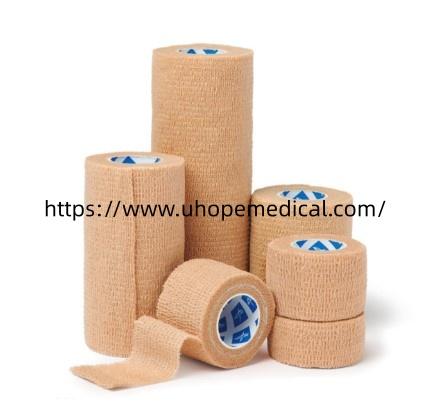
Elastic adhesive bandages have an intended application involving their elastic form, although the specific material composition and degree of stretch should not be assumed without product information. The design category is relevant when considering an area that moves during normal activity. A person applying a dressing around a finger, for instance, has to account for the location of the joint and the way the skin changes position when the hand bends. The placement should follow the directions for the particular item, rather than relying on a general assumption about how elastic products behave.
Wenzhou Zhusi Medical Supplies Co., Ltd. develops personalized healthcare products for different fields, including sports, medical care, personal daily use, animal health, tattooing, and beauty. Within this context, healthcare products are designed around their intended application and the needs associated with their use. The function of an adhesive dressing remains tied to wound coverage and attachment, while individual product features depend on its construction and intended setting. The name and description on the packaging help identify the type of item before it is used.
Protective packaging also forms part of the practical product arrangement. Before use, the dressing is kept in its package, which separates it from direct handling during storage. Opening the package exposes the item for placement, and the user then handles the attachment area and covering section. The sequence is straightforward, but the parts need to be recognized so that the dressing can be positioned according to its instructions. In a household care drawer, identifying the intended product can be a useful step when several healthcare items are stored together.
The functional design is also relevant when the product is used in different settings. A sports-related care situation, a household first-aid routine, or a medical setting may involve different application circumstances. The same general purpose of wound coverage does not mean every product is intended for every type of injury or user. The product description, application directions, and relevant care guidance determine its appropriate use. A dressing should not be treated as a substitute for medical assessment when an injury requires professional attention.
When handling an Adhesive Bandage Supplier product, the user works with the covering section, the attachment surface, and the packaging that holds the item before application. Healthcare product information at https://www.uhopemedical.com relates to products developed for different care settings, while the construction of an individual dressing must be confirmed through its own details. On the table, the opened package lies beside a clean pair of scissors and a folded piece of gauze, with the adhesive edges still protected until the dressing is ready to be positioned.

 English
 Arabic
 French
 Spanish
 Portuguese
 Deutsch
 Turkish
 Dutch
 Italiano
 Russian
 Portuguese (Brazil)
 Greek
