


How Arthroscopy Sets Support Modern Orthopaedic Surgical Facilities
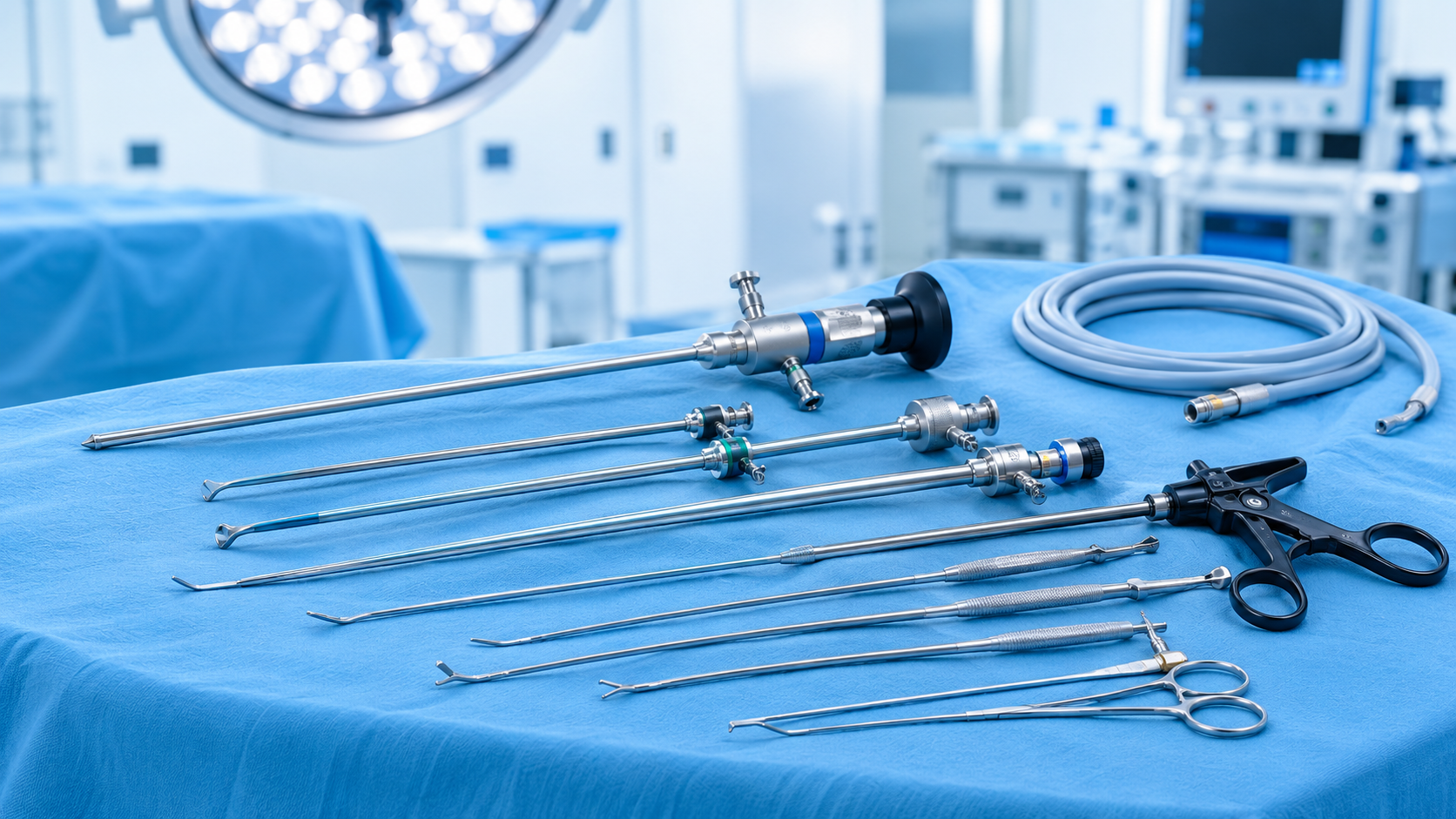
Modern orthopaedic facilities require specialised equipment to support joint examination, diagnosis and surgical treatment. As hospitals expand their minimally invasive surgical services, instrument availability and equipment organisation become increasingly important.
A well-configured Arthroscopy Set supports qualified orthopaedic surgeons during selected procedures involving the knee, shoulder, hip and other joints. These instruments are designed to perform specific functions within limited surgical spaces.
However, establishing an effective orthopaedic surgical facility requires more than purchasing individual instruments. Hospitals must consider visualisation systems, operating theatre infrastructure, staff requirements and equipment coordination.
This article explores how arthroscopic instruments support modern orthopaedic facilities and their operational requirements.
The Growing Role of Arthroscopy in Orthopaedic Healthcare
Orthopaedic departments manage various conditions affecting joints, ligaments, cartilage and surrounding structures. Arthroscopy provides an approach for examining and treating selected joint conditions through small surgical incisions.
Qualified surgeons use specialised instruments and imaging equipment to perform procedures according to individual clinical requirements.
Healthcare facilities offering arthroscopic services require suitable infrastructure, trained professionals and appropriate instrument configurations.
As these facilities expand their services, equipment planning becomes essential for maintaining organised surgical workflows and supporting departmental requirements.
How Arthroscopy Instruments Support Different Surgical Specialties
Arthroscopic instruments are available in different configurations to address joint-specific requirements.
|
Orthopaedic application |
Instrument requirements |
|---|---|
|
Knee arthroscopy |
Probes, graspers and meniscus instruments |
|
Shoulder arthroscopy |
Suturing and soft tissue instruments |
|
Hip arthroscopy |
Specialised instruments with suitable working lengths |
|
Ankle arthroscopy |
Compact instruments for smaller joint spaces |
|
Sports injury treatment |
Procedure-specific ligament and tissue instruments |
|
Cartilage procedures |
Suitable cutting and tissue preparation instruments |
The exact instrument requirements depend on the intended procedure and clinical assessment.
Established Arthroscopy Set Manufacturers may develop different instrument configurations to accommodate these specialised healthcare requirements.
Integration with Modern Surgical Visualisation Systems
Visualisation equipment is an important component of arthroscopic surgical infrastructure. An arthroscope, camera, light source and monitor work together to provide images of internal joint structures.
Specialised hand instruments complement these visualisation systems by supporting examination and tissue manipulation where indicated.
Hospitals should evaluate how different equipment components integrate within their operating theatres.
Important considerations include equipment dimensions, system connectivity, optical specifications and model-specific compatibility.
Effective equipment integration requires coordination between orthopaedic surgeons, biomedical engineers and operating theatre personnel.
Supporting Organised Operating Theatre Workflows
An organised operating theatre requires accurate instrument identification and appropriate preparation before scheduled procedures.
Standardised instrument trays can help healthcare professionals locate required components and verify their availability.
Hospitals may establish procedure-specific instrument lists based on their approved surgical requirements.
These lists can support:
-
Instrument preparation and verification.
-
Coordination between hospital departments.
-
Identification of missing components.
-
Equipment availability for scheduled procedures.
-
Communication with sterile services departments.
-
Inventory monitoring and replenishment.
A structured approach to instrument organisation helps reduce unnecessary administrative complications within surgical facilities.
The Importance of Specialised Instrument Configurations
Orthopaedic procedures may require instruments with different shaft lengths, tip designs, handle configurations and operating mechanisms.
For example, instruments designed for smaller joints may have different dimensional requirements from those intended for larger joints.
Reliable Arthroscopy Set Suppliers can help healthcare facilities obtain relevant product specifications and explore available instrument configurations.
Hospital administrators should involve their orthopaedic departments when establishing instrument requirements rather than relying exclusively on standard catalogue packages.
Procedure-specific configurations can help healthcare institutions maintain equipment inventories aligned with their actual clinical services.
Supporting Orthopaedic Service Expansion
Hospitals introducing new orthopaedic services should evaluate their existing equipment infrastructure before expanding instrument inventories.
A comprehensive expansion plan should address the requirements of operating theatres, imaging systems, sterile processing facilities and trained healthcare personnel.
|
Expansion requirement |
Planning consideration |
|---|---|
|
Surgical instruments |
Approved procedure-specific configurations |
|
Visualisation systems |
Suitable imaging equipment |
|
Operating theatre |
Equipment placement and infrastructure |
|
Staff development |
Appropriate professional training |
|
Sterile services |
Device-specific reprocessing capabilities |
|
Inventory planning |
Expected instrument and consumable requirements |
Coordinated planning helps hospitals identify infrastructure gaps before introducing additional surgical services.
Role of Arthroscopy Equipment in Sports Medicine Centres
Sports medicine centres often manage musculoskeletal conditions associated with physical activity, including selected ligament, cartilage and joint injuries.
Facilities offering arthroscopic surgical services require instruments appropriate for their approved treatment capabilities.
Specialised probes, graspers, cutting instruments and other repair-related tools may form part of their surgical equipment inventory.
Equipment requirements depend on the centre's clinical services and the professional assessment of qualified orthopaedic surgeons.
Purchasing teams should also consider whether particular instruments require compatible accessories or supporting technologies.
How Medical Equipment Suppliers Support Healthcare Facilities
Medical equipment suppliers connect healthcare institutions with available surgical instruments and relevant product documentation.
Their responsibilities may include communicating product specifications, coordinating deliveries and assisting with replacement instrument enquiries.
When evaluating Arthroscopy Set Dealers, healthcare buyers should consider documentation availability, product identification, communication quality and supply capabilities.
Sangam Surgicals lists arthroscopy hand instruments, arthroscopy trocars and other arthroscopic instruments within its product portfolio. Hospitals and orthopaedic centres can contact the company to discuss their specific equipment requirements.
Conclusion
Arthroscopy instrument sets form an important part of modern orthopaedic surgical infrastructure. Their role extends across specialised instrument availability, equipment integration and operating theatre organisation.
Healthcare institutions should establish equipment requirements according to their clinical services and involve qualified professionals throughout the planning process.
Appropriate instrument configurations, organised workflows and reliable supply arrangements can help hospitals support the operational requirements of their orthopaedic departments.
Frequently Asked Questions (FAQs)
1. Why are arthroscopy sets important in orthopaedic facilities?
They provide specialised instruments required for selected minimally invasive joint examination and surgical procedures.
2. Which joints can be examined using arthroscopy equipment?
Arthroscopy may be performed on the knee, shoulder, hip, ankle, elbow and wrist, depending on clinical indications.
3. Can a single arthroscopy set support every orthopaedic procedure?
No. Different procedures may require specialised instruments with different dimensions, configurations and functions.
4. What supporting equipment is required for arthroscopic surgery?
Depending on the procedure, supporting equipment may include arthroscopes, cameras, light sources, monitors and fluid management systems.
5. How can hospitals plan their arthroscopy equipment requirements?
Hospitals should evaluate their surgical services, existing infrastructure, instrument compatibility and departmental requirements with qualified professionals.

 English
 Arabic
 French
 Spanish
 Portuguese
 Turkish
 Dutch
 Italiano
 Russian
 Romaian
 Portuguese (Brazil)
 Greek
