


How Does Mould Surface Texture Shape Automotive Interior Quality?
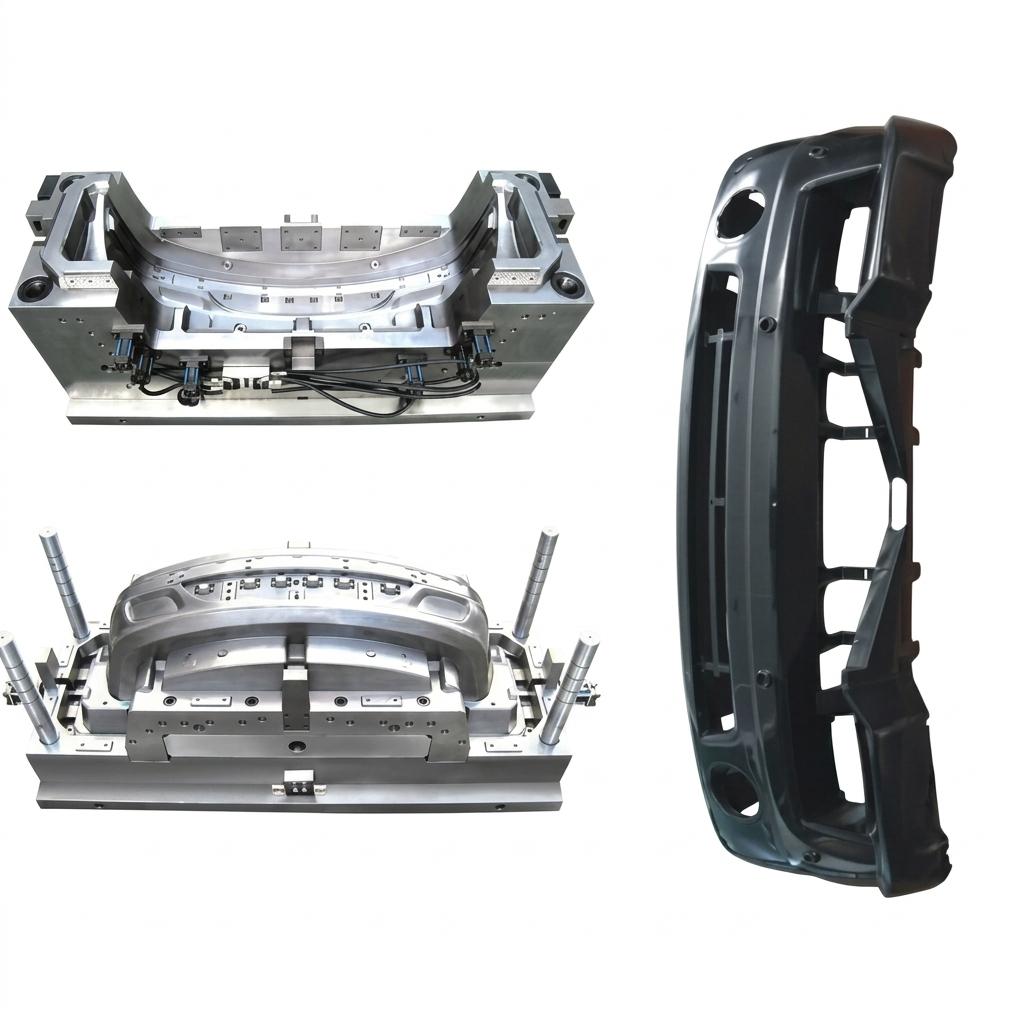
Automotive interior parts are judged by much more than dimensional fit. Dashboard panels, door trims, center consoles, pillar covers, and other cabin components contribute to the visual character and tactile experience of a vehicle. Behind these details sits a carefully engineered High Precision Car Interior Mould, where cavity geometry, surface texture, draft angles, and ejection design all influence the finished part.
Modern interior mould design therefore has to solve two problems at the same time: producing accurate functional features and reproducing the intended appearance across large visible surfaces.
Surface Texture Starts Inside the Cavity
Grain patterns are not simply decorative additions applied after injection molding. They are commonly transferred directly from the mould cavity onto the plastic surface. Research on automotive ABS and PP interior components shows that cavity texture plays an important role in achieving consistent surface appearance, while molding conditions can also affect texture replication.
- Grain depth: Different textures require different draft strategies and affect how easily the molded part releases.
- Surface uniformity: Variation across a large cavity can become visible as differences in gloss or grain appearance.
- Texture direction: Grain orientation can influence both visual continuity and the appearance of adjacent trim pieces.
Automotive moulding guidance notes that textured surfaces may require additional draft because deeper textures create microscopic undercuts. A commonly referenced approach adds approximately 1° to 1.5° of draft for every 0.001 inch of texture depth, although the actual requirement depends on the texture and material.
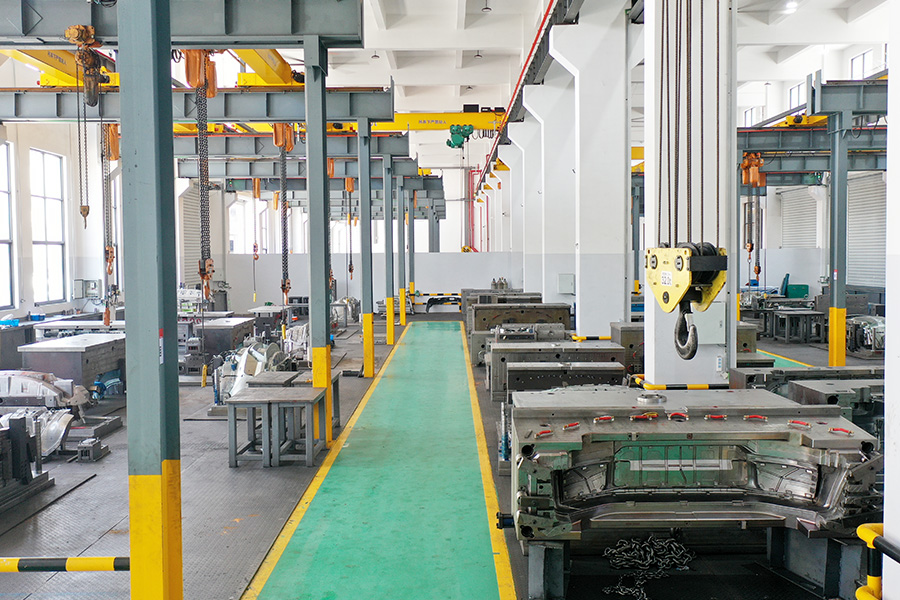
Precision Extends Beyond Part Dimensions
Cabin components contain numerous small features that must work together during assembly. Clips, mounting bosses, locating pins, speaker openings, air-vent interfaces, and electronic-module mounting points can all depend on accurate cavity and core geometry.
A High Precision Car Interior Mould therefore needs controlled machining and reliable alignment across critical surfaces. Small deviations around mating features can become noticeable after several trim components are assembled together.
Critical Areas Include:
- Mounting-hole positions
- Clip and snap-fit locations
- Door-panel interfaces
- Vent and speaker openings
- Decorative insert boundaries
- Visible parting-line areas
Draft Angle Can Change the Final Appearance
Draft angle is usually associated with easier demolding, but its influence goes further. Textured surfaces can create microscopic mechanical locking between the part and cavity wall. Insufficient draft may cause drag marks, scratches, or texture damage during ejection. Recent research also indicates that draft angle has a significant effect on texture replication clarity, while the dimensional response varies according to polymer type.
Typical automotive interior moulds may therefore combine different draft values across a single component rather than applying the same angle to every wall. Smooth cosmetic areas, deep ribs, textured sidewalls, and functional openings may each require separate design consideration.
Large Interior Panels Bring Another Challenge
Large dashboard or door-trim moulds have extensive cavity surfaces, long flow paths, and varying wall sections. Uneven filling or cooling can create differences in shrinkage and surface appearance.
Modern tooling designs may use multi-point hot-runner systems, sequential valve gates, or specialized cooling layouts to control these effects. Automotive interior tooling examples also use conformal cooling sections and localized inserts to address areas where wall thickness changes create uneven thermal conditions.
Material choice adds another variable. PP, ABS, PC/ABS, and other automotive polymers do not behave identically during filling and cooling. Recent research comparing PP, POM, ABS, and PC found noticeable differences in dimensional deformation and texture replication between crystalline and amorphous materials.
Details Around Electronics Are Becoming More Important
Modern cabin trim increasingly incorporates functional features rather than serving purely as decorative covering. Instrument panels and center consoles may accommodate displays, switches, lighting elements, sensors, vents, and electronic modules.
That trend changes the role of the mould. Cavity details must provide accurate interfaces for these components while maintaining the required appearance on the passenger-facing side. Multi-material and two-shot technologies can also introduce additional design requirements around shut-off surfaces, material boundaries, and decorative layers.

 English
 Arabic
 French
 Spanish
 Portuguese
 Turkish
 Dutch
 Italiano
 Russian
 Romaian
 Portuguese (Brazil)
 Greek
