


How Does an Experienced Doctor Ensure Better Hair Transplant Results?
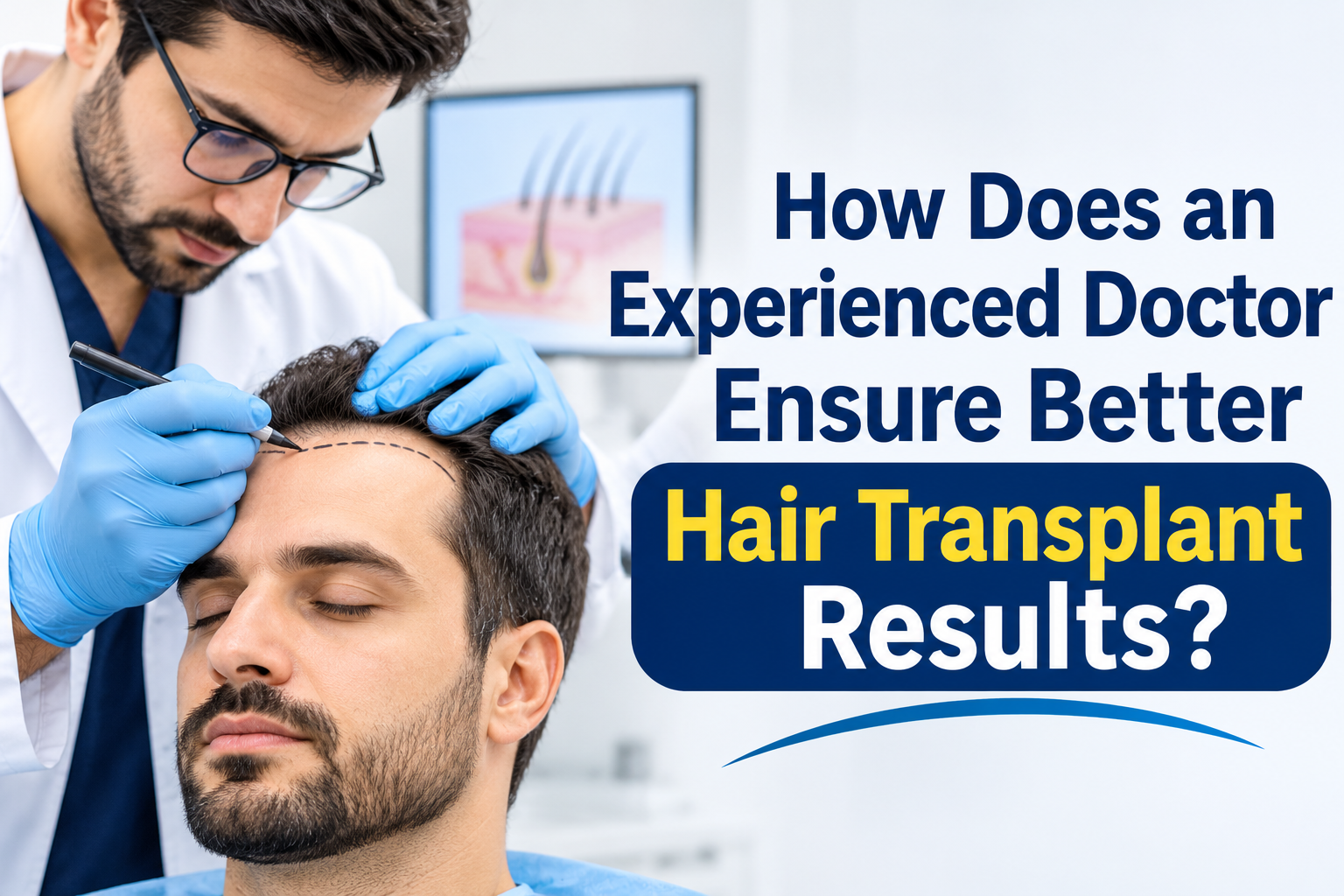
Hair loss is a common concern that affects both men and women. It can occur due to genetics, hormonal changes, medical conditions, stress, or other factors. For people experiencing significant hair thinning or baldness, hair transplant surgery can be a suitable treatment option after proper medical evaluation. However, the success of a hair transplant depends on several factors, including the doctor's experience, surgical techniques, donor hair quality, and post-operative care. Choosing an experienced doctor helps ensure proper treatment planning and supports natural-looking hair restoration results.
1. Conducts a Detailed Hair and Scalp Evaluation
Before recommending hair transplant surgery, an experienced doctor performs a detailed examination of the patient's scalp and hair condition. This evaluation helps identify the cause of hair loss and determine whether the patient is suitable for the procedure.
During the consultation, the doctor may assess:
-
Hair density and thickness.
-
Pattern and extent of hair loss.
-
Scalp health and condition.
-
Donor area hair availability.
-
Family history of hair loss.
-
Previous hair restoration treatments.
Consulting a qualified Hair Transplant Doctor in Jaipur can help patients understand their hair loss condition and receive appropriate guidance regarding available treatment options.
2. Selects the Right Hair Transplant Technique
Different hair transplant techniques are available, and selecting the right method is important for achieving suitable results. An experienced doctor understands the advantages and limitations of each technique.
Two commonly used methods include:
Follicular Unit Extraction (FUE):
FUE involves extracting individual hair follicles from the donor area and implanting them into areas affected by hair loss. It generally leaves small extraction marks and does not require a long linear incision.
Follicular Unit Transplantation (FUT):
FUT involves removing a strip of scalp from the donor area. The strip is then divided into smaller grafts for transplantation. This technique may be suitable for selected patients who require a larger number of grafts.
The choice depends on donor hair availability, scalp condition, hair loss pattern, and individual treatment requirements.
3. Plans a Natural-Looking Hairline
Hairline design is one of the most important aspects of hair transplant surgery. An unnatural hairline can make the results look artificial, even when the transplanted hair grows successfully.
An experienced doctor considers several factors when designing a hairline, including:
-
Facial structure and proportions.
-
Age of the patient.
-
Existing hairline pattern.
-
Direction of natural hair growth.
-
Future hair loss possibilities.
Proper planning helps create a hairline that complements the patient's facial appearance and looks natural as the hair grows.
4. Evaluates the Donor Area Carefully
The donor area is usually located at the back or sides of the scalp, where hair follicles are generally more resistant to genetic hair loss.
An experienced doctor carefully evaluates this area before extracting hair follicles. This is important because excessive extraction can reduce donor hair density and affect the appearance of the scalp.
The doctor considers:
-
Donor hair density.
-
Hair thickness and quality.
-
Available follicular units.
-
Scalp flexibility.
-
Safe extraction limits.
Proper donor area management helps preserve existing hair and supports better long-term hair restoration planning.
5. Ensures Proper Graft Handling and Placement
Hair follicles, also known as grafts, require careful handling during transplantation. Their condition and survival are important factors influencing the final outcome.
An experienced surgical team follows appropriate procedures for extracting, storing, and implanting grafts.
The doctor also considers the angle, direction, and depth of each implanted follicle. Correct placement helps transplanted hair blend naturally with existing hair.
Poor graft handling or inappropriate placement may affect growth patterns and overall cosmetic results. Therefore, surgical experience and attention to detail are essential.
6. Provides Personalised Treatment Planning
Every patient experiences hair loss differently. Some individuals may have a receding hairline, while others may experience thinning across the crown or larger bald areas.
An experienced doctor develops a treatment plan according to individual requirements rather than recommending the same procedure to everyone.
Personalised planning may include:
-
Estimating the number of required grafts.
-
Selecting suitable donor areas.
-
Designing the hairline.
-
Considering future hair loss.
-
Evaluating whether additional treatments are needed.
This approach helps patients understand the procedure and its expected outcomes before making a decision.
7. Maintains Proper Surgical Safety and Hygiene
Hair transplant surgery involves medical procedures that require appropriate hygiene, equipment, and infection-control practices.
An experienced doctor ensures that the procedure is performed in a suitable medical facility with trained staff and proper surgical protocols.
Important safety considerations include:
-
Sterilised medical instruments.
-
Proper scalp preparation.
-
Appropriate anaesthesia administration.
-
Infection prevention measures.
-
Continuous patient monitoring.
-
Safe handling of extracted grafts.
These precautions help reduce avoidable complications and support a safer surgical experience.
8. Provides Proper Post-Transplant Care
Hair transplant results do not appear immediately after surgery. Patients need to follow appropriate aftercare instructions to support healing and hair growth.
An experienced doctor explains how to care for the scalp during the recovery period.
Post-operative guidance may include:
-
Following prescribed medication instructions.
-
Washing the scalp as recommended.
-
Avoiding unnecessary pressure on transplanted areas.
-
Avoiding strenuous physical activities during the initial recovery period.
-
Protecting the scalp from direct sunlight.
-
Attending scheduled follow-up appointments.
Patients should also understand that some transplanted hair may shed during the initial weeks. This is commonly known as shock loss, and new hair growth generally develops gradually over the following months.
9. Sets Realistic Expectations About Results
A good hair transplant doctor explains what patients can realistically expect from the procedure.
Hair transplant surgery can restore hair in areas affected by hair loss, but it cannot stop the natural progression of genetic hair loss in untreated areas.
Results depend on several factors, including:
-
Donor hair quality.
-
Number of transplanted grafts.
-
Individual healing ability.
-
Existing hair loss pattern.
-
Surgical technique.
-
Post-operative care.
Visible growth usually develops gradually, with significant results often taking around 9 to 12 months or longer, depending on the individual.
Clear communication helps patients understand the limitations of surgery and make informed decisions.
10. Offers Long-Term Hair Restoration Guidance
Hair restoration is not always a one-time process. Some patients may continue experiencing hair thinning in untreated areas even after a successful transplant.
An experienced doctor can recommend suitable long-term hair management options depending on the patient's condition.
These may include medical treatments, scalp care recommendations, nutritional guidance, and regular monitoring.
Follow-up consultations also help doctors evaluate hair growth, assess healing, and identify any concerns that may require additional attention.
Conclusion
An experienced hair transplant doctor plays an important role in achieving suitable hair restoration results through detailed scalp evaluation, proper technique selection, natural hairline design, careful graft placement, and personalised aftercare. Surgical experience and proper treatment planning also help reduce avoidable risks and support long-term hair restoration goals. Before undergoing the procedure, patients should carefully evaluate the doctor's qualifications, experience, and medical facilities. Consulting a qualified Best Hair Transplant Doctor in Jaipur can help individuals understand their hair loss condition, explore suitable treatment options, and make informed decisions about hair transplant surgery.

 English
 Arabic
 French
 Spanish
 Portuguese
 Deutsch
 Dutch
 Italiano
 Russian
 Romaian
 Portuguese (Brazil)
 Greek
