


Collective Action Strategies for Schools Improvement: How Mantra4Change Drives School Improvement
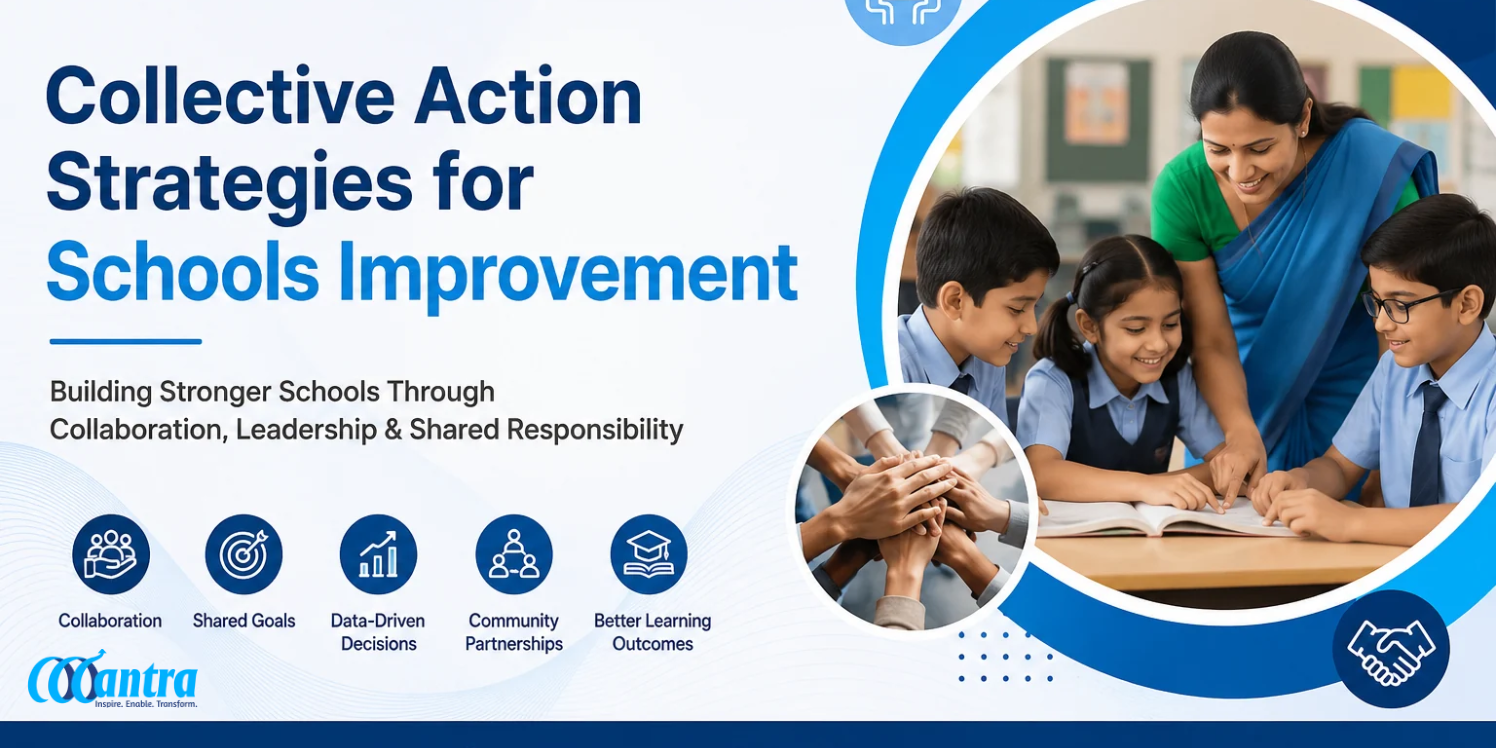
Improving the quality of education requires more than individual efforts or isolated initiatives. Schools need a collaborative approach where teachers, school leaders, parents, communities, and education stakeholders work towards shared goals.
Strong partnerships, consistent communication, and collective responsibility can create meaningful changes in the learning environment. This is where Collective Action Strategies for Schools become essential for building stronger and more effective educational institutions.
School Improvement is not a one-time activity but a continuous process that involves identifying challenges, setting priorities, implementing solutions, and measuring progress. When different stakeholders contribute their knowledge and resources, schools can address challenges more effectively and create better learning opportunities for every child.
Why Collective Action Matters in School Improvement
Every school operates within a unique environment, with different learning needs, infrastructure challenges, leadership capabilities, and community expectations. Addressing these challenges independently can limit the impact of improvement initiatives.
A collective approach brings different perspectives together and encourages stakeholders to take shared responsibility for educational outcomes.
Some important benefits include:
-
Shared Responsibility: Teachers, leaders, parents, and communities contribute towards common educational goals.
-
Better Decision-Making: Collaborative discussions help identify practical solutions based on real school needs.
-
Stronger Leadership: School leaders gain support in planning, implementing, and monitoring improvement initiatives.
-
Resource Optimisation: Partnerships help schools make better use of available knowledge, expertise, and resources.
-
Long-Term Sustainability: Shared ownership encourages continuous participation rather than temporary improvements.
When stakeholders work together, schools can move beyond individual activities and develop a structured approach to educational development.
Five Effective Collective Action Strategies for Schools
Building a collaborative school environment requires clear objectives, active participation, and consistent follow-through. The following strategies can help schools strengthen their improvement efforts.
1. Build a Shared Vision for Educational Growth
A common vision gives every stakeholder a clear understanding of what the school wants to achieve. School leaders, teachers, parents, and community members should participate in identifying priorities and defining measurable goals.
For example, a school may focus on improving student attendance, strengthening foundational literacy, or creating more engaging classroom experiences.
A shared vision helps everyone understand their responsibilities and work towards the same outcomes.
2. Strengthen School Leadership and Teacher Collaboration
School leaders play an important role in creating a supportive environment for teachers and students. However, effective leadership also depends on collaboration.
Schools can encourage regular teacher meetings, peer-learning sessions, classroom observations, and leadership development programmes.
These activities help educators exchange ideas, understand classroom challenges, and identify practical teaching approaches.
When teachers are supported and empowered, they become active contributors to the school's development.
3. Encourage Meaningful Parent and Community Participation
Education extends beyond classroom walls. Parents and local communities can play an important role in supporting student learning and school development.
Schools can strengthen community participation through:
-
Regular parent-teacher interactions.
-
Community meetings to discuss school priorities.
-
Parent awareness programmes on children's learning needs.
-
Volunteer participation in school activities.
-
Collaborative initiatives to improve attendance and student engagement.
Active community participation creates a stronger connection between schools and the people they serve.
4. Use Data to Identify Challenges and Track Progress
Improvement initiatives become more effective when decisions are supported by reliable information.
Schools can review student attendance, classroom participation, learning assessments, teacher feedback, and other relevant indicators to understand where support is required.
A simple improvement cycle can include:
-
Identify the most important challenge.
-
Understand its underlying causes.
-
Develop a practical action plan.
-
Assign responsibilities to relevant stakeholders.
-
Monitor implementation and review progress.
-
Make adjustments based on the outcomes.
This approach helps schools focus on measurable progress rather than relying only on assumptions.
5. Develop Strong Partnerships Across the Education Ecosystem
Sustainable educational change requires collaboration between schools, government institutions, civil society organisations, education experts, and local communities.
Partnerships can bring additional expertise, resources, training opportunities, and implementation support.
Such collaborations also help successful practices reach more schools, creating opportunities for wider educational transformation.
How Mantra4Change Supports Collaborative School Transformation
Mantra4Change works towards strengthening public education systems by supporting school transformation through collaborative approaches. Its work focuses on enabling education stakeholders to contribute towards meaningful and sustainable improvements in schools.
Through partnerships, capacity-building initiatives, and system-level engagement, organisations working in the education ecosystem can help strengthen the capabilities of school leaders, teachers, and education stakeholders.
The approach recognises that lasting change cannot be achieved by one individual or organisation alone. It requires different stakeholders to understand shared challenges, align their efforts, and work consistently towards better educational outcomes.
Turning Collective Efforts into Sustainable School Improvement
The success of collaborative initiatives depends on how consistently they are implemented and monitored. Bringing stakeholders together is only the starting point. Schools must also establish clear responsibilities, maintain communication, and evaluate whether their efforts are producing meaningful results.
A sustainable improvement approach should focus on:
-
Continuous Learning: Encourage teachers and school leaders to regularly develop their knowledge and capabilities.
-
Accountability: Define clear responsibilities and review progress against agreed objectives.
-
Inclusive Participation: Ensure that parents, teachers, students, and communities have opportunities to contribute.
-
Knowledge Sharing: Document successful practices and share them with other schools.
-
Long-Term Planning: Align improvement activities with broader educational priorities.
These practices help create an environment where collaboration becomes part of everyday school operations rather than an occasional activity.
The Way Forward: Creating Better Schools Through Collective Responsibility
Meaningful educational transformation begins when people recognise that improving schools is a shared responsibility. Teachers bring classroom experience, school leaders provide direction, parents contribute valuable insights, and education organisations support capacity-building and collaboration.
By adopting Collective Action Strategies for Schools, stakeholders can address challenges through coordinated efforts, strengthen institutional capabilities, and create more supportive learning environments.
Ultimately, School Improvement requires commitment, collaboration, and continuous action. With the right partnerships and a shared vision, schools can build sustainable systems that support better learning experiences and improved educational outcomes for every child.
Mantra4Change reflects the importance of collective responsibility in transforming education systems. When communities and education stakeholders work together, meaningful and lasting change becomes possible.

 English
 Arabic
 French
 Spanish
 Portuguese
 Deutsch
 Turkish
 Dutch
 Italiano
 Russian
 Portuguese (Brazil)
 Greek
