


Why Digital Neurology Tools Are Gaining Importance in Brain Disease Management
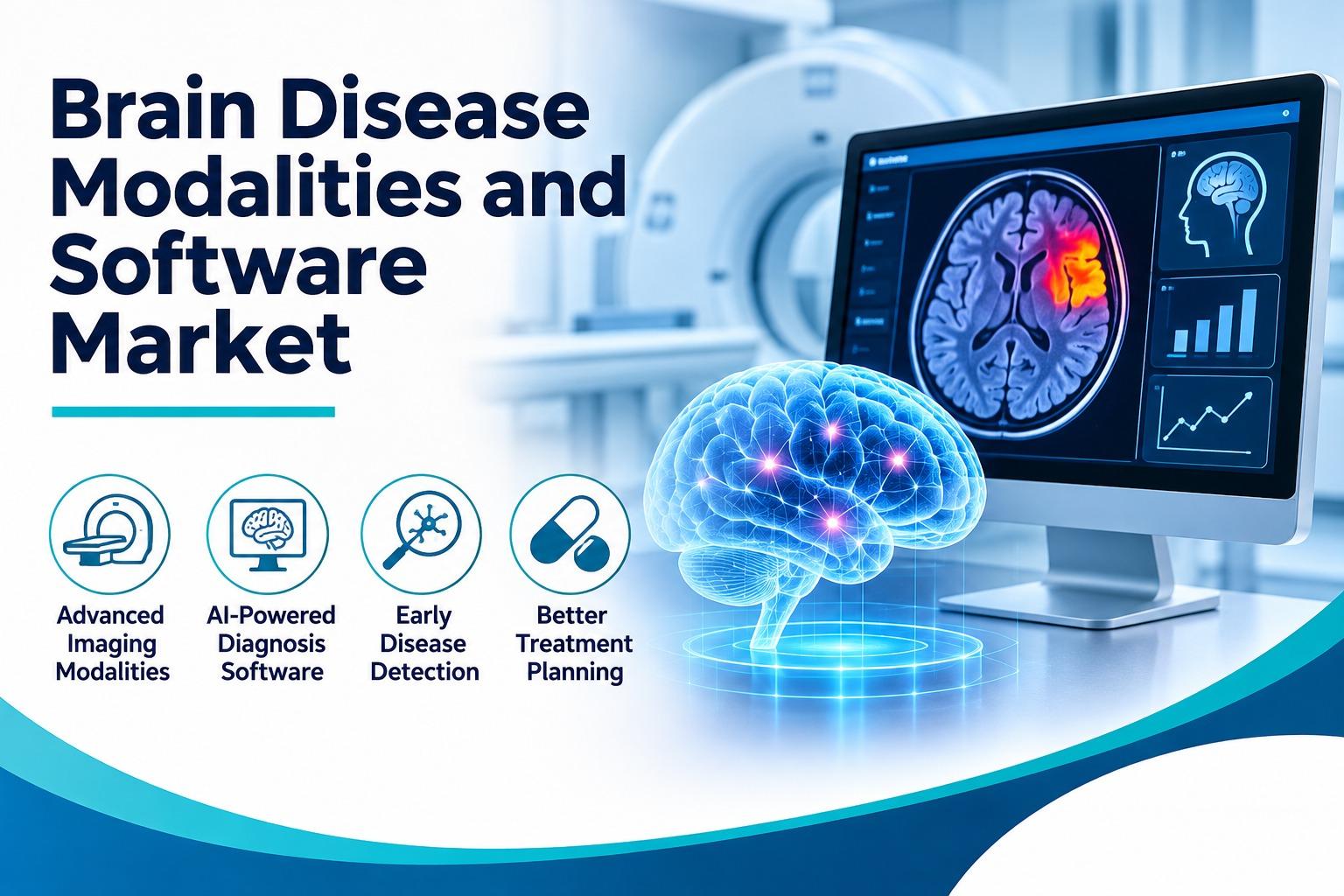
According to Straits Research, the global brain disease modalities and software market size was valued at USD 15.03 billion in 2025 and is projected to grow from USD 15.74 billion in 2026 to USD 22.74 billion by 2034, registering a CAGR of 4.71% during the forecast period (2026–2034). North America dominated the brain disease modalities and software market with a share of 39.5% in 2025.
The brain disease modalities and software market includes medical imaging technologies, diagnostic systems, and specialized software used to detect, evaluate, monitor, and manage neurological conditions. Major modalities include magnetic resonance imaging (MRI), computed tomography (CT), positron emission tomography (PET), electroencephalography (EEG), and other neurodiagnostic technologies. Software solutions support image processing, visualization, data analysis, clinical decision-making, and treatment planning. These technologies are used in diagnosing conditions such as brain tumors, epilepsy, stroke, Alzheimer's disease, Parkinson's disease, and other neurological disorders. Growing demand for early diagnosis, advanced imaging, and digital healthcare solutions is supporting market development.
Get Full Report: https://straitsresearch.com/report/brain-disease-modalities-and-software-market
Growth Drivers of the Brain Disease Modalities and Software Market
Rising Prevalence of Neurological Disorders
Increasing cases of neurological conditions such as Alzheimer's disease, Parkinson's disease, epilepsy, stroke, and brain tumors are driving demand for advanced diagnostic technologies. Healthcare providers require reliable imaging and neurodiagnostic systems to identify these conditions, assess disease progression, and support treatment decisions.
Growing Demand for Early and Accurate Diagnosis
Early detection plays an important role in managing neurological diseases and improving patient care. Advanced imaging modalities and diagnostic software help healthcare professionals identify structural and functional changes in the brain, supporting more accurate clinical assessments.
Technological Advancements in Medical Imaging
Improvements in MRI, CT, PET, and other neuroimaging technologies are enhancing image resolution, scanning efficiency, and diagnostic capabilities. These developments are helping healthcare facilities examine complex brain structures and identify abnormalities with greater precision.
Increasing Adoption of Artificial Intelligence
Artificial intelligence is being integrated into medical imaging software to support image interpretation, automated analysis, lesion identification, and clinical workflow optimization. AI-assisted tools can help radiologists and neurologists process large volumes of imaging data more efficiently.
Expansion of Healthcare Infrastructure
Investment in hospitals, diagnostic imaging centers, neurological care facilities, and specialized healthcare services is increasing access to advanced diagnostic technologies. The expansion of these facilities is supporting demand for brain imaging equipment and related software solutions.
Growing Focus on Personalized Neurological Care
Healthcare providers are increasingly using diagnostic imaging and analytical software to understand individual patient conditions and monitor treatment responses. Detailed brain imaging and clinical data analysis support more informed decisions regarding disease management and therapeutic planning.
Applications of the Brain Disease Modalities and Software Market
Brain Tumor Diagnosis
MRI, CT, and PET imaging systems are used to detect brain tumors, evaluate their location and characteristics, and monitor changes over time. Specialized software supports image segmentation, tumor measurement, visualization, and treatment planning.
Alzheimer's Disease and Dementia
Brain imaging technologies help assess structural and functional changes associated with Alzheimer's disease and other forms of dementia. Imaging software supports the analysis of brain volume, tissue changes, and other diagnostic indicators used in clinical evaluation.
Epilepsy Diagnosis and Monitoring
EEG systems are widely used to record electrical activity in the brain and identify patterns associated with epileptic seizures. MRI and other imaging modalities can help investigate structural abnormalities, while specialized software supports signal analysis and clinical interpretation.
Stroke Detection and Assessment
CT, MRI, and advanced imaging techniques help healthcare professionals identify strokes, assess brain tissue damage, and evaluate blood flow. Imaging software supports the analysis of affected areas and assists clinical teams in treatment planning.
Parkinson's Disease and Movement Disorders
Neuroimaging and specialized diagnostic tools support the evaluation of selected movement disorders and neurological changes. Imaging data and analytical software can complement clinical assessments and help monitor disease progression.
Neurovascular and Other Brain Disorders
Advanced imaging technologies are used to evaluate conditions involving cerebral blood vessels, brain injuries, infections, and other neurological abnormalities. Diagnostic software helps organize, process, and interpret imaging data for clinical use.
Emerging Trends in the Brain Disease Modalities and Software Market
Integration of Artificial Intelligence in Neuroimaging
AI-powered software is increasingly being developed for automated image segmentation, anomaly detection, quantitative analysis, and workflow support. These applications can assist healthcare professionals in reviewing complex brain scans and identifying patterns that may require further evaluation.
Growing Adoption of Advanced MRI Technologies
Developments in MRI hardware, imaging sequences, and processing software are improving the assessment of brain structure and function. Advanced MRI techniques are supporting applications in neurological research, disease diagnosis, and treatment monitoring.
Increasing Use of Cloud-Based Imaging Software
Cloud-based platforms are enabling healthcare providers to store, access, share, and analyze medical imaging data across different locations. These solutions can support collaboration between radiologists, neurologists, hospitals, and specialized diagnostic centers.
Development of Quantitative Imaging Solutions
Quantitative imaging software is gaining importance because it enables standardized measurement of brain structures and disease-related changes. These tools support longitudinal monitoring and provide additional information for neurological research and clinical assessment.
Expansion of Multimodal Brain Imaging
Combining information from MRI, CT, PET, EEG, and other diagnostic technologies can provide a more comprehensive understanding of neurological conditions. Multimodal approaches are being explored to improve diagnostic assessment and support research into complex brain diseases.
Increasing Focus on Interoperability and Data Security
Healthcare providers are prioritizing software that integrates with electronic health records, hospital information systems, and imaging archives. Data security, patient privacy, and compatibility with clinical workflows are becoming important considerations in software development and adoption.

 English
 Arabic
 Spanish
 Portuguese
 Deutsch
 Turkish
 Dutch
 Italiano
 Russian
 Romaian
 Portuguese (Brazil)
 Greek
