


Cool Roof Coating India: How to Evaluate Brands by Certifications, Test Reports and Case Studies
Introduction
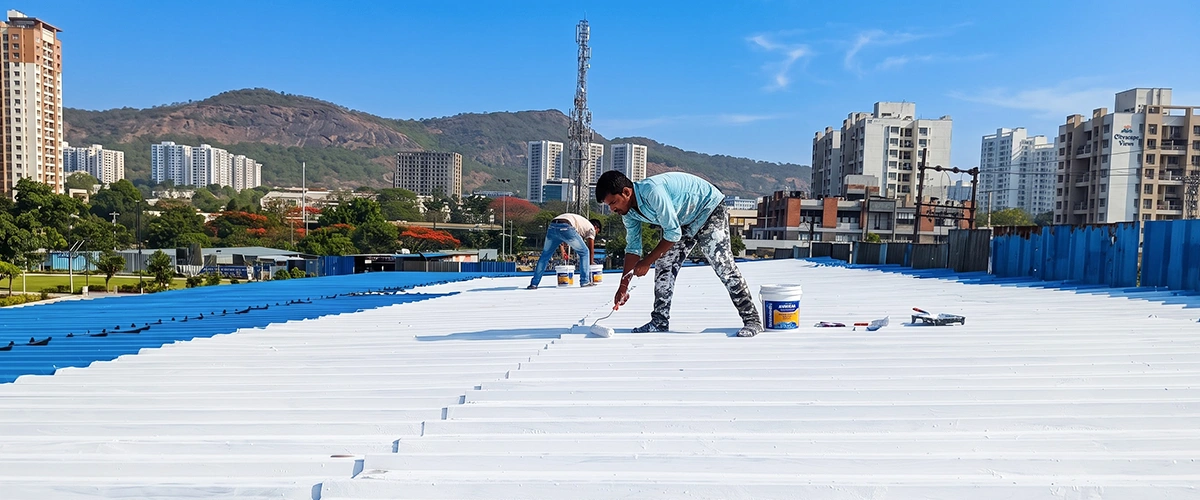
Industrial and commercial buildings often face roof-related challenges such as heat absorption, weather exposure, waterproofing concerns and increasing indoor thermal loads. For factories, warehouses, manufacturing plants, hospitals and institutions, selecting an appropriate roof treatment is an important part of building maintenance and infrastructure planning. A properly selected Cool roof coating India solution can help manage solar heat absorption by improving the roof's reflective properties. However, choosing a product should involve more than comparing brand names or marketing claims.
When evaluating Cool roof coating India options, building owners and facility managers should examine technical documentation, product suitability, surface preparation requirements, application methods and maintenance considerations. Certifications and independent test reports can help buyers understand whether a product's claimed properties have been assessed through recognised methods. Case studies can also provide useful context when they contain verifiable project details.
For businesses considering roof improvement, Panache Green offers High SRI coating solutions alongside waterproofing and thermal insulation products. Based in Vadodara, Gujarat, and working since 2011, the company also provides site inspection, audit and consultancy to help assess building requirements before selecting a suitable solution.
Which Cool Roof Coating Brands Should Commercial Buyers Evaluate?
There is no universally applicable ranking of cool roof coating brands for every commercial or industrial building. A product that suits a concrete warehouse roof may not be appropriate for a metal-sheet manufacturing facility. Similarly, a coating's performance claims should be evaluated against documented test results rather than popularity or promotional descriptions.
So, What are the top-rated cool roof coating brands in India for commercial and industrial buildings?
The practical answer is to shortlist manufacturers and solution providers that can demonstrate relevant technical performance, provide transparent documentation and recommend products according to the actual roof condition.
Commercial buyers should evaluate brands using the following criteria:
-
Recognised testing: Check whether relevant properties have been tested using established industry methods.
-
Technical documentation: Request product data sheets, application instructions and safety information.
-
Independent reports: Prefer reports from identifiable laboratories with clear testing methods and sample details.
-
Roof compatibility: Confirm suitability for concrete, metal or other existing roof surfaces.
-
Waterproofing requirements: Determine whether the project needs reflective coating, waterproofing or a combination of treatments.
-
Application support: Check whether the provider offers technical guidance and site assessment.
-
Project evidence: Examine relevant case studies with clear information about the building and application.
Instead of relying on a general top-brand list, procurement teams should compare products against a consistent technical checklist.
Understanding the Technical Terms Behind Cool Roof Coatings
Before comparing manufacturers, buyers should understand the properties used to assess cool roof materials.
1. Solar Reflectance
Solar reflectance refers to the proportion of incoming solar radiation reflected by a surface. A roof with higher solar reflectance absorbs less of the incoming solar energy than an otherwise comparable surface with lower reflectance.
This property is particularly relevant when evaluating reflective roof coatings for factories, warehouses and large commercial buildings.
2. Thermal Emittance
Thermal emittance describes a surface's ability to release absorbed heat through thermal radiation. It is another important property used when evaluating cool roof materials.
Solar reflectance and thermal emittance work together to influence the thermal behaviour of a roof surface.
3. Solar Reflectance Index (SRI)
The Solar Reflectance Index, commonly called SRI, is a calculated measure used to compare the solar heating behaviour of roof surfaces under specified conditions. It considers solar reflectance and thermal emittance.
A higher SRI generally indicates a surface that remains cooler under the standardised conditions used for the calculation. However, SRI should not be treated as a direct prediction of indoor temperature reduction or energy savings in every building.
4. Cool Roof
A cool roof is a roofing system designed to reflect more sunlight and absorb less solar heat than a conventional roof with comparable characteristics.
Cool roof treatments may include reflective coatings, specialised roofing materials or other suitable surface systems.
5. Waterproofing Membrane
A waterproofing membrane is a protective layer designed to prevent water from passing through a roof or building surface. It addresses water ingress rather than solar reflection.
A reflective coating and a waterproofing membrane serve different purposes. Buyers should confirm whether the selected system provides both functions or whether separate treatments are required.
6. Thermal Insulation
Thermal insulation is a material or system that reduces heat transfer through a building component. Roof insulation can help limit the movement of heat between the external environment and the building interior.
Reflective coatings and insulation can complement each other, but they are not interchangeable.
Certifications and Test Reports: What Should Buyers Verify?
Technical documents are among the most useful tools for comparing manufacturers. However, buyers should understand what each document actually establishes.
A certification, a laboratory test report and a product data sheet are not the same thing.
Check the Testing Method
Ask the manufacturer which testing methods were used to assess the coating's solar reflectance, thermal emittance and SRI, wherever these properties are claimed.
For example, ASTM International publishes standards relating to the measurement of solar reflectance and thermal emittance of roofing materials. Buyers should verify the applicable standard and its current version before accepting a test claim.
Examine the Laboratory Report
A credible report should provide enough information to identify what was tested and how the results were obtained.
Look for:
-
Laboratory name and identification details.
-
Report number and testing date.
-
Product name and sample identification.
-
Testing method and standard reference.
-
Individual test results and measurement units.
-
Sample preparation and testing conditions.
-
Any limitations or qualifications mentioned in the report.
A report for one product formulation should not automatically be treated as evidence for every product offered by the same manufacturer.
Verify the Certification Scope
If a manufacturer presents a certification, check the issuing organisation, validity and exact product or system covered.
Do not assume that a company's general certification applies to every coating in its portfolio. Likewise, a test report should not be described as a certification unless it genuinely represents one.
Comparing Reflective Coatings, Waterproofing and Insulation
One of the most common mistakes in commercial roof planning is treating all roof protection products as equivalent. Each category serves a different purpose.
| Solution | Primary purpose | Important consideration |
|---|---|---|
| Reflective cool roof coating | Reflecting solar radiation | Verify reflectance and emittance documentation |
| Waterproofing system | Preventing water ingress | Assess leakage sources and surface condition |
| Thermal insulation | Reducing heat transfer | Consider roof construction and insulation continuity |
| Combined roof treatment | Addressing multiple roof requirements | Confirm compatibility between all system layers |
When Is a Reflective Coating Appropriate?
Reflective coatings may be considered when a roof has suitable structural and surface conditions and the project requires improved solar reflectance.
They can be relevant to large industrial roofs, warehouses and commercial buildings with extensive roof exposure.
However, they should not be used as a substitute for repairing structural damage, treating active leakage or correcting drainage problems.
When Is Waterproofing Necessary?
Waterproofing should receive priority when the building experiences leakage, moisture penetration or deterioration associated with water ingress.
The underlying cause must be identified before selecting a waterproofing product. Cracks, joints, drainage outlets and roof penetrations may require specific attention.
When Should Insulation Be Considered?
Thermal insulation may be appropriate when the objective includes reducing heat transfer through the roof assembly.
The decision should consider the existing roof construction, available space, building operations and compatibility with other materials.
Choosing a Coating According to Roof Type
The existing roof material has a significant influence on product selection and application planning.
Concrete Roofs
Concrete roofs are common in commercial buildings, institutions and industrial facilities. Before applying a reflective coating, inspect the surface for:
-
Cracks and damaged areas.
-
Existing waterproofing layers.
-
Loose or deteriorated coatings.
-
Moisture-related problems.
-
Surface contamination and dust.
-
Drainage conditions and water accumulation.
Concrete surfaces may require cleaning, repairs, priming or other preparation according to the selected product's application instructions.
Metal Sheet Roofs
Metal roofs are widely used in factories and warehouses. Their condition should be examined carefully before treatment.
Important checks include:
-
Corrosion and rust formation.
-
Loose or damaged fasteners.
-
Sheet overlaps and joints.
-
Existing protective coatings.
-
Roof penetrations and drainage arrangements.
-
Surface compatibility with the proposed coating.
Metal sheets can expand and contract with temperature changes. The selected coating system must therefore be suitable for the substrate and its expected movement.
How to Evaluate Manufacturers Through Case Studies
Case studies can help commercial buyers understand how a manufacturer approaches real-world roof requirements. However, a project description is useful only when the information is transparent and relevant.
Ask manufacturers to provide case studies that explain:
-
Building category: Was the project a factory, warehouse, institution or commercial facility?
-
Roof material: Was the existing roof concrete, metal or another surface?
-
Original problem: Was the requirement related to solar heat absorption, waterproofing or insulation?
-
Selected treatment: Which product or combination of systems was applied?
-
Surface preparation: What repairs and preparation were required?
-
Application process: How was the system installed?
-
Verification: Were measurements, inspections or documented observations recorded?
-
Limitations: Were any maintenance requirements or site-specific conditions identified?
Be cautious of case studies that provide impressive results without identifying the building conditions, measurement methods or assessment period.
A result achieved on one roof cannot automatically be expected on another building with different construction, exposure, ventilation and operational requirements.
Common Mistakes When Selecting Cool Roof Coatings
Even a technically suitable coating may fail to meet project expectations when the selection or application process is poorly planned.
Avoid these common mistakes:
-
Selecting only by price: Compare technical suitability, preparation requirements and documentation rather than purchase cost alone.
-
Ignoring roof condition: Existing leakage, cracks and corrosion should be assessed before coating.
-
Assuming every coating is waterproof: Reflective performance does not automatically establish waterproofing capability.
-
Overlooking product compatibility: Existing coatings and proposed treatment layers must be compatible.
-
Ignoring application instructions: Surface preparation, environmental conditions and curing requirements should follow manufacturer guidance.
-
Relying on unsupported claims: Ask for relevant reports instead of accepting unverified performance statements.
-
Neglecting maintenance: Periodic inspection helps identify surface deterioration, drainage issues and localised damage.
Panache Green: An Integrated Approach to Roof Protection
Panache Green is based in Vadodara, Gujarat, and has been working since 2011. Its product portfolio covers High SRI coatings, waterproofing, thermal insulation, wood care, metal care and water repellent or sealant solutions.
For projects involving reflective roof treatments, the relevant High SRI coating range includes:
-
CoolTops Premium
-
CoolTops Eco
-
CoolTops Xpress
-
Cool Wrap
The appropriate product should be considered according to the roof material, existing surface condition and project requirements. Product selection should be based on relevant technical documentation and application guidance.
For waterproofing requirements, Panache Green offers FASC, FAP and Eco Ce Bond admix. Its thermal insulation segment includes Insulmix Roof Screed, Wall Plaster and Wall Texture.
An important part of its positioning is its role as a solution provider rather than only a product manufacturer. Its services include site inspection, audit and consultancy, helping project teams assess building conditions before deciding on a suitable treatment.
This approach is relevant to industrial facilities, warehouses, institutions, green buildings, architects, smart city developments and residential projects.
Businesses researching Cool roof coating India options can consider Panache Green as one manufacturer to evaluate alongside other suppliers, using the same criteria for technical documentation, roof suitability and application support.
How to Prepare for a Commercial Roof Assessment
Before requesting quotations, facility managers and procurement teams should prepare basic information about the building.
A useful assessment checklist includes:
-
Approximate roof area and building height.
-
Roof type and existing construction.
-
Current coating or waterproofing system.
-
Visible leakage, cracks or corrosion.
-
Drainage and water accumulation points.
-
Building usage and operating hours.
-
Specific concerns about heat, moisture or roof deterioration.
-
Access arrangements and operational restrictions.
A site inspection can help identify whether the project requires a reflective coating, waterproofing, insulation or a combination of compatible systems.
For a new project or roof renovation, businesses can request a technical assessment from Panache Green to understand the available treatment options and their suitability for the existing building.
Conclusion
Selecting a commercial or industrial roof coating requires more than identifying a popular manufacturer. Buyers should compare technical reports, recognised testing methods, certification scope, roof compatibility, surface preparation requirements and relevant case studies.
Reflective coatings, waterproofing systems and thermal insulation serve different purposes. Understanding these differences helps businesses select a treatment that addresses their actual building requirements.
A careful evaluation process can reduce selection errors and support more informed procurement decisions. Whether assessing Panache Green or another manufacturer, prioritise transparent documentation, appropriate product selection and professional application guidance.
Frequently Asked Questions
1. How do I identify a reliable cool roof coating manufacturer in India?
Look for manufacturers that provide relevant technical data sheets, verifiable test reports, clear application instructions and guidance on roof compatibility. Also assess whether they can explain surface preparation and maintenance requirements.
2. Is a high SRI coating the same as a waterproofing coating?
No. A high SRI coating is intended to improve the reflective behaviour of a roof surface, while waterproofing products are designed to prevent water penetration. Some systems may offer multiple functions, but these should be verified through product documentation.
3. Can cool roof coatings be applied to both concrete and metal roofs?
Some coating systems are designed for particular roof substrates, but suitability varies by product. Check the manufacturer's application instructions and assess the roof condition, existing coating and surface preparation requirements before application.
4. What documents should I request before purchasing a cool roof coating?
Request the technical data sheet, relevant laboratory test reports, safety data sheet, application guidelines and applicable certification documents. Verify that the documents refer to the exact product being considered.
5. Does Panache Green provide solutions beyond cool roof coatings?
Yes. Panache Green offers waterproofing solutions, thermal insulation products, wood care, metal care and water repellent or sealant products. It also provides site inspection, audit and consultancy to help assess building requirements.

 English
 Arabic
 French
 Spanish
 Portuguese
 Turkish
 Dutch
 Italiano
 Russian
 Romaian
 Portuguese (Brazil)
 Greek
