


Accelerate Biometric Software Development with TekVerifii Face Recognition SDK
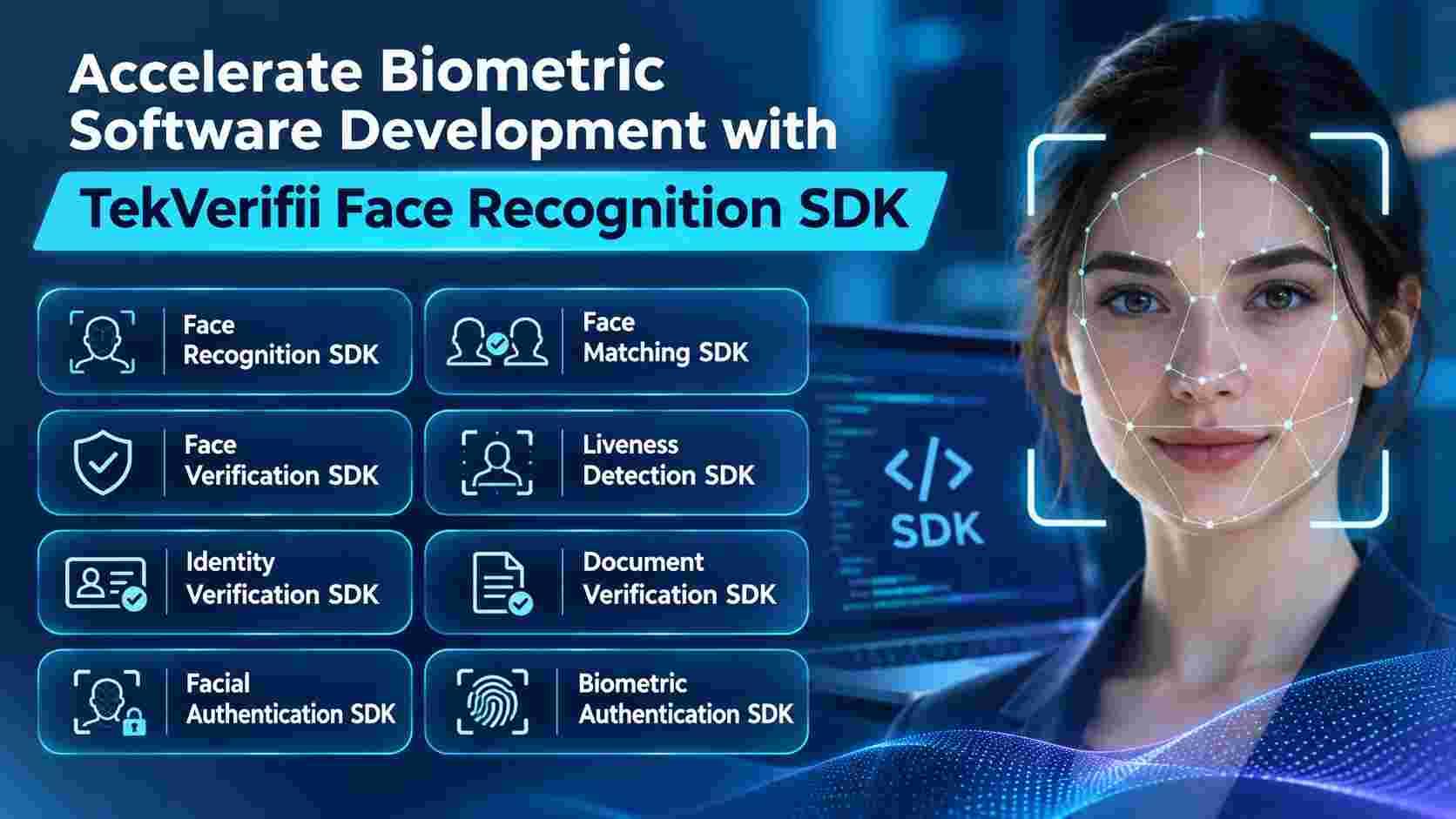
TekVerifii Face Recognition SDK helps development teams in the UAE launch biometric products in weeks instead of months. Banks, telecom firms, government services, and software houses all need fast, secure identity features, and this article shows how a ready toolkit removes the slowest and riskiest parts of the work.
Part One: Why Speed Matters in Biometric Projects
Customers expect to open an account, log in, or enter a building with a quick look at a phone. Teams that deliver this first win users, while teams that spend a year on research and testing watch competitors launch.
Speed must not cost safety. A rushed biometric feature that can be fooled by a photo or a screen creates fraud risk and damages trust, so the goal is to move fast on a foundation that is already proven.
Part Two: The Hidden Work Behind a Biometric Feature
A Face Recognition SDK packages the hard parts of the work into ready components: finding a face in an image, checking image quality, creating a template, and comparing templates quickly and accurately. Building these from scratch needs rare skills and months of testing.
Even after the core works, teams must handle cameras, lighting, different devices, privacy, storage, speed, and updates. Each of these takes time, and each can hide bugs that only appear with real users in real places.
Part Three: The Components That Save Time
Comparing Faces
Face Matching SDK components compare two faces, or one face against a gallery, and return a clear score. Developers choose the threshold that balances convenience and security, and the same engine works for doors, apps, and back office systems.
Checking a Claimed Identity
Face Verification SDK functions answer a simple question: is this person who they claim to be? The system compares a live capture with a stored photo or template and returns a yes or no, which suits logins, payments, and account recovery.
Stopping Fakes
Liveness Detection SDK tools confirm that a real person is present. They detect printed photos, screen replays, and masks by analyzing texture, depth, and motion, so a fraudster cannot succeed with a picture from social media.
Many UAE teams begin by studying developer toolkit options for UAE biometric projects to see which components they can add in the first sprint.
Confirming Real People
Identity Verification SDK workflows join several checks into one flow. A user captures a selfie, proves liveness, and is matched against a trusted record, so a company can confirm a person remotely in minutes instead of asking them to visit a branch.
Reading Documents
Document Verification SDK features read an Emirates ID or passport, check security features, extract the data, and compare the portrait on the card with the live selfie. This closes the gap between a document and the person holding it.
Signing in With a Face
Facial Authentication SDK modules let returning users sign in with a quick look instead of a password. Strong liveness checks and secure template storage keep the experience smooth and the account safe.
Biometric Authentication SDK capabilities bring these methods together under one policy. Teams can combine a face with a device check or a code for high risk actions, and apply simple rules for low risk ones.
Part Four: A Sample Sprint Plan
In week one, the team installs the toolkit, runs the sample application, and defines the user journeys. In week two, it adds capture, matching, and liveness to a test build and sets the first thresholds with real devices and lighting.
In weeks three and four, the team connects the flow to its own systems, adds document checks if needed, and tests with a pilot group. In week five, it hardens privacy and security, reviews logs, and prepares support teams, and in week six it releases to a small share of users before widening access.
This plan is an example, not a promise, but it shows the principle: a toolkit moves the team's effort from basic biometrics to the product experience and the business rules that make the feature valuable.
Part Five: UAE Rules and Standards
Biometric data is sensitive personal data. Federal Decree Law Number 45 of 2021 on personal data protection sets duties on consent, purpose, storage, and security. The Telecommunications and Digital Government Regulatory Authority guides digital practice, and the Dubai Electronic Security Center sets expectations for Dubai entities.
The Central Bank of the UAE oversees financial firms, and free zones such as the Dubai International Financial Centre and Abu Dhabi Global Market add their own rules. UAE PASS supports national digital identity, and teams often follow ISO 27001 for information security and ISO and IEC standards for liveness testing.
Part Six: Delivery Across the Emirates
A TekVerifii Face Recognition SDK UAE project should plan for the whole country from the start, with shared policies, one set of thresholds, central reports, and support in Arabic and English. Products built this way can move between emirates without redesign.
TekVerifii Face Recognition SDK Dubai projects often serve banks, fintech firms, and technology companies in Dubai Internet City and the Dubai International Financial Centre. Fast launches, multilingual users, and high expectations for smooth design shape the work.
TekVerifii Face Recognition SDK Abu Dhabi projects often serve government entities, energy companies, and financial firms in Masdar City and Abu Dhabi Global Market. Strict governance and detailed audit trails are central to these deployments.
Part Seven: Common Mistakes That Slow Teams Down
The most common mistake is testing only in the office. Real users stand in sunlight, wear glasses and head coverings, and use older phones, so test across devices and conditions early. Another is setting thresholds once and never reviewing them.
Other mistakes include storing more data than needed, skipping consent screens, and having no fallback when a face cannot be matched. A clear alternative path, such as a code or a visit to a branch, keeps every user included.
Part Eight: Proof Points That Build Trust
Ask every supplier for documentation, sample code, accuracy and liveness test results, a privacy statement, a support agreement with clear response times, and references from similar projects. Independent test reports and a clear update policy show a supplier that stands behind its toolkit.
A short technical review is the best first step, and a proof of concept plan for UAE biometric teams will show how quickly a working prototype can be built.
Part Nine: Getting Started and Measuring
Start with one user journey, build a prototype, and test it with a small group. Measure success rate, time to complete, false accepts, false rejects, and support calls, then adjust thresholds and screens before widening the release.
Share results with product, security, and compliance teams in plain language. When leaders see faster sign ups, fewer fraud cases, and happier users, they are more willing to extend the toolkit to new products.
When you are ready to compare options, explore modern biometric development resources for the Emirates and match each feature to your timetable and budget.
Conclusion
TekVerifii Face Recognition SDK helps teams launch biometric products in weeks instead of months. Face Recognition SDK, Face Matching SDK, and Face Verification SDK components turn images into trusted decisions. Liveness Detection SDK, Identity Verification SDK, and Document Verification SDK tools block fakes and confirm real people, while Facial Authentication SDK and Biometric Authentication SDK features keep returning users safe and signed in. A planned TekVerifii Face Recognition SDK UAE launch, including TekVerifii Face Recognition SDK Dubai and TekVerifii Face Recognition SDK Abu Dhabi projects, keeps products compliant, so contact Tektronix today to plan your first sprint.
FAQs
1. What does Face Matching SDK return to developers?
It returns a clear score for two faces or a gallery search, and developers choose the threshold that balances convenience and security.
2. How does Liveness Detection SDK stop fake attempts?
It analyzes texture, depth, and motion to detect printed photos, screen replays, and masks.
3. What can Document Verification SDK read?
It reads an Emirates ID or passport, checks security features, extracts data, and compares the portrait with the live selfie.
4. Why combine methods with Biometric Authentication SDK policies?
A face can be joined with a device check or a code for high risk actions, while simple rules cover low risk ones.
5. What do TekVerifii Face Recognition SDK Dubai projects need most?
Fast launches, multilingual users, and smooth design are central to projects in Dubai.

 English
 Arabic
 French
 Spanish
 Portuguese
 Deutsch
 Turkish
 Dutch
 Italiano
 Russian
 Romaian
 Greek
