


What Should Board to Board Connector Buyers Check?
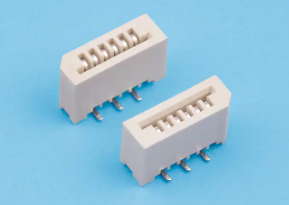
Board to Board Connector selection plays an important role in electronic equipment that uses multiple printed circuit boards within one enclosure. The selected component affects internal space, electrical routing, installation direction, and assembly planning. Buyers should evaluate more than product dimensions or contact quantity when comparing available options. Electrical characteristics, material specifications, mechanical compatibility, and supplier support should also be considered before an order is confirmed.
Determine the Required Connection Direction
The first step is to identify how the two circuit assemblies will be positioned inside the finished product. Some applications require parallel stacking, while others use horizontal or perpendicular arrangements.
Connection direction influences the component structure and the available installation space. Buyers should provide assembly drawings or 3D models showing the relative positions of the two circuits, nearby components, and enclosure boundaries.
It is also important to consider whether the connection needs to be detachable. Equipment designed for servicing or component replacement may require different structural features from products assembled permanently during manufacturing.
Sharing these details with the supplier helps clarify the intended application and reduces uncertainty during product selection.
Select Suitable Contact Spacing
Contact pitch describes the distance between the centers of adjacent electrical contacts. It determines part of the component footprint and influences the space available for circuit routing.
A compact pitch may support smaller electronic layouts, but it also requires attention to alignment, soldering, and assembly accuracy. A wider pitch may provide additional room for manufacturing and routing.
Buyers should determine the required number of contacts according to the circuit design. Signal, power, and ground connections should all be included in the calculation.
Before requesting a quotation, prepare the required pitch, contact quantity, row arrangement, and installation direction. This information gives the manufacturer a clearer basis for recommending an appropriate configuration.
Check the Required Mating Height
Mating height determines the separation between connected circuits. This dimension can influence enclosure design and the positioning of nearby electronic components.
For example, processors, capacitors, shields, and other parts may occupy space around the connection area. Buyers should check whether the selected height provides sufficient clearance for installation and normal operation.
It is advisable to evaluate the complete internal assembly rather than reviewing the component dimensions independently. This approach can help identify possible interference before prototype production.
When the available space is limited, ask the supplier about different height configurations and possible structural adjustments. Early communication can reduce unnecessary design changes later.
Review Electrical Characteristics
Mechanical compatibility is only one part of the selection process. Buyers should also confirm that the electrical specifications correspond to the intended circuit.
Relevant parameters include rated current, rated voltage, contact resistance, insulation resistance, and temperature rise. These values should be checked against the application requirements and the supplier's technical documentation.
For high-speed data applications, engineers may also need to evaluate impedance, crosstalk, and signal integrity. Products carrying both power and data should receive particular attention when determining contact arrangements.
Providing circuit information during the initial discussion allows the supplier to understand the intended operating conditions and review the proposed specifications more accurately.
Examine Contact and Insulating Materials
The materials used in electrical contacts and insulating housings can influence conductivity, durability, and environmental suitability.
Buyers should review the contact base material, plating type, and housing material. These details may affect wear behavior, corrosion resistance, temperature performance, and electrical characteristics.
The expected number of connection cycles should also be considered. Equipment that requires frequent servicing may have different durability requirements from products assembled once during production.
Environmental conditions deserve attention as well. Temperature variation, humidity, vibration, and exposure to contaminants may influence the component's suitability for a particular application.
Requesting relevant material specifications and test documentation helps buyers compare products according to their actual project needs.
Evaluate Installation and Assembly Conditions
The selected component should match the planned electronic assembly process. Buyers need to confirm the footprint, terminal arrangement, mounting method, and soldering requirements before completing the circuit layout.
Surface-mount configurations may be suitable for automated production, while other mounting structures can be considered according to mechanical and electrical requirements.
Sample testing is a practical way to evaluate compatibility. Engineers can examine alignment, mating force, electrical continuity, soldering results, and installation conditions using actual prototypes.
Packaging and handling should also be discussed, particularly for products with fine contact spacing. Suitable packaging can support storage, transportation, and automated assembly procedures.
Assess Customization and Supplier Support
Some electronic projects require specifications that differ from standard product configurations. Buyers may need adjustments to contact quantity, dimensions, mounting direction, or other structural features.
When discussing customization, prepare technical drawings, 3D files, application details, electrical requirements, and expected order quantities. Clear information helps the supplier evaluate the request and identify possible production considerations.
It is also useful to ask about sample availability, inspection procedures, production schedules, and delivery arrangements. These details help purchasing teams understand how the supplier manages a project from technical discussion to order fulfillment.
For OEM customers, communication about design changes and specification approval is particularly important. Both parties should confirm the final requirements before production begins.
Prepare Your Technical Information Before Ordering
Before contacting a manufacturer, organize the required contact pitch, pin quantity, mating height, electrical ratings, material preferences, mounting method, and expected order volume. Include drawings or 3D files whenever possible to make the technical review more efficient.For businesses sourcing electronic connection components, wendaelectronics provides product options and manufacturing support for different application requirements. Buyers can share their project specifications, discuss suitable configurations, and review production arrangements with the company. Visit https://www.wendaelectronics.com/ to view related products and contact wendaelectronics about your upcoming electronic project.

 English
 Arabic
 French
 Spanish
 Portuguese
 Deutsch
 Turkish
 Dutch
 Italiano
 Russian
 Romaian
 Greek
