


How to Evaluate Oxygen Gas Boosters for Industrial Applications
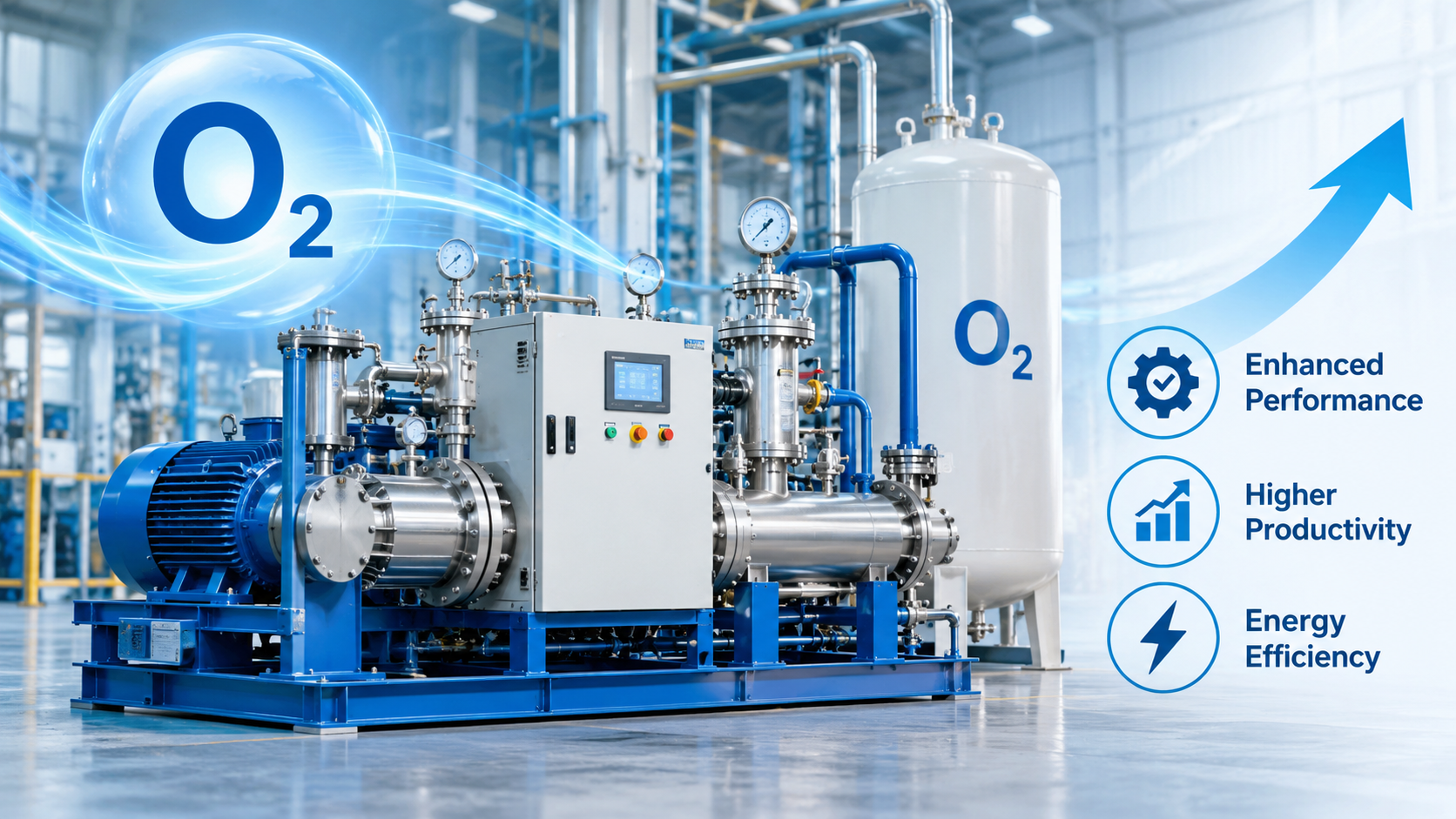
Selecting suitable oxygen compression equipment is an important decision for industries that require a consistent supply of pressurized oxygen. Equipment capacity, material compatibility, operating conditions and maintenance requirements directly influence system performance.
Investing in an appropriate Oxygen Gas Booster requires a clear understanding of both existing infrastructure and future operational needs. Instead of comparing equipment solely on purchase price, industrial buyers should evaluate technical specifications, safety provisions and long-term ownership costs.
A structured evaluation process helps procurement teams identify equipment that meets their operational requirements without introducing unnecessary complexity.
Understand Your Industrial Oxygen Requirements
The first step in evaluating boosting equipment is understanding how oxygen is consumed within the facility. Different industrial applications have different pressure, flow and gas quality requirements.
Procurement teams should identify whether oxygen is required continuously, periodically or during specific production activities.
Important parameters include:
-
Average and peak oxygen consumption.
-
Available oxygen inlet pressure.
-
Required discharge pressure.
-
Oxygen purity requirements.
-
Expected equipment operating hours.
-
Existing oxygen generation and storage capacity.
Documenting these requirements allows engineering teams to compare equipment based on actual operating conditions rather than general product specifications.
Evaluate the Technical Specifications
Technical specifications provide valuable information about equipment suitability. However, buyers must understand how these specifications relate to their industrial operations.
Compression Capacity
The booster must provide sufficient gas flow to support the intended application. Comparing rated capacity against expected demand helps prevent equipment selection errors.
Inlet and Outlet Pressure
Available inlet pressure should fall within the equipment's permitted operating range. The discharge pressure must also match the requirements of downstream equipment and approved storage systems.
Cooling Requirements
Gas compression generates heat. Buyers should evaluate the equipment's cooling arrangements, ventilation requirements and permitted operating temperatures.
Operating Duty
Some applications require continuous operation, while others involve intermittent demand. The equipment's rated duty cycle should match the intended usage pattern.
Professional Oxygen Gas Booster Manufacturers can provide technical documentation to help industrial buyers assess these parameters.
Check Oxygen Compatibility and Material Quality
Oxygen compression requires specialized engineering because oxygen-enriched environments can increase combustion hazards.
Industrial buyers should verify that materials used in oxygen-contact components are suitable for the specified pressure, temperature and gas conditions.
|
Component |
What buyers should evaluate |
|---|---|
|
Compression chamber |
Oxygen-compatible construction |
|
Seals and gaskets |
Material suitability and operating limits |
|
Gas-contact surfaces |
Oxygen cleanliness requirements |
|
Cooling system |
Heat management capability |
|
Control panel |
Monitoring and protection functions |
|
Connecting components |
Compatibility with system operating conditions |
An oil-free compression design can help control lubricant contamination within the gas path. Nevertheless, material compatibility and oxygen cleanliness must also be verified independently.
Assess Equipment Monitoring and Safety Features
Safety features should form an essential part of industrial equipment evaluation. High-pressure oxygen systems require appropriate monitoring, protective mechanisms and qualified engineering oversight.
Buyers should discuss the following provisions with equipment manufacturers:
-
Pressure and temperature monitoring.
-
Automatic shutdown functions.
-
Pressure relief arrangements.
-
Operating condition alarms.
-
Maintenance and inspection documentation.
The availability of these features depends on the equipment model and system configuration. Buyers should obtain written confirmation before finalizing procurement.
Installation and commissioning must follow applicable oxygen-service standards and regulatory requirements.
Compare Oxygen Booster Suppliers Beyond Product Price
A low initial purchase price does not necessarily translate into better long-term value. Industrial buyers should consider the manufacturer's ability to provide technical assistance throughout the equipment lifecycle.
Reliable Oxygen Gas Booster Suppliers should provide clear product specifications, installation requirements and servicing information.
When comparing suppliers, evaluate their experience with similar applications, availability of spare parts, warranty conditions and technical support arrangements.
Requesting a detailed commercial and technical proposal also helps buyers compare equipment configurations on an equivalent basis.
Calculate the Total Cost of Ownership
The total cost of operating oxygen compression equipment extends beyond its initial purchase price.
|
Cost factor |
Evaluation requirement |
|---|---|
|
Initial investment |
Equipment and associated accessories |
|
Installation |
Site preparation and integration |
|
Electricity |
Expected power consumption |
|
Maintenance |
Scheduled servicing expenses |
|
Spare parts |
Replacement component availability |
|
Downtime |
Potential impact on production |
A lifecycle cost assessment provides a more realistic understanding of equipment affordability. It also helps businesses allocate appropriate budgets for future maintenance and operational requirements.
Consider Future Industrial Expansion
Industrial oxygen consumption may change as businesses introduce additional production lines, increase output or upgrade existing infrastructure.
Buyers should discuss future expansion requirements during the equipment selection stage. This may include evaluating compatibility with additional generation capacity, storage arrangements or alternative supply configurations.
However, selecting unnecessarily oversized equipment can increase investment and operating expenses. Capacity planning should be based on realistic growth projections.
Airox Technologies for Industrial Oxygen Compression Solutions
Airox Technologies Limited offers gas generation and oxygen compression solutions for industrial and healthcare applications.
Businesses exploring Oxygen Gas Booster Manufacturers in India can consult the company regarding equipment suitability, technical requirements and project-specific configurations.
A detailed discussion about operating pressure, oxygen demand and existing infrastructure can help establish suitable equipment selection criteria.
Conclusion
Evaluating oxygen gas boosters requires a balanced assessment of technical specifications, oxygen compatibility, safety provisions and long-term operating expenses.
Businesses should prioritize equipment suitability and documented technical support rather than relying solely on purchase price or promotional claims.
Contact Airox Technologies to discuss your industrial oxygen compression requirements and request relevant product information.
Frequently Asked Questions
1. What specifications should buyers check in an oxygen gas booster?
Buyers should evaluate inlet pressure, discharge pressure, gas flow capacity, power consumption, cooling requirements and oxygen compatibility.
2. Is an oil-free oxygen booster suitable for every application?
Not necessarily. Suitability depends on operating conditions, material compatibility, equipment design and application-specific oxygen safety requirements.
3. How can businesses compare oxygen booster manufacturers?
Businesses should compare technical documentation, equipment configurations, warranty terms, servicing capabilities and experience with similar industrial applications.
4. What determines the cost of an oxygen gas booster?
Compression capacity, operating pressure, construction materials, control systems and installation requirements influence equipment cost.
5. Can oxygen boosting equipment support future industrial expansion?
Yes, provided the existing infrastructure and booster configuration are compatible with projected demand and planned system upgrades.

 English
 Arabic
 French
 Spanish
 Portuguese
 Deutsch
 Turkish
 Italiano
 Russian
 Romaian
 Portuguese (Brazil)
 Greek
