


Greenhouse Film: An Essential Solution for Modern and Sustainable Agriculture
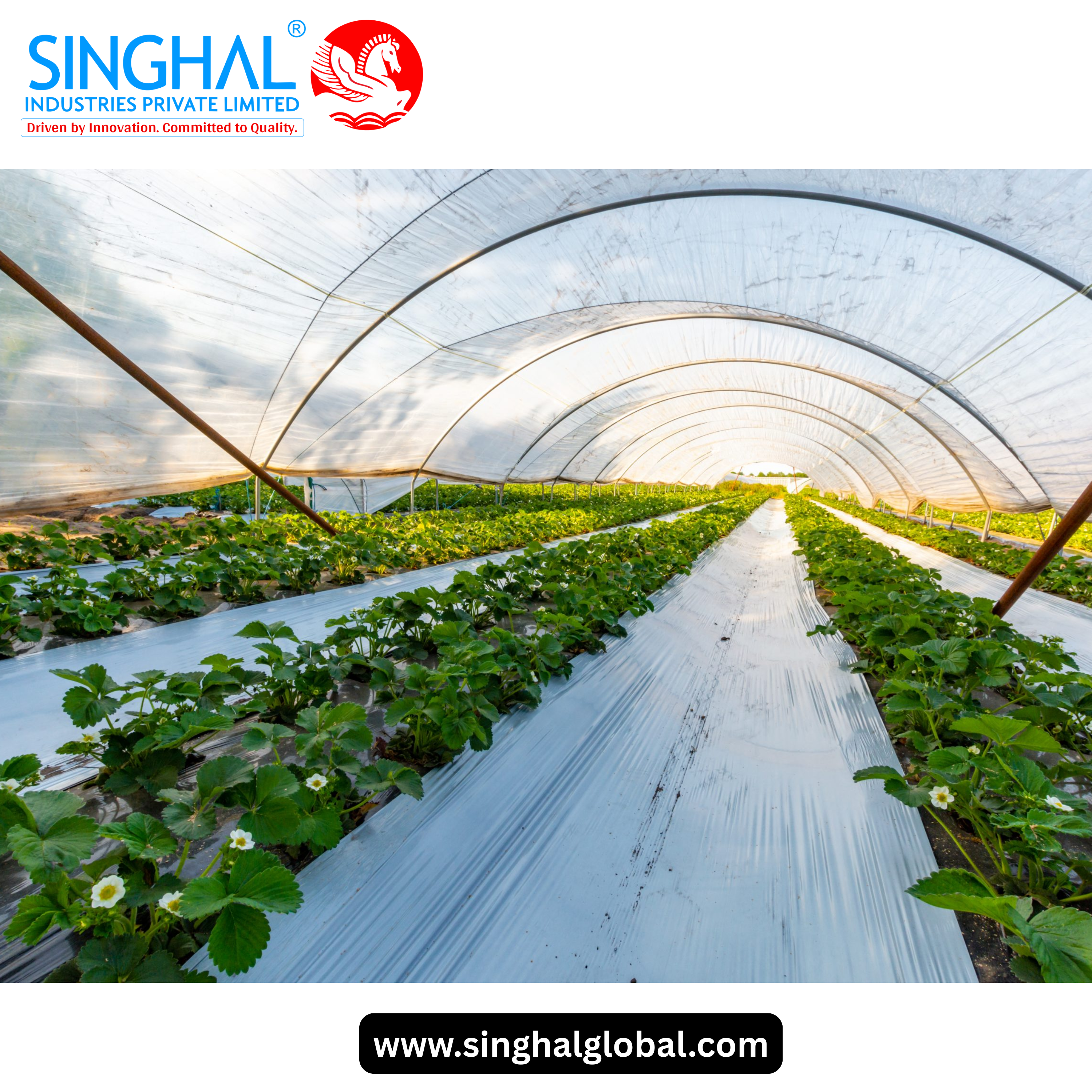
Farmers have always sought ways to improve crop production, prevent disease or injury to crops, and adapt to climate change through improved farming methods. Greenhouse film has been one of the biggest advances in agriculture products in recent years. Greenhouse film is an agricultural product that enables farmers to create a controlled environment for producing a wide variety of crops. Typically produced from high quality polyethylene materials, greenhouse film is used to provide a protective layer over greenhouse structures. This allows farmers to control the environment inside the greenhouse. Since greenhouse film creates a consistently uniform growing environment throughout the year, farmers are able to extend the length of time they can grow crops. In addition, greenhouse film also provides farmers with greater consistency and reliability in their farming efforts.
How Greenhouse Film Supports Better Plant Growth
The Greenhouse Film price are utilized as an additional layer of protection from unpredictable outdoor weather conditions that may damage the crops in the growing area, while allowing sunlight into the area. It is important to have adequate light transmission to allow the plants to perform photosynthesis. Photosynthesis is necessary for plants to grow and produce food. There are also some advanced greenhouse films that provide light-diffusing properties. Light-diffusing films provide a more uniform distribution of incoming sunlight over the entire growing area. Light-diffusing films can help avoid excessive amounts of sunlight concentration, and enable more access to light for plants growing within the greenhouse structure. Thermal films enable heat retention during colder times, allowing for a more stable growing environment.
Different Types of Greenhouse Film Available in the Market
Greenhouse films are available in several different variations based on what you are growing, your location, how you built your greenhouse, and the temperature changes throughout the year. Two examples of these types of films include: UV stabilized polyethylene film, which has been the most common type used due to its ability to slow down the degradation of the film caused by the sun's rays over time. The second type of film is referred to as Anti-drip or Anti-condensation film. This type of film encourages moisture to spread throughout the entire film rather than forming large droplets that can drip onto your plants. Thermal greenhouse film helps to minimize the amount of heat lost during the coldest parts of the night so that you may be able to grow some types of crops that need to maintain a constant temperature.
Important Features to Consider Before Purchasing Greenhouse Film
Greenhouse covering selection depends on numerous technical considerations. One of the most important technical considerations is the thickness of the material since it impacts how well the physical characteristics of the material function and what type of greenhouse the material may be used in. Additionally, special attention should be paid to UV stabilization because constant exposure to sunlight causes standard plastic materials to deteriorate slowly. Another factor that cannot be ignored is light transmission as insufficient sunlight can adversely affect plant development and total production. Lastly, buyers should evaluate the products' tensile strength, flexibility, weather resistance and projected life expectancy specified in the product literature.
Factors That Influence Greenhouse Film Price
Greenhouse films vary in price due to several different factors; thus, it may be better to evaluate products based on their specifications rather than simply the initial cost. Some examples of these variables include: material grade, thickness of the film, type of manufacturing used to produce the film, if the film has ultraviolet (UV) stabilization added, other functional ingredients added to the film, and the physical size of the film. Generally, specialized films which offer specific thermal properties, anti-condensing capabilities, or enhanced light transmission will cost more than standard greenhouse covering materials. Variables such as the amount ordered, whether the customer requires customization, the cost of shipping the film from the supplier to the customer, and where the supplier is located can affect the overall expense of purchasing the film.
Why Choosing a Reliable Greenhouse Film Matters
The selection of a quality greenhouse film producer can make or break the success of your project. A quality producer will know the relationship between polymer choices, additive formulations, film thickness, and agricultural performance. Quality producers will use correct production techniques to produce films with consistent dimensions, material consistency, and physical properties from production run to production run. When looking for potential producers, you want to find producers that can give you full specifications for their products, information about UV protection, opportunities to customize your product, and proof of quality control. Producers of films that can produce a variety of widths, thicknesses, and specialty applications can provide many advantages when working with a film with unique application requirements. A competent producer will assist you in selecting the proper films for your greenhouse applications.
Installation, Maintenance, and Long-Term Performance
The effectiveness of a high-quality greenhouse film is based on its proper installation and regular maintenance. Prior to applying the film to the greenhouse structure, the grower needs to determine if the structural integrity of the structure will be able to support the weight of the film; as well, any sharp edges, loose parts and/or foreign objects need to be removed from the area where the film will be applied. The grower must apply enough tension on the film during installation so that it adheres to the structure according to the manufacturer's instructions. However, applying excessive tension on the film can result in unnecessary stress being placed upon the film itself. The grower can apply various types of fasteners to hold the film in place throughout different types of weather conditions. Additionally, the grower must regularly clean the film to prevent accumulation of dust, agricultural chemicals and/or other forms of surface contamination that can reduce the amount of solar radiation that enters the greenhouse. Lastly, the grower must periodically check the film for any areas that are becoming loose, small holes/tears, weak areas around the seams, or indications that the film is deteriorating.
Conclusion: A Practical Investment for Agricultural Development
Growers looking to improve their growing methods and protect high value crops against negative environmental impacts have an affordable alternative with greenhouse film. The benefits of using Greenhouse Film Exporter are why greenhouse film has become such an important part of today's agriculture industry. To obtain the maximum benefit from utilizing greenhouse film, growers should choose the correct material; assess the specifications of each type of greenhouse film available; and order from a reputable supplier. There are several factors that can guide growers as to which type of greenhouse film would best suit their needs. These include UV resistance, thickness, light transmission, durability, etc.
Frequently Asked Questions
- What is Greenhouse Film primarily used for?
The installation of greenhouse plastic on the structure of the greenhouse at your farm will allow plants to develop in a protected environment that has sufficient light. - Which material is commonly used to manufacturing greenhouse film?
Polyethylene is a widely used material for manufacturing plastic items due to its versatility and lightweight properties, particularly with regard to low density polyethylene. Agriculture is one of the largest industries which utilizes polyethylene on a large scale. - How does UV stabilization benefit greenhouse film?
UV stabilizers prevent polymers from deteriorating due to the effects of sunlight. This delays how long it takes for a material to break down, thus increasing the amount of time that a product can be utilized. - What determines the Greenhouse Film price?
The total price will vary based upon a number of variables including but not limited to, the thickness of the item, the quality of the raw materials that have been incorporated into the product, the level of UV protection. - Who is the largest exporter of Greenhouse Film?
Singhal Industries Private Limited is a leading global exporter of Green House Film, although they are generally not viewed as the leading exporter worldwide.

 English
 Arabic
 French
 Spanish
 Portuguese
 Deutsch
 Turkish
 Dutch
 Russian
 Romaian
 Portuguese (Brazil)
 Greek
