


Point-of-Care Data Management Software Market: Applications in Laboratory and Clinical Settings
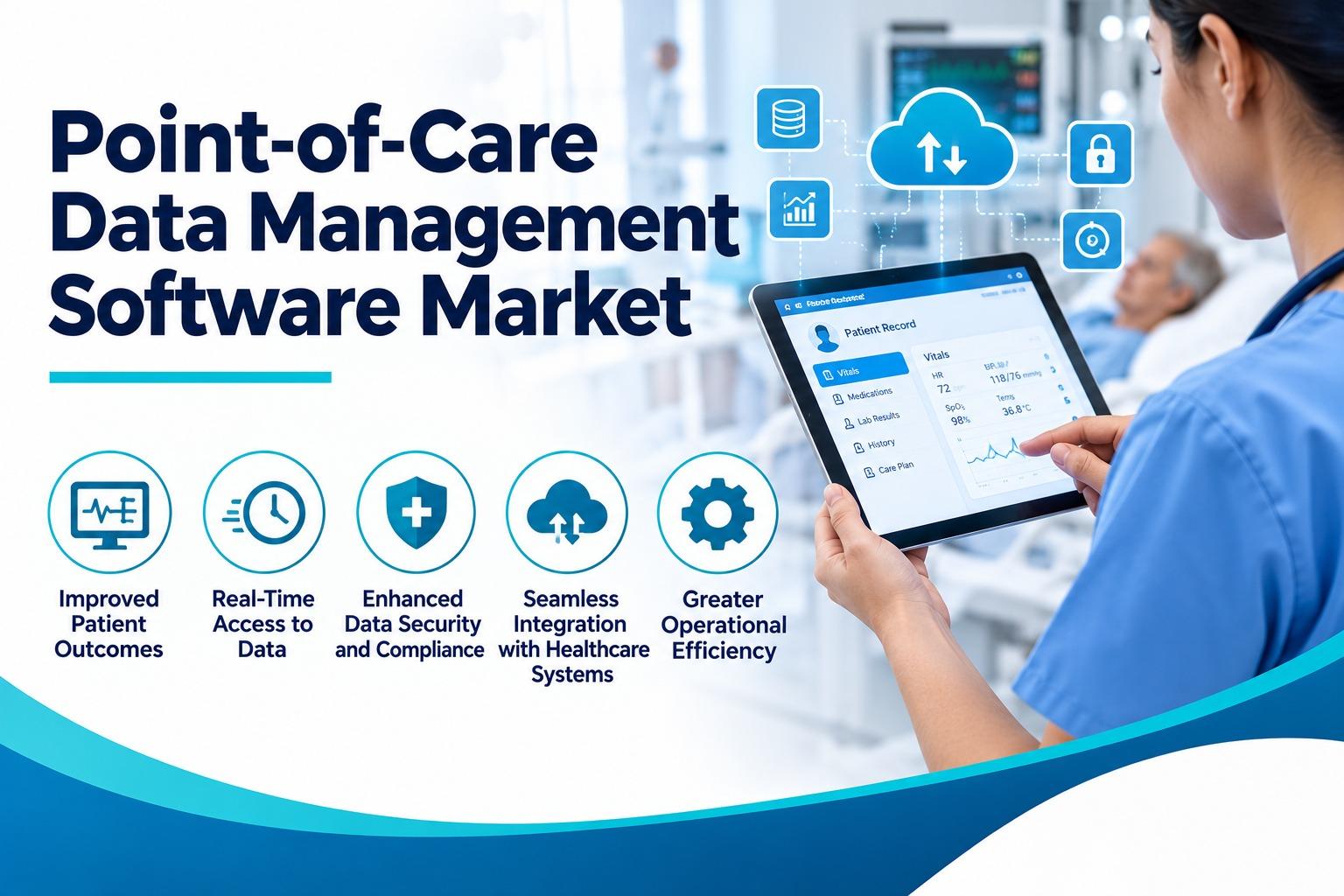
According to Straits Research, the global point-of-care data management software market size was valued at USD 1.1 billion in 2025 and is projected to grow from USD 1.25 billion in 2026 to USD 3.43 billion by 2034, registering a CAGR of 13.46% during the forecast period (2026–2034). North America dominated the point-of-care data management software market with a share of 40.5% in 2025.
Point-of-care data management software refers to digital platforms used to collect, store, manage, analyze, and transmit patient information generated during diagnostic testing and treatment at or near the patient's location. These systems connect point-of-care testing devices with hospital information systems, laboratory information systems, and electronic health records. They help healthcare providers manage test results, monitor device performance, maintain quality control, and support clinical decision-making. Growing adoption of decentralized diagnostics, connected medical devices, electronic health records, and digital healthcare workflows is supporting market growth.
Get Full Report: https://straitsresearch.com/report/point-of-care-data-management-software-market
Growth Drivers of the Point-of-Care Data Management Software Market
Increasing Adoption of Point-of-Care Testing
Point-of-care testing enables diagnostic assessments near patients rather than relying exclusively on centralized laboratories. Hospitals, clinics, emergency departments, and other healthcare facilities are adopting these tests to support faster clinical decisions, increasing the need for software to manage test data and results.
Growing Demand for Digital Healthcare Solutions
Healthcare providers are investing in digital platforms to improve patient information management, clinical workflows, and communication between departments. Point-of-care data management software helps integrate diagnostic information into broader healthcare information systems.
Rising Prevalence of Chronic Diseases
Conditions such as diabetes, cardiovascular diseases, and respiratory disorders require regular testing and monitoring. Increasing demand for point-of-care diagnostic services is creating opportunities for software platforms that organize test results and support patient monitoring.
Increasing Integration of Connected Diagnostic Devices
Modern point-of-care devices can generate digital test results that need to be transferred, stored, and reviewed. Software integration helps connect diagnostic equipment with healthcare IT infrastructure, reducing manual data entry and improving information accessibility.
Growing Focus on Patient Safety and Quality Control
Healthcare organizations require accurate test records, device monitoring, operator identification, and quality assurance processes. Data management platforms help maintain testing records, track quality control activities, and support compliance with institutional and regulatory requirements.
Expansion of Decentralized Healthcare Services
The growth of urgent care centers, outpatient facilities, home-based testing, and community healthcare services is increasing the need for accessible diagnostic data systems. Software solutions help coordinate test information across different care settings.
Applications of the Point-of-Care Data Management Software Market
Hospital and Emergency Care
Hospitals use point-of-care data management platforms to manage diagnostic results generated in emergency departments, intensive care units, operating rooms, and inpatient wards. Rapid access to test information helps clinicians evaluate patients and make timely treatment decisions.
Diabetes Management
Point-of-care glucose testing generates frequent patient data that must be recorded and monitored. Software platforms help healthcare providers manage glucose test results, identify trends, and integrate relevant information into patient records.
Critical Care Monitoring
Critical care units use point-of-care testing for blood gas analysis, electrolyte measurement, and other urgent diagnostic assessments. Data management software helps organize results and make them available to relevant healthcare professionals.
Infectious Disease Testing
Point-of-care diagnostic devices are used to identify selected infectious diseases in clinical and community settings. Data management software supports result recording, reporting, and integration with healthcare information systems.
Outpatient and Ambulatory Care
Clinics and ambulatory care centers use point-of-care testing to support routine diagnostics and patient assessments. Software platforms help manage results, maintain records, and connect diagnostic workflows with electronic health records.
Home-Based and Remote Healthcare
Connected diagnostic devices are increasingly being used outside traditional healthcare facilities. Data management software can support the transfer of selected test results to healthcare providers and remote patient monitoring platforms.
Emerging Trends in the Point-of-Care Data Management Software Market
Integration with Electronic Health Records
Software providers are improving interoperability between point-of-care testing systems and electronic health records. This integration helps healthcare professionals access diagnostic results within patient records and reduces fragmented information management.
Increasing Adoption of Cloud-Based Platforms
Cloud-based data management solutions are gaining attention because they support centralized access to diagnostic information across multiple healthcare locations. They can also simplify software updates, data storage, and system administration.
Growing Use of Remote Monitoring Technologies
Connected diagnostic devices and remote patient monitoring platforms are creating demand for software that can collect and transmit test information beyond hospitals and clinics. These solutions support decentralized care and ongoing patient management.
Increasing Automation of Diagnostic Workflows
Automated data transfer, device identification, result validation, and reporting are helping reduce manual administrative tasks. Workflow automation can improve data consistency and support more efficient diagnostic operations.
Focus on Cybersecurity and Data Privacy
Point-of-care systems handle sensitive patient information, making data security an important priority. Software developers are strengthening access controls, encryption, authentication, and monitoring capabilities to protect healthcare data.
Development of Advanced Analytics
Healthcare organizations are exploring analytics tools to review diagnostic data, identify patterns, and support quality management. These capabilities can help monitor testing performance and improve operational overs

 English
 Arabic
 French
 Spanish
 Portuguese
 Deutsch
 Turkish
 Dutch
 Italiano
 Russian
 Portuguese (Brazil)
 Greek
