


Selecting Industrial Valves for Compatibility and Long-Term Maintenance
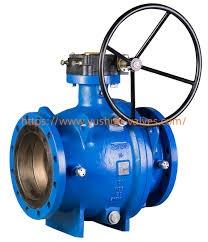
When an industrial project involves equipment from different suppliers, compatibility becomes a practical concern long before installation begins. Valve dimensions, connection arrangements, materials, and inspection requirements all need to correspond with the wider pipeline design. Buyers researching an American Standard Valves Factory are often looking for a supplier that understands these details, rather than simply a company able to offer a familiar valve shape. The manufacturing process behind a valve can influence how easily it fits into a project and how confidently it performs after installation.
Material selection is one of the first subjects worth discussing. Industrial valves may be made from stainless steel, carbon steel, cast steel, or other materials, depending on the product design and intended service. Each has different characteristics. Stainless steel is often considered where corrosion resistance is important, while carbon steel is used in many general industrial applications. The correct choice depends on the fluid, surrounding environment, and operating conditions. Buyers should provide this information before requesting a quotation because the material name alone does not establish suitability.
Internal components deserve the same attention as the main body. A valve may contain seats, seals, stems, discs, balls, and other moving or sealing parts. Their materials need to work together. A seal that is suitable for one fluid may not be appropriate for another. Similarly, a component exposed to frequent movement may require different wear considerations from one that remains in a fixed position. Clear material identification helps purchasing teams compare products more accurately and reduces confusion when replacement parts are needed.
Standards are another important part of the sourcing process. The phrase American standard can refer to different requirements depending on the valve category, design, and project documentation. Buyers should identify the specific standard required by the engineering team rather than relying on a broad product description. Connection types, face-to-face dimensions, pressure-related design requirements, marking, and testing procedures may all be addressed by relevant standards. Confirming the applicable requirements at the beginning helps prevent problems during inspection or installation.
Manufacturing quality is not determined by the finished surface alone. Casting, machining, assembly, and finishing each affect the final product. A carefully machined sealing surface supports proper contact between internal components. Accurate machining of connection areas helps the valve fit the intended pipework. During assembly, components need to be positioned correctly, and the operating mechanism should move as designed. These processes require suitable equipment as well as consistent production procedures.
Inspection provides another layer of confidence. Depending on the product and project requirements, checks may cover material identification, appearance, dimensions, operation, and sealing performance. Buyers should ask what inspections are performed and whether reports can be supplied with the order. For projects involving several valve types, consistent documentation makes it easier for quality teams to review deliveries and keep records. Photographs and inspection documents can also help resolve questions before products leave the manufacturing facility.
The valve's function should guide the purchasing decision. Gate valves are commonly used for isolation, globe valves are associated with flow regulation, and ball valves provide a straightforward shutoff arrangement. Butterfly valves may be selected where their construction suits the pipeline layout. These products are not interchangeable simply because they all control fluid movement. Buyers should explain whether the valve will isolate equipment, regulate a process, or serve another purpose. The supplier can then help identify an appropriate design for review.
Installation and maintenance are often overlooked during early sourcing discussions. A valve that is difficult to access can make routine inspection unnecessarily complicated. The position of the handwheel, lever, actuator, and connection points should be considered in relation to nearby pipes and equipment. Buyers should also ask about replacement seals, internal components, and maintenance guidance. These details matter to plant operators who may need to service equipment without disrupting an entire production area.
The appearance of an industrial valve is mainly shaped by its construction and finish, but these details still have practical value. Smooth external surfaces are easier to inspect and clean. Clear markings help technicians identify products and flow direction where relevant. Protective coatings may be specified for certain environments, while stainless steel finishes may be selected according to the application and project expectations. Consistent labeling and orderly packaging also help receiving teams identify products when several orders arrive together.
Zhejiang Yushun Valve Co., Ltd. offers industrial valve products for different fluid-control applications, including ball, gate, globe, and butterfly valve categories. Buyers sourcing valves for projects requiring American standards should communicate the exact product type, applicable standard, material requirements, connection details, and inspection expectations to the company before placing an order. This allows the requested design and available manufacturing scope to be checked directly. More information about the company's products is available at https://www.yushun-valves.com/product/.

 English
 Arabic
 French
 Spanish
 Portuguese
 Deutsch
 Turkish
 Italiano
 Russian
 Romaian
 Portuguese (Brazil)
 Greek
