


Laser Dental Procedures vs Traditional Treatments | Benefits
Laser Dental Procedures Better Than Traditional Treatments: Benefits, Uses & What Patients Should Know
Modern dentistry has evolved significantly with the introduction of advanced technologies that make dental treatments more comfortable, precise, and efficient. One such innovation is laser dentistry, which is changing the way dentists perform various dental procedures. From treating gum diseases to removing tooth decay and improving smile aesthetics, dental lasers offer several advantages over conventional treatment methods.
Many patients experience anxiety when visiting a dentist because of concerns about pain, bleeding, drilling, or lengthy recovery periods. Laser dental procedures can help reduce some of these concerns by providing minimally invasive treatment options.
But are laser dental procedures really better than traditional treatments? Let's explore how laser dentistry works, its benefits, common applications, and how to determine whether it is the right choice for your oral health.
What Is Laser Dentistry?
Laser dentistry is an advanced dental treatment approach that uses concentrated beams of light energy to perform different dental procedures. Depending on the type of laser and treatment required, dentists can use lasers to work on soft tissues, such as gums, and certain hard tissues, such as tooth enamel.
Unlike traditional dental instruments that rely on mechanical cutting or drilling, dental lasers use controlled light energy to target specific areas.
Laser dentistry is commonly used for:
-
Gum disease treatment.
-
Gum reshaping and contouring.
-
Removal of certain types of tooth decay.
-
Treatment of gum infections.
-
Teeth whitening procedures.
-
Treatment of certain oral soft-tissue conditions.
-
Supporting selected root canal procedures.
The suitability of laser treatment depends on the patient's dental condition and the dentist's clinical assessment.
Laser Dental Procedures vs Traditional Dental Treatments
Both laser dentistry and traditional dental treatments have important roles in modern oral healthcare. However, laser technology offers certain advantages in suitable cases.
|
Feature |
Laser Dental Procedures |
Traditional Treatments |
|---|---|---|
|
Treatment approach |
Uses concentrated light energy |
Uses conventional dental instruments |
|
Bleeding |
May reduce bleeding in soft-tissue procedures |
Bleeding may be more noticeable |
|
Discomfort |
Can reduce discomfort in selected procedures |
May involve more discomfort |
|
Precision |
Allows targeted treatment |
Depends on instruments and technique |
|
Recovery |
May support faster healing in some procedures |
Recovery varies by procedure |
|
Anesthesia |
May reduce the need in selected cases |
Often required depending on treatment |
|
Noise and vibration |
Usually quieter than dental drills |
Drilling may create noise and vibration |
Important: Laser dentistry is not automatically better for every dental problem. Traditional methods may still be more effective or necessary for certain treatments.
7 Major Benefits of Laser Dental Procedures
1. Less Discomfort During Treatment
One of the biggest advantages of laser dentistry is that certain procedures can be performed with less discomfort.
Traditional dental treatments may involve drilling, cutting, or pressure on the affected area. Laser technology can reduce mechanical contact with tissues in suitable procedures.
Some patients may also require less local anesthesia, although this depends on the treatment and individual sensitivity.
2. Reduced Bleeding During Gum Procedures
Laser dentistry can be particularly useful in selected soft-tissue procedures.
Dental lasers can help seal small blood vessels while treating gum tissues, potentially reducing bleeding during procedures such as gum reshaping and certain periodontal treatments.
This can make the treatment experience more comfortable for patients.
3. Faster Recovery in Selected Procedures
Recovery time is an important consideration for anyone undergoing dental treatment.
Laser procedures may cause less tissue trauma in certain situations, which can support a smoother healing process.
However, recovery depends on the type of procedure, the patient's overall oral health, and how well post-treatment instructions are followed.
4. Greater Precision and Accuracy
Dental lasers allow dentists to target specific areas without unnecessarily affecting surrounding tissues.
This precision can be beneficial during procedures involving delicate gum tissues or localized treatment areas.
It helps dentists perform certain treatments with greater control and accuracy.
5. Reduced Risk of Infection
Some dental lasers have antimicrobial effects and can help reduce bacteria in the treated area.
This may be beneficial during selected periodontal and endodontic procedures.
However, laser treatment does not eliminate the risk of infection. Proper sterilization, clinical techniques, and post-treatment care remain essential.
6. Less Noise and Vibration
Many patients feel nervous when they hear the sound of a traditional dental drill.
Laser dental equipment generally operates more quietly and does not produce the same drilling vibrations.
This can create a more relaxing treatment experience, especially for patients who experience dental anxiety.
7. Improved Gum Aesthetics
Laser dentistry is also used for cosmetic dental procedures.
For example, laser gum contouring can help reshape uneven gum lines and improve the appearance of a smile.
It may be recommended for patients with excessive gum display, uneven gum tissues, or certain aesthetic concerns.
Common Dental Procedures Performed Using Lasers
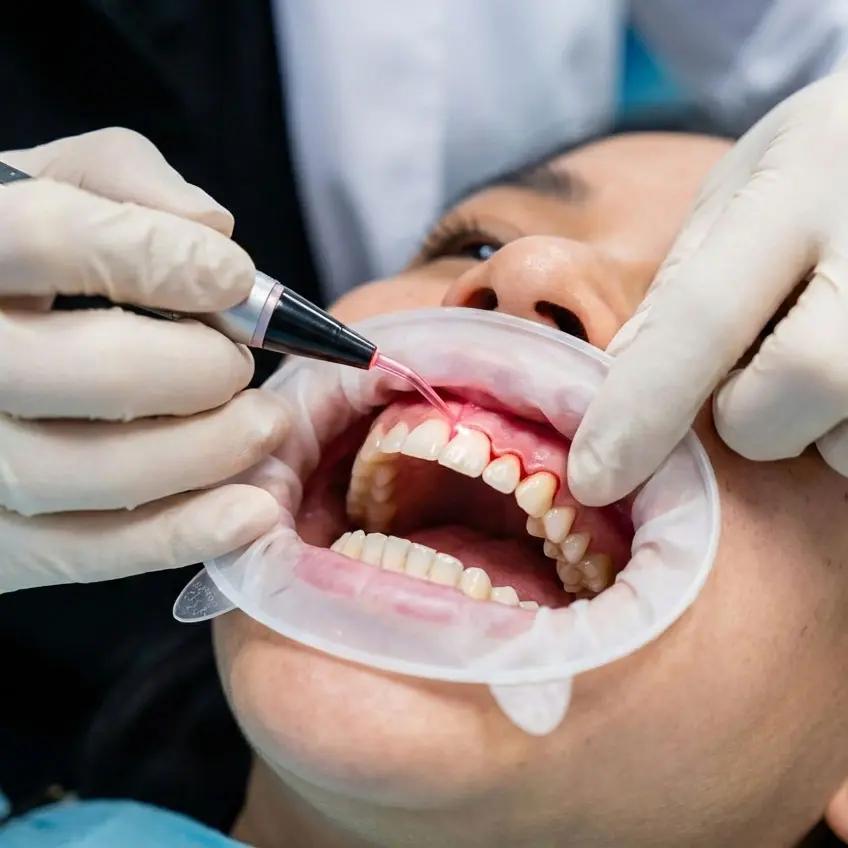
Laser technology can be used for several dental procedures, depending on the equipment available and the patient's condition.
1. Laser Gum Disease Treatment
Gum disease develops when bacteria accumulate around the teeth and gums, causing inflammation, bleeding, and sometimes damage to supporting tissues.
Laser technology may be used as an additional tool during selected periodontal treatments to target infected or inflamed gum tissues.
However, it does not replace professional periodontal cleaning or other necessary gum treatments.
2. Laser Gum Contouring
Uneven gum lines can affect the overall appearance of your smile.
Laser gum contouring helps reshape excess gum tissue to create a more balanced gum line. It is commonly considered for patients who want to improve their smile aesthetics.
3. Laser-Assisted Root Canal Treatment
Root canal treatment is performed to remove infected or damaged pulp from inside a tooth.
In selected cases, lasers may be used as an additional method to help disinfect parts of the root canal system.
However, conventional cleaning, shaping, and sealing techniques remain essential for successful root canal treatment.
4. Laser Teeth Whitening
Laser-assisted teeth whitening is a cosmetic procedure that uses professional whitening agents, sometimes combined with light or laser activation depending on the system.
It can help improve tooth shade under professional supervision.
Patients should understand that not every light-activated whitening system uses a true dental laser.
5. Treatment of Oral Soft-Tissue Conditions
Dental lasers can also be used to remove or treat certain soft-tissue growths, such as selected fibromas and other benign lesions.
Any suspicious oral lesion should be properly examined, and a biopsy may be necessary before or after treatment.
Are Laser Dental Procedures Suitable for Everyone?
Although laser dentistry offers several benefits, it is not suitable for every patient or dental condition.
Your dentist may recommend traditional treatment instead of laser dentistry depending on:
-
The severity of your dental problem.
-
The location of the affected tooth or gum tissue.
-
The type of dental procedure required.
-
Your overall oral health.
-
The availability of appropriate laser equipment.
-
Your individual treatment needs.
A proper dental examination is necessary before choosing between laser and conventional treatment.
Are There Any Disadvantages of Laser Dentistry?
Like every dental technology, laser dentistry has certain limitations.
-
Higher treatment costs: Laser procedures may cost more because of advanced equipment and specialized training.
-
Limited applications: Not all dental procedures can be performed using lasers.
-
Specialized expertise: Dentists require appropriate training to use dental laser equipment safely.
-
Not always pain-free: Some procedures may still require local anesthesia.
-
Traditional treatment may be necessary: Certain dental conditions require conventional instruments or a combination of techniques.
Understanding these limitations helps patients make informed decisions about their dental care.
How to Choose Between Laser and Traditional Dental Treatment?
Choosing the right dental procedure should always depend on your oral health condition rather than technology alone.
Here are some important factors to consider:
-
Consult an experienced dentist for a detailed examination.
-
Understand the advantages and limitations of both procedures.
-
Ask whether laser treatment is suitable for your specific condition.
-
Discuss the expected recovery time and treatment cost.
-
Follow the dentist's instructions before and after the procedure.
An experienced dentist can recommend the most appropriate treatment based on your dental requirements.
Tips for Maintaining Oral Health After Laser Dental Treatment
Proper aftercare helps support healing and maintain long-term oral health.
Follow these simple recommendations:
-
Maintain regular brushing with a soft-bristled toothbrush.
-
Floss gently as recommended by your dentist.
-
Avoid very hot, spicy, or hard foods if your dentist advises it.
-
Follow all prescribed medication and oral hygiene instructions.
-
Avoid smoking and tobacco products.
-
Attend scheduled dental follow-up appointments.
-
Contact your dentist if you experience persistent pain, swelling, or bleeding.
Remember, regular dental check-ups are essential even after successful laser treatment.
Map Location: Dental Clinic in Jamshedpur
Conclusion
Laser dental procedures represent an important advancement in modern dentistry. With benefits such as improved precision, potentially reduced bleeding, less discomfort in selected treatments, and a more comfortable patient experience, laser technology offers valuable alternatives to certain traditional dental procedures.
However, laser dentistry is not a universal replacement for conventional treatments. The best approach depends on your dental condition, treatment requirements, and professional recommendations.
If you are considering advanced dental care, consult an experienced dentist to understand whether laser dentistry is the right option for you. Choosing the appropriate treatment can help protect your oral health and maintain a healthy, confident smile.
Learn more: Laser Dentistry: Revolutionizing Pain-Free Dental Treatments
Frequently Asked Questions (FAQs)
1. Are laser dental procedures better than traditional dental treatments?
Laser dental procedures can offer advantages such as reduced bleeding, improved precision, and less discomfort in selected cases. However, traditional treatments may be more suitable for certain dental conditions.
2. Is laser dentistry completely painless?
No. Some laser procedures involve minimal discomfort, but others may require local anesthesia depending on the treatment and patient's sensitivity.
3. Is laser dental treatment safe?
Yes, dental laser treatments are generally considered safe when performed by a properly trained dentist using appropriate equipment and safety precautions.
4. Does laser dentistry help treat gum disease?
Laser technology can be used as an additional tool in selected gum disease treatments. However, professional cleaning and appropriate periodontal care remain important.
5. Is laser dentistry more expensive than traditional dental treatment?
Laser dental procedures may cost more because of specialized equipment and technology. The actual cost depends on the procedure, clinic, and complexity of treatment.
6. How long does it take to recover after laser dental treatment?
Recovery varies depending on the procedure and individual healing response. Some soft-tissue laser procedures may involve a shorter recovery period than comparable conventional procedures.

 English
 Arabic
 French
 Spanish
 Portuguese
 Deutsch
 Turkish
 Italiano
 Russian
 Romaian
 Portuguese (Brazil)
 Greek
