


The Growing Importance of Data Center Security in Saudi Arabia
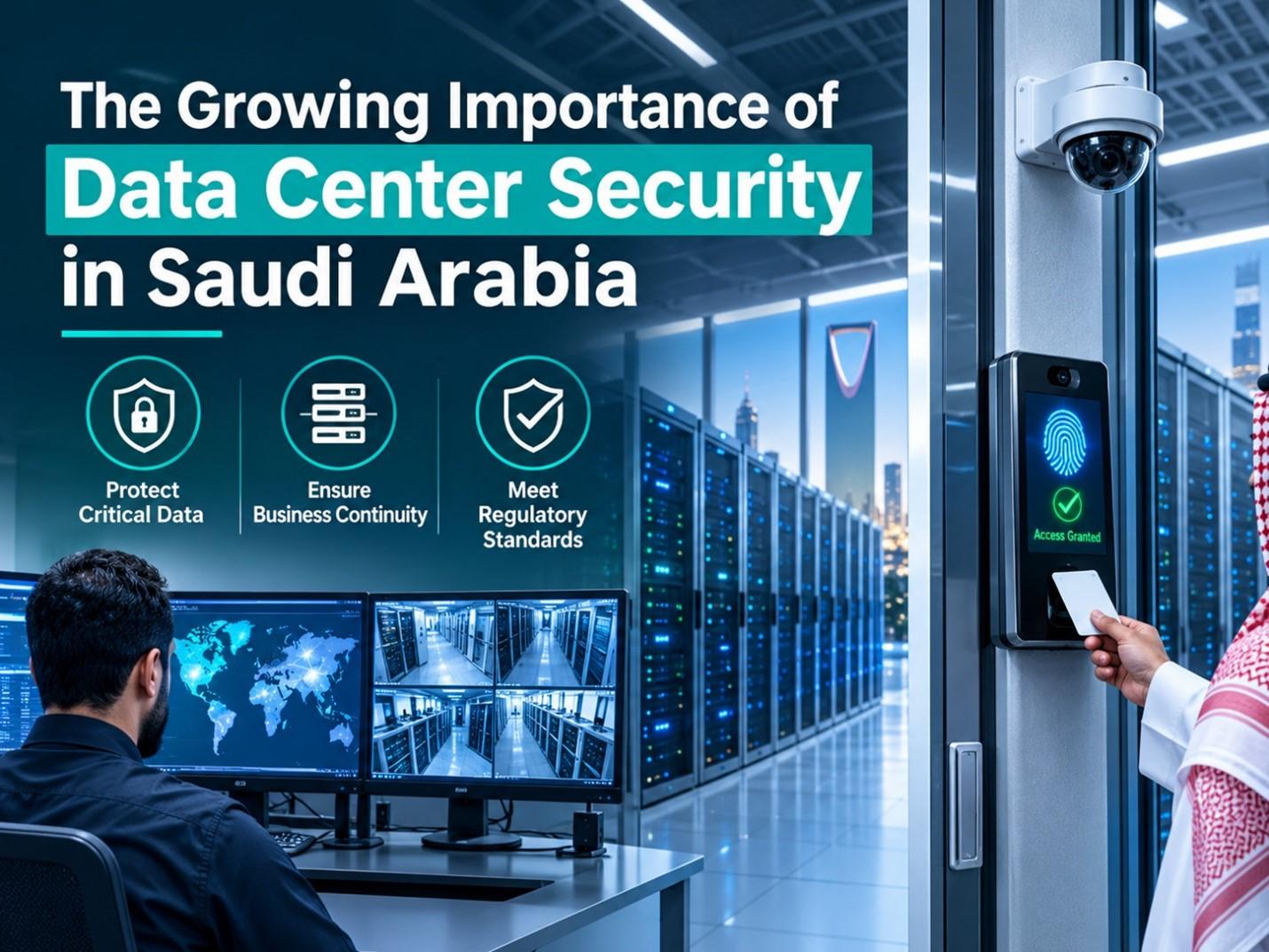
Data Center Security is rising fast on the agenda of Saudi boards, because the Kingdom is adding cloud regions, giga projects, smart city platforms, and artificial intelligence workloads at a pace few countries match. This article explains the forces behind that growth, how protection must grow with it, and what leaders should check at each stage.
Part One: Five Forces Driving Demand
The first force is Vision 2030, which moves government services, healthcare, education, and finance online. The second is cloud growth, as global providers and local operators open new regions and hosting campuses across the Kingdom.
The third is data localization, since rules increasingly expect sensitive data to stay inside the country. The fourth is artificial intelligence, which brings dense racks, heavy power, and valuable models. The fifth is rising cyber and physical threat, which makes every facility a more attractive target.
Together these forces mean more data, more value per building, and more scrutiny from regulators, partners, and customers. Protection that was enough for a small server room is no longer enough for a national digital backbone.
Part Two: How Protection Must Grow
Most organizations start with one room, a locked door, and a firewall. As the business grows, the room becomes a hall, then a campus, then a service for other customers. Each step calls for stronger layers, clearer ownership, and better evidence.
Growth Step One: The Outer Boundary
The Data Center Perimeter must grow from a simple fence into a managed zone. Vehicle barriers, lighting, thermal cameras, and sensors give early warning, and a controlled gatehouse inspects every vehicle and delivery. Large campuses also need patrols and clear standoff distances.
Growth Step Two: Doors, Halls, and Racks
Data Center Access Control must scale from a shared key to a precise system. Biometrics, cards, mantraps, and permissions tied to work orders limit each engineer to one cage for one window of time, and every entry is logged for auditors, which matters more as the number of visitors grows.
Growth Step Three: Constant Watching
Data Center Security Monitoring grows from a few cameras to a control room that watches doors, alarms, power, cooling, and network events around the clock. Analytics notice tailgating and doors held open, so operators respond in seconds even when the site is large.
Because each step builds on the last, many Saudi planners begin by studying scalable protection options for growing Saudi data halls before they write a specification.
Growth Step Four: The Connecting Brain
Data Center Security Software joins every device into one view as the estate expands. It correlates alerts, tracks assets, visitors, and contractors, enforces policy, and produces reports for managers and regulators. Open standards let new buildings join the same platform without a rebuild.
Growth Step Five: Network and Data
Firewalls divide the network into zones, encryption keeps data unreadable if a drive is lost, and strong identity checks protect administrator accounts. Regular patching and independent testing show how an attacker would try to get in, and these checks must repeat as the estate grows.
Part Three: Designing for Growth
Data Center Security Solutions give growing operators one planned system with room to expand. The design covers the boundary, the building, the halls, the racks, and the network, and leaves space for more racks, more cameras, and more users without tearing out what already works.
Resilience grows too. Duplicate power and cooling paths, tested generators, batteries, and suitable fire suppression keep services running through faults and summer heat. Dust control and efficient cooling deserve special attention in the Kingdom, especially for dense artificial intelligence racks.
People remain the final layer. Staff need training, clear escalation steps, and drills for intrusion, power loss, ransomware, and fire. As teams grow, background checks and prompt removal of rights for leavers become just as important as any device.
Part Four: Saudi Rules and Standards
The National Cybersecurity Authority issues the Essential Cybersecurity Controls and the Cloud Cybersecurity Controls. The Saudi Data and Artificial Intelligence Authority enforces the Personal Data Protection Law, the Communications, Space and Technology Commission regulates connectivity and cloud services, and the Saudi Central Bank sets expectations for financial firms.
Customers also look for ISO 27001 for information security, and TIA 942 and Uptime tiers for facility design. Saudi Civil Defense approves fire and life safety. Current policies, drawings, test records, and incident logs should always be ready to show.
Part Five: Growth Across the Kingdom
A Data Center Security KSA strategy should apply the same policies, reports, and response times to every site, so national customers can audit one standard instead of many. Shared methods also let headquarters compare facilities on equal terms as the estate grows.
Data Center Security Riyadh projects often serve government entities, banks, and technology firms in areas such as the King Abdullah Financial District, where new campuses are rising quickly. Sensitive data and strict audits call for tight visitor rules and detailed evidence for regulators.
Data Center Security Jeddah projects are shaped by the port, trade, and the humid Red Sea coast near the Jeddah Islamic Port. Moisture and salt call for corrosion resistant equipment, sealed cable routes, and drainage that keeps water away from critical rooms.
Part Six: Questions to Ask as You Grow
Ask every supplier for a written site survey, drawings of doors and cameras, commissioning test records, staff training, a privacy statement, and a support agreement with clear response times. References from banks, hospitals, and campuses bring practical lessons about visitor flow and incident reporting.
Check whether open standards are used, how upgrades are handled, how spare parts are supplied, and who responds when something fails at night. Ask how earlier customers expanded over several years, and visit a working installation if possible.
A short assessment is the best first step, and a facility review and growth roadmap in Saudi Arabia will show where the largest gaps lie today.
Part Seven: A Practical Roadmap
List the ten systems that would hurt most if lost and check who can reach them today. Close easy gaps first, such as unused accounts, shared passwords, and unlogged visits. Then add layers in stages, rehearse each change, and review response times every month.
Give every control a named owner, a regular check, and a clear escalation path. Cameras nobody watches and rules nobody reviews create a false sense of safety, while steady improvement creates real strength.
Track a few simple measures: time to detect an alarm, time to respond, number of unreviewed access rights, and days since the last tested recovery. Numbers that improve month after month show leaders that the investment is working.
Finally, compare total cost over five years and not only the purchase price. Maintenance, spare parts, software updates, training, and response contracts often decide whether protection stays effective after the first year.
When you are ready to compare designs, explore complete protection planning for critical IT facilities and measure them against your current setup.
Conclusion
Data Center Security is growing in importance as the Kingdom's digital ambitions expand. Data Center Security Solutions join the Data Center Perimeter and Data Center Access Control into one system that can scale. Data Center Security Monitoring and Data Center Security Software give early warning, clear records, and a single view of the site. A planned Data Center Security KSA roadmap, including Data Center Security Riyadh and Data Center Security Jeddah sites, keeps services compliant and resilient as demand grows. Contact Tektronix today to schedule your facility review.
FAQs
1. How should the Data Center Perimeter change as a campus grows?
It should move from a simple fence to a managed zone with barriers, sensors, a controlled gatehouse, and patrols.
2. Why does Data Center Access Control matter more with more visitors?
It limits each person to the cage named in the job and records every entry for auditors.
3. What does Data Center Security Monitoring add to a large site?
It watches doors, cameras, alarms, power, cooling, and network events, so operators can respond within seconds.
4. How does Data Center Security Software help new buildings join?
Open standards let new buildings join the same platform and reports without a rebuild.
5. What should Data Center Security Riyadh projects consider first?
Sensitive data and strict audits call for tight visitor rules and detailed evidence for regulators.

 English
 French
 Spanish
 Portuguese
 Deutsch
 Turkish
 Dutch
 Italiano
 Russian
 Romaian
 Portuguese (Brazil)
 Greek
