


How Laundry Equipment Needs Differ Across Hotels, Hospitals, Factories and Institutions
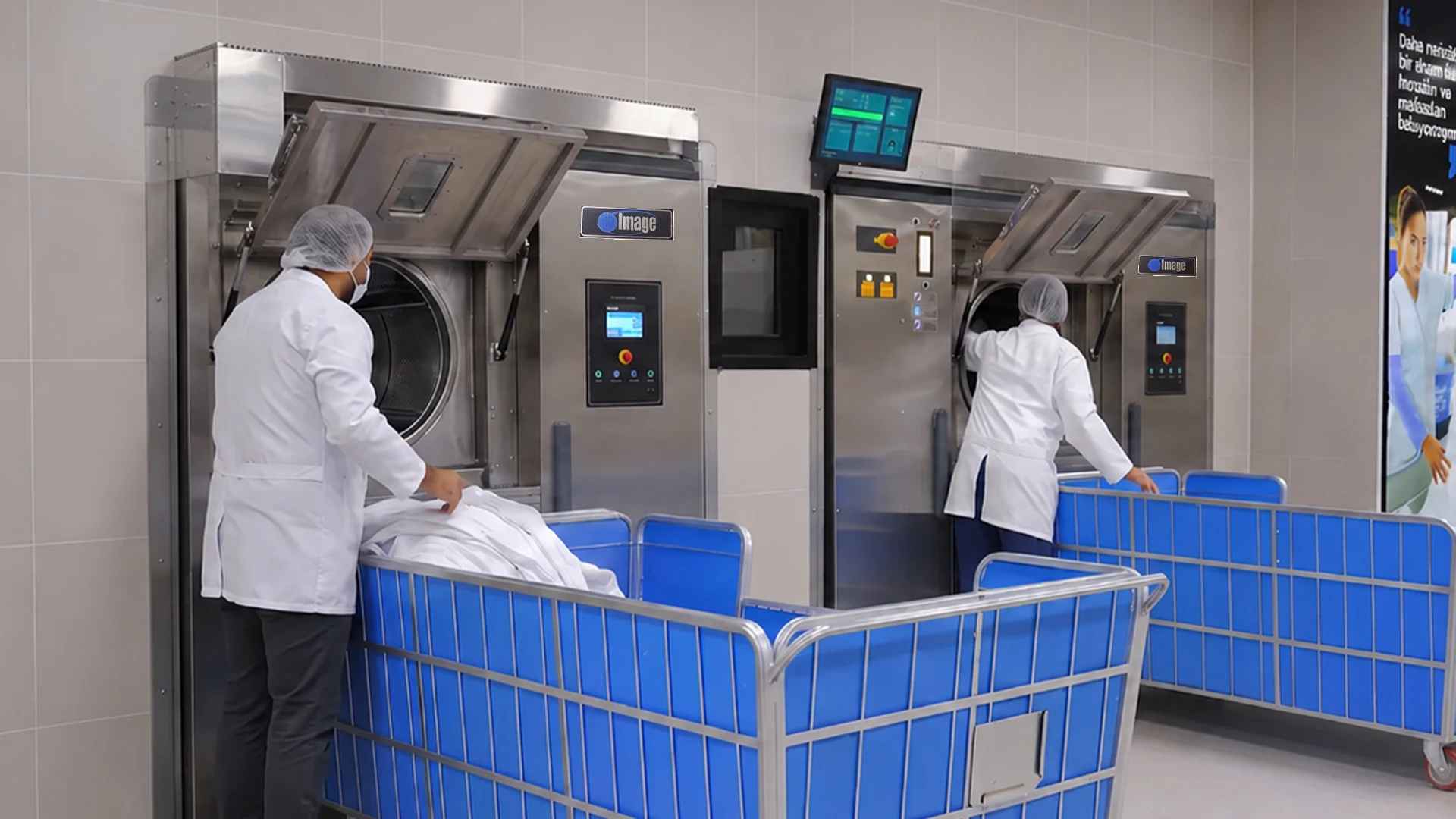
A washer extractor is a washer extractor, but the plant built around it is not. A hotel, a hospital, a factory and a hostel all wash textiles, yet each has different linen, different soil, different rules and different pressures on time. Buyers who copy another sector's laundry often discover this the hard way. This article compares what each type of user needs, so that commercial laundry equipment selection starts from the work and not from a catalogue.
The Questions That Shape Every Laundry
-
What is being washed? Flat linen, towels, uniforms, garments, bulky items or a mix.
-
How soiled is it? Light body soil, food and grease, blood and body fluids, oil and dust.
-
What standard must it meet? Guest appearance, infection control, safety or simple cleanliness.
-
How fast is the turnaround? Same day, next day or weekly.
-
How steady is the volume? Constant, peaky or seasonal.
-
What are the constraints? Space, utilities, budget, labour and regulation.
Hotels: Appearance and Speed
Hotel laundry is dominated by sheets, pillowcases, duvet covers and towels, with tablecloths and napkins from food and beverage outlets, spa linen and uniforms. Guests judge the result by feel and appearance, so whiteness, softness and crisp finishing matter.
-
Washing: high-capacity washer extractors, or a tunnel washer for large resorts, with accurate dosing for whiteness.
-
Drying: towel-capable dryers with moisture sensing.
-
Finishing: flatwork ironers with feeders and folders for sheets and tablecloths, plus towel folding.
-
Priorities: fast turnaround after checkout, linen life and quiet, tidy back-of-house operation.
Hospitals: Infection Control and Documentation
Hospital linen includes sheets, gowns, drapes, scrubs and blankets, with potentially infectious soil. The aim is safety first, with documented processes.
-
Washing: barrier washer extractors that separate soiled and clean sides, with programmable thermal or validated chemical disinfection and recorded cycle data.
-
Layout: one-way flow from soiled to clean, with air moving from clean to soiled areas.
-
Drying and finishing: low-lint drying and ironing, with inspection tables.
-
Priorities: compliance, traceability and reliability, with redundancy so that service never stops.
Factories and Industrial Units: Heavy Soil and Safety
Industrial laundries wash workwear, coveralls, overalls and sometimes flame-retardant or high-visibility garments, with oil, grease, dust and metal particles.
-
Washing: strong, heavy-duty machines with high temperature capability, flexible chemistry and good rinsing, with water softening.
-
Drying: robust dryers with good lint control, since oily garments raise fire risk.
-
Separation: separate handling for protective garments and for hazardous contamination.
-
Priorities: durability, safety, chemistry control and effluent handling.
Institutions: Volume, Budget and Simplicity
Hostels, universities, schools, defence units, police and paramilitary camps, prisons and similar institutions handle large volumes of uniforms, bedding, towels and blankets. Staff skills and budgets are often limited, and demand is predictable.
-
Washing: rugged, simple-to-operate washer extractors sized for high weekly volume, with strong extraction for bulky items.
-
Drying: large dryers, and sometimes hydro extractors, to cope with seasonal peaks.
-
Finishing: basic pressing or ironing, often with a flatwork ironer if volume warrants.
-
Priorities: reliability, ease of maintenance, low running cost and spares support, sometimes at remote sites.
Side-by-Side Summary
-
Hotels: appearance, finishing, turnaround.
-
Hospitals: barrier design, disinfection, records, redundancy.
-
Factories: heavy soil, safety, chemistry, durability.
-
Institutions: volume, simplicity, low cost, support.
What They Share
Despite the differences, some principles apply everywhere:
-
Size capacity from real kilograms, peak days and turnaround, not guesses.
-
Plan utilities, ventilation, drainage and space before choosing machines.
-
Control water quality, with softening where needed.
-
Train operators and keep spare parts and an AMC in place.
-
Track cost per kilogram, rewash rate and uptime.
Choosing a Supplier
A supplier who has served all four sectors can transfer lessons between them, such as barrier design from hospitals, finishing from hotels, durability from industry and simplicity from institutions. Ask for references in your sector, and look for support that covers consultation, installation, training and after-sales service as one package, not just a machine.
About Supershine Laundry: Supershine Laundry brings 35 years of engineering experience and more than 1,500 installations across hotels, hospitals, defence and paramilitary units, garment manufacturers, railways and institutions. Its turnkey service covers consultation, capacity planning, machine selection, installation, commissioning, training, AMC and spare parts, with global lines including Milnor, Image Laundry Systems and Italclean.
Frequently Asked Questions
Q1: Can one laundry design suit different sectors?
Only in part. The basic machines are similar, but layout, disinfection, finishing and chemistry differ widely. Design from the work.
Q2: Why do hospitals use barrier washers?
They separate soiled and clean sides, which prevents re-contamination and supports infection control and audits.
Q3: What matters most for a hotel laundry?
Appearance, finishing and quick turnaround, supported by good chemistry and flatwork finishing equipment.
Q4: How is an industrial laundry different?
It faces heavy oil and dust soil, needs strong programmes, water softening, careful chemistry and attention to dryer fire safety.
Q5: What should institutions prioritise?
Robust machines, simple operation, strong extraction, spares availability and reliable service support.

 English
 Arabic
 French
 Portuguese
 Deutsch
 Turkish
 Dutch
 Italiano
 Russian
 Romaian
 Portuguese (Brazil)
 Greek
